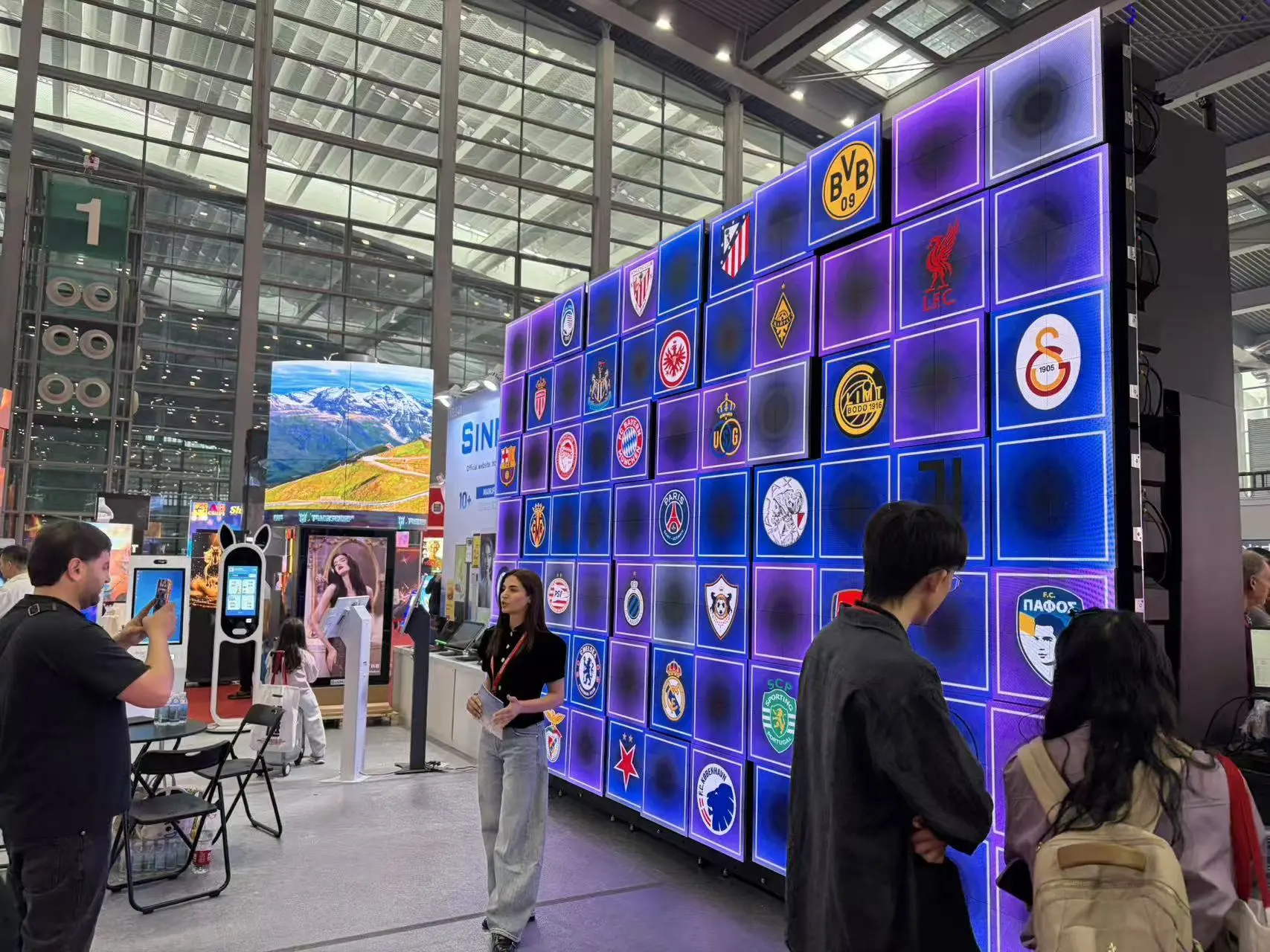
Trend Analysis: From "Passive Visual Reception" to "Spatial Physical Resonance"
Over the past decade in commercial spaces and exhibition design, large-scale flat LED screens have carried the vast majority of visual communication functions. However, as screens become omnipresent, the audience's visual nerves have gradually succumbed to fatigue, and the one-way communication model of "passive visual reception" is losing its effectiveness.
Today's digital spatial aesthetics demand that media not only "glow" but also "breathe."
The emergence of the kinetic screen allows pixels to break through the two-dimensional X and Y axes, gaining physical depth on the Z-axis for the first time. Through the precise extension and retraction of a matrix of mechanical modules, the screen can move in sync with musical rhythms or provide real-time physical 3D visual feedback based on sensor-driven human-computer interaction. This mode of expression, combining virtual imagery with actual physical displacement, creates a powerful "spatial physical resonance," breathing genuine vitality and emotional tension into architectural surfaces.

Technical Turning Point: SPKI-128 and the Breakthrough of the "0mm Visual Gap"
Although kinetic screens offer unparalleled dynamic potential, they have historically faced a critical physical pain point in high-end indoor displays (such as luxury flagship stores and premier museums): black gaps that create a fragmented visual experience.
To ensure that moving modules do not interfere with each other, traditional kinetic screens typically require a physical gap of 2-3mm. Consequently, when displaying high-definition content, the screen surface is covered with a black grid, severely compromising the overall premium feel of the space.
At these upcoming dual exhibitions in Shenzhen, Spectrum Display will introduce its flagship indoor masterpiece that shatters this industry bottleneck: the SPKI-128 Kinetic Screen.
Exclusive "LED Chip Relocation" Technology: In pursuit of ultimate image continuity, the SPKI-128 begins with the underlying PCB board design. Through precise LED chip relocation and structural optimization, it achieves an extreme physical gap of just 0.5mm, all while ensuring the high-speed and safe operation of the modules.
0mm Visual Seamless Experience: At standard viewing distances, this microscopic physical gap is completely hidden. The ultra-fast servo response of up to 800mm/s, combined with a 0mm visual gap, transforms what was once a rigid mechanical matrix into a continuous, freely undulating "Digital Fabric" that flows like silk.
This represents not only an ultimate challenge in engineering but also a crucial turning point for digital media in spatial aesthetics.
Exhibition Invitation: A Live Encounter with "Digital Fabric"
Seeing is believing. The true physical rhythm and spatial tension can only be profoundly experienced when standing before a massive kinetic array.
This March, Spectrum Display cordially invites global architectural designers, spatial visual artists, and system integrators to visit our booths at these two major exhibitions in Shenzhen. We will present a comprehensive view of our complete closed-loop ecosystem, from the underlying software (AE/UE5 plugins) to the hardware terminals, showcasing the infinite possibilities of future spaces.
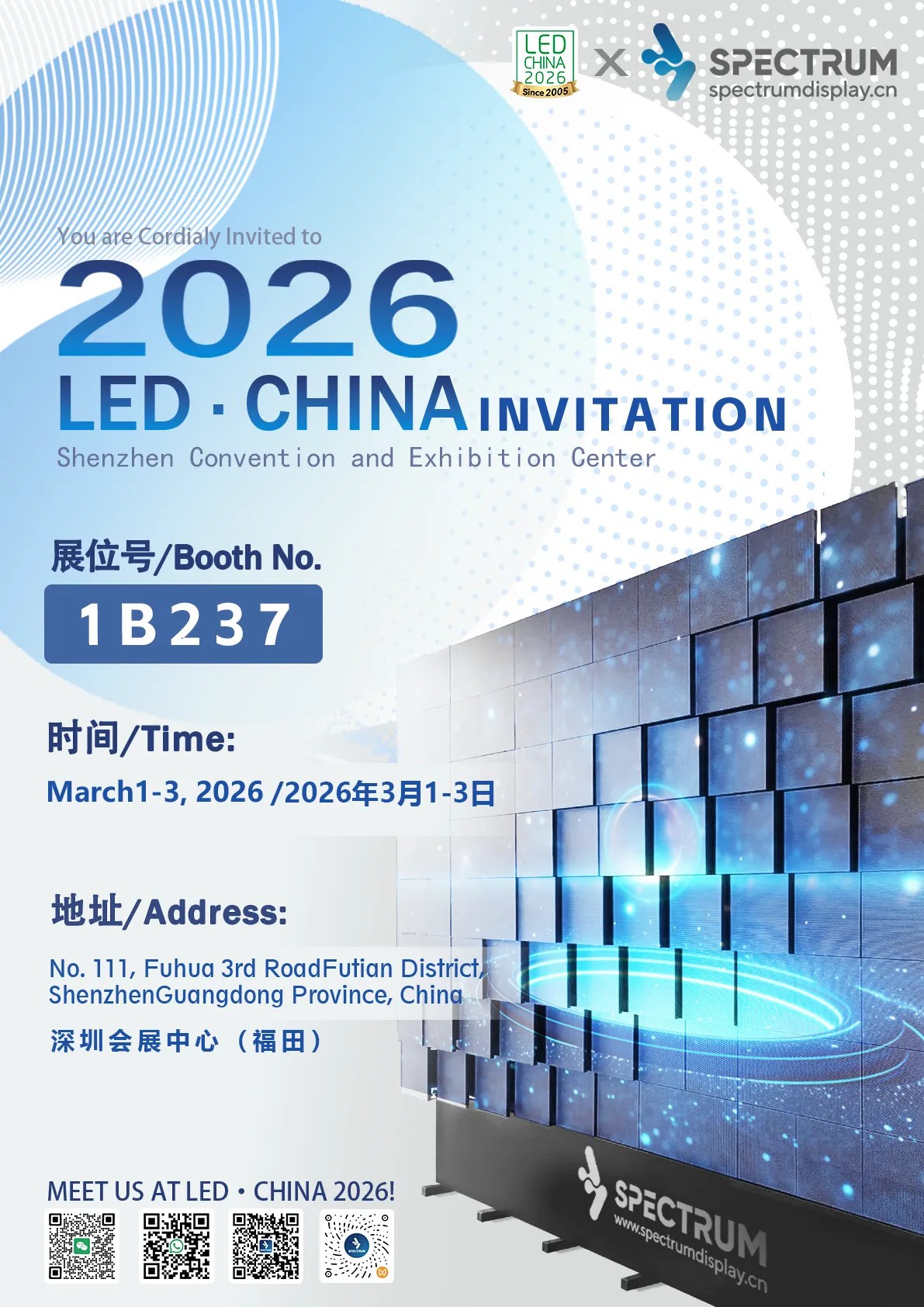
📍 LED CHINA 2026
Date: March 1 - March 3, 2026
Location: Shenzhen Convention & Exhibition Center (Futian)
Spectrum Booth: 1B237

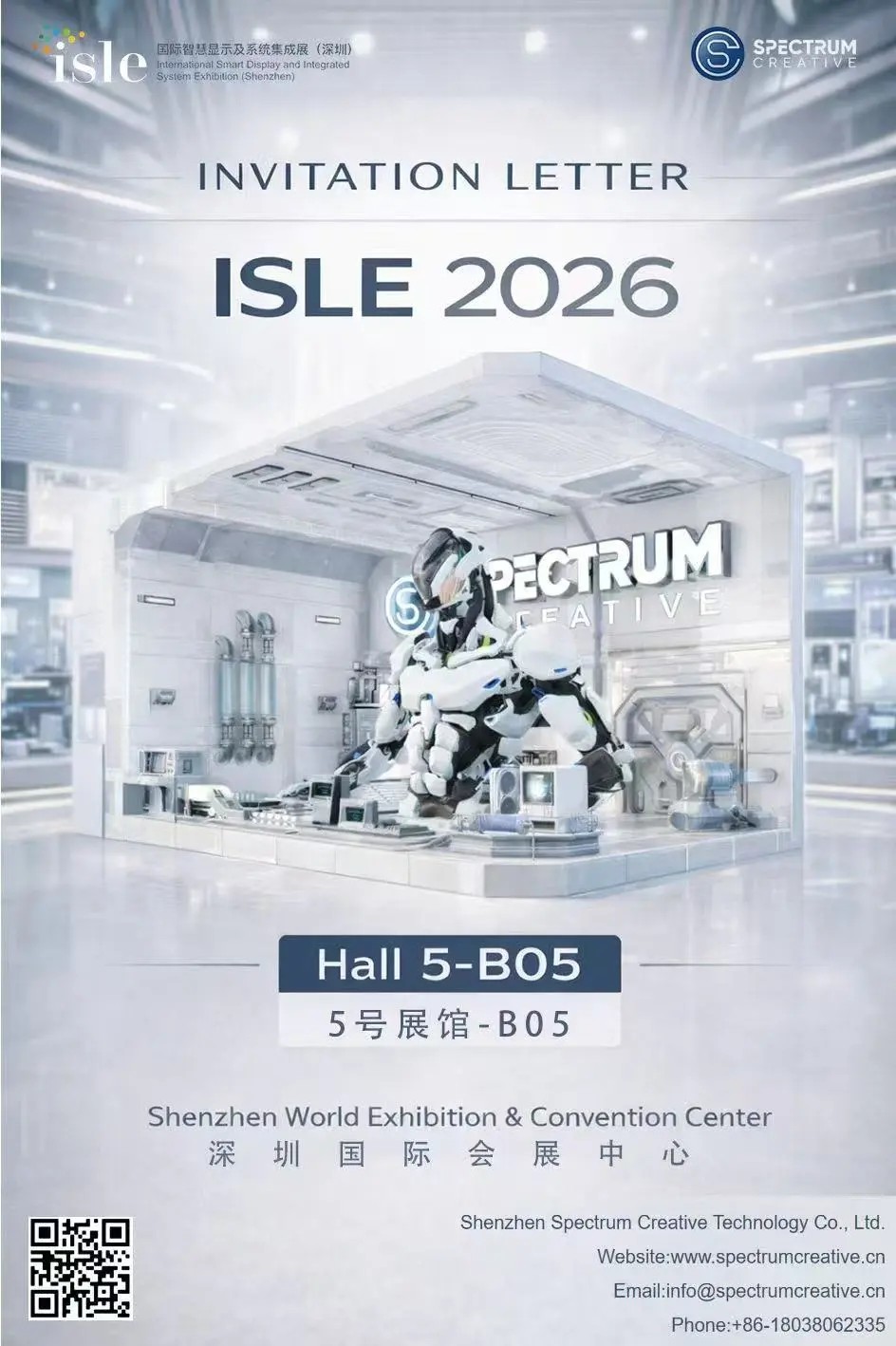
📍 ISLE 2026
Date: March 5 - March 7, 2026
Location: Shenzhen World Exhibition & Convention Center (Bao'an)
Spectrum Booth: Hall 5, B05

We look forward to meeting you in Shenzhen to collectively witness the next physical leap in digital art.