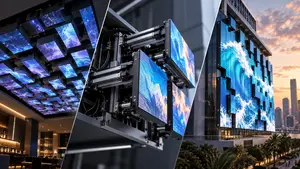
One-Sentence Definition
A Custom Mechanical LED Solution is a comprehensive visual engineering system that integrates LED display technology, precision mechanical structures, motion control systems, and intelligent content management.
Every Kinetic LED project does not begin with “we need a screen.”
It begins with an architectural challenge that traditional solutions cannot solve.
Through customized mechanical design, precision motion control, and system-level engineering capabilities, Spectrum Display transforms impossible spaces into extraordinary visual experiences.
Contents
The Starting Point of Every Project: Not “We Need a Screen,” But “Traditional Solutions Cannot Work Here”
Step 1: Understanding Architectural Requirements — Reading the “Challenges” of Space
Step 2: Customized Mechanical Design — Making the Screen Adapt to Architecture
Step 3: Motion Control Design — Turning Digital Content into Physical Movement
Step 4: Safety Testing — When People Approach, Machines Step Back
Step 5: Project Delivery — The Final Journey from Design to Reality
Conclusion: Not Selling Equipment, But Solving Complex Spatial Challenges
1. The Starting Point of Every Project: Not “We Need a Screen,” But “Traditional Solutions Cannot Work Here”
In the Kinetic LED industry, there is a saying:
“Selling hardware is easy. Making projects work in the real world is the difficult part.”
Many AV integrators discover this after taking on advanced commercial display projects.
The early stage is often challenged by:
complex steel structures
difficult installation conditions
complicated control systems
long commissioning periods
High labor costs and extended onsite debugging can quickly consume project margins.
But before installation challenges appear, there is an even deeper problem:
The space itself does not cooperate.
Every Kinetic LED project usually starts with a challenge:
“Here is a space, but traditional solutions cannot work.”
It could be:
a shopping mall atrium with insufficient ceiling height
a luxury storefront with extremely limited installation depth
a building facade where the display must perfectly align with existing architectural structures
a showroom where the screen must disappear completely when not in use
For these situations, standardized product thinking is no longer enough.
The solution must begin with understanding architectural limitations.
2. Step 1: Understanding Architectural Requirements — Reading the Challenges of Space
Architectural limitations are not obstacles.
They are the real test of engineering capability.
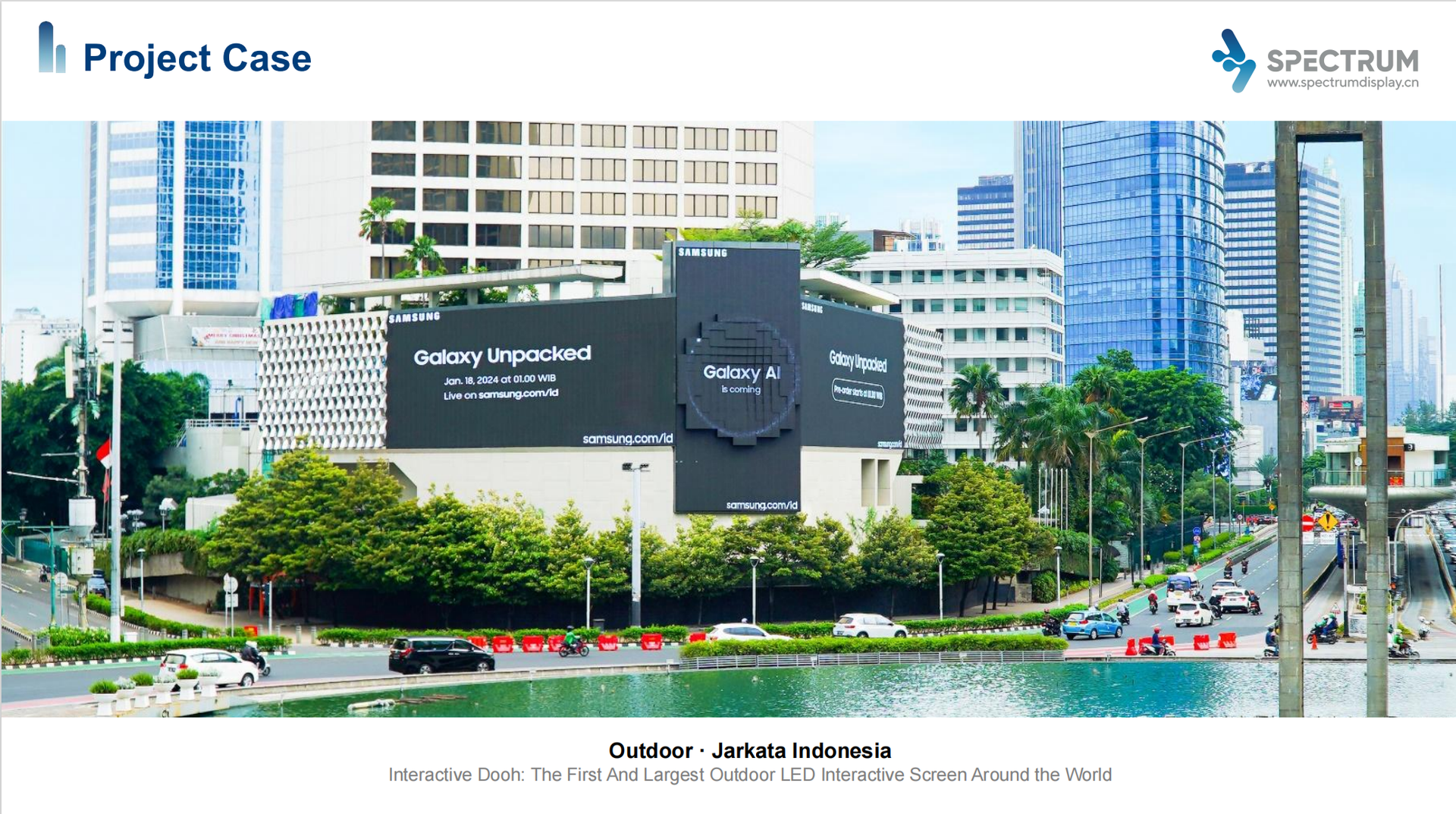
Case 1: Mandarin Oriental Jakarta — Engineering for Extreme Outdoor Conditions
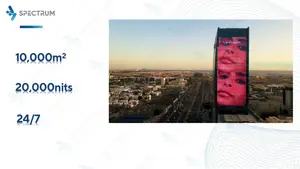
For the Mandarin Oriental Jakarta project, Spectrum Display created a large-scale outdoor landmark LED installation for a Samsung Galaxy launch event.
The challenge was not simply creating a large screen.
The challenge was surviving a demanding environment:
tropical heat
high humidity
coastal salt mist
extreme weather conditions
For mechanical LED systems, these conditions create serious engineering risks.
Water intrusion, dust accumulation, and corrosion can threaten thousands of mechanical components and cause system failures.
The engineering team had to understand the environment before designing the display:
Not:
“How large should the screen be?”
But:
“How can the mechanical system survive here for years?”
Case 2: Space-Limited Technology Showrooms
In corporate showrooms, museums, and technology exhibition spaces, designers often face a difficult balance:
They want the impressive 3D physical interaction of a mechanical LED display.
But they also have extremely limited installation depth.
Traditional mechanical screens often require large rear maintenance space.
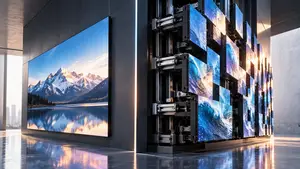
Spectrum Display developed the SPKI-160 solution with a pure front maintenance design, allowing mechanical LED systems to integrate into narrow premium spaces.
Case 3: Customized Foldable LED Window Project
In one high-end exhibition project, the architectural requirement was clear but extremely challenging:
A 13.5-meter-wide LED display.
When open:
A seamless large-format visual wall.
When closed:
A normal architectural window, perfectly aligned with surrounding glass structures without blocking the outdoor view.
The challenge included:
non-standard dimensions
precise alignment with existing glass structures
zero visible “screen feeling” when closed
No standard LED cabinet could directly solve this requirement.
A completely customized engineering approach was required.
3. Step 2: Customized Mechanical Design — Making the Screen Adapt to Architecture
After understanding architectural limitations, the next step is redesigning the mechanical system from the ground up.
The principle is simple:
The screen should adapt to architecture, not force architecture to adapt to the screen.
Digital Building Material Concept
Spectrum Display has developed a modular engineering approach that treats kinetic LED systems more like architectural materials.
Instead of installing a display after construction, the system is designed as part of the space itself.
This approach improves:
installation accuracy
structural reliability
maintenance efficiency
SPKI-160: Ultra-Thin Solution for Limited Spaces
For narrow spaces, SPKI-160 reduces installation depth dramatically.
With an optimized mechanical structure and front maintenance design, it can integrate into:
digital exhibition walls
premium showrooms
architectural interiors
The result is not a screen attached to a wall.
It becomes part of the wall.
SPKI-250: Engineering Solution for Large-Scale Installations
For large kinetic LED projects, increasing the number of small moving units also increases:
motor quantity
communication complexity
maintenance difficulty
SPKI-250 adopts a larger movement unit design to simplify system integration and improve long-term reliability.
The engineering philosophy is:
Reduce unnecessary complexity.
Increase stability.
Customized Foldable LED System: Designed from Zero
For the foldable LED window project:
Each 900mm-wide folding section used customized LED modules with:
P2 pixel pitch
180×240mm module size
6750×1560 pixel resolution
10.53 million pixels
Every pixel position and every mechanical connection was designed specifically for that architectural space.
This is the difference between:
Standardization:
“Use what already exists.”
Customization:
“Create what the project requires.”
4. Step 3: Motion Control Design — Turning Digital Content into Physical Movement
Mechanical structure is the skeleton.
LED display is the skin.
Motion control is the nervous system.
It transforms digital instructions into physical movement.
From Content to Motion
The core value of Kinetic LED technology is connecting digital content with mechanical movement.
The workflow:
Video Design
→ Control Data Generation
→ Motion Module Execution
→ Physical Visual Transformation
Brightness, color, rhythm, and visual patterns can become movement instructions.
The screen does not simply show content.
It physically responds to content.
Motion Control in Extreme Environments
For large outdoor projects, stable communication is critical.
In the Mandarin Oriental Jakarta project, Spectrum Display designed the system to handle complex outdoor conditions, ensuring synchronized operation across large numbers of mechanical units.
For large outdoor installations, SPKO-500 provides:
600mm maximum stroke
up to 800mm/s movement speed
creating powerful architectural movement effects.
Precision Motion and Silent Operation
Through precision mechanical transmission design and intelligent algorithms, Spectrum Display enables:
smooth acceleration
controlled deceleration
synchronized movement
low-noise operation
The goal is not simply making a screen move.
The goal is making every movement worth watching.
Digital Twin Simulation
With digital simulation tools, movement paths, interference tests, and safety verification can be completed before onsite installation.
This reduces:
commissioning time
installation risks
unexpected onsite issues
The project team can validate the complete system before the physical installation begins.
5. Step 4: Safety Testing — When People Approach, Machines Step Back
The challenge of mechanical LED engineering is not only:
“Can the machine move?”
The more important question is:
“Does the machine know when to stop?”
Intelligent Anti-Pinch Protection
SPKI indoor kinetic LED systems include intelligent anti-pinch protection.
When abnormal resistance is detected, the system immediately responds and stops movement.
Visual impact should never come at the cost of safety.
Multi-Level Safety Protection
Customized mechanical LED projects require multiple safety layers:
infrared safety sensors
motion resistance feedback
emergency stop systems
When people or objects enter the movement area, the system can immediately stop operation.
Safety is not an additional feature.
It is part of the engineering foundation.
High-Altitude Maintenance Solutions
For large fixed installations in:
shopping mall atriums
airports
large public spaces
maintenance can become a major challenge.
SPKI-250 provides an engineering-based maintenance approach, allowing technicians to access internal components safely through dedicated maintenance structures.
For limited spaces, SPKI-160’s front maintenance design allows module replacement without dismantling surrounding structures.
6. Step 5: Project Delivery — The Final Journey from Design to Reality
After mechanical design, motion control, and safety verification are completed, the project enters the final stage:
Real-world delivery.
Canton Fair: Engineering Capability Recognized by a National-Level Project
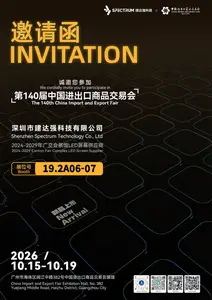
In 2024, Spectrum Display became an official LED display supplier for the Canton Fair exhibition complex for the 2024–2029 period.
Through innovative solutions including:
naked-eye 3D displays
kinetic LED systems
Spectrum Display supports one of the world’s largest international trade exhibition platforms.
The project requirements of national-level venues demand:
reliability
innovation
engineering excellence
Full Lifecycle Project Support
Project delivery is not the end.
It is the beginning of long-term operation.
Spectrum Display provides support across:
project planning
solution design
manufacturing
installation
commissioning
maintenance
For indoor applications, front maintenance designs reduce service complexity.
For outdoor applications, modular maintenance structures improve long-term operation efficiency.
The goal is simple:
Turn complex engineering challenges into reliable project solutions.
FAQ
Q1: What is the difference between a customized Kinetic LED project and a standard LED product?
A standard LED product follows fixed dimensions and installation methods.
A customized Kinetic LED solution starts from architectural requirements and redesigns:
mechanical structures
motion logic
control systems
to solve unique project challenges.
Q2: How long does a customized Kinetic LED project take?
The timeline depends on project complexity.
It usually includes:
requirement analysis
mechanical design
prototype validation
manufacturing
installation
A complete project may require several weeks to several months.
Q3: How does Spectrum Display ensure safety?
Spectrum Display integrates multiple safety systems:
intelligent anti-pinch protection
infrared sensors
motion feedback
emergency stop systems
to protect both people and equipment.
Q4: How are maintenance challenges solved for large installations?
Different projects require different maintenance strategies.
SPKI-160 supports front maintenance for space-limited applications.
SPKI-250 provides engineering solutions for large fixed installations.
Q5: Can Kinetic LED systems integrate with existing control systems?
Yes.
Spectrum Display solutions support professional control protocols including:
DMX512
Art-Net
sACN
allowing integration with:
lighting systems
architectural control platforms
interactive environments
Q6: When does a project need a customized Kinetic LED solution?
When projects involve:
non-standard spaces
special movement requirements
architectural integration
unique visual experiences
standard products may not be enough.
A customized solution provides an engineering-based answer.
Conclusion: Not Selling Equipment, But Solving Complex Spatial Challenges
Every Kinetic LED project begins with a limitation.
Not:
“We need a screen.”
But:
“Traditional solutions cannot work here.”
The core capabilities required include:
1. Customized Mechanical Design
Making displays adapt to architecture.
2. Precision Motion Control
Turning digital content into physical experiences.
3. System-Level Safety Engineering
Ensuring reliable and secure operation.
4. Manufacturing and Integration Capability
Transforming concepts into real products.
5. Full Lifecycle Support
Supporting projects beyond installation.
A true Kinetic LED manufacturer does not simply deliver equipment.
It delivers the ability to transform architectural limitations into visual possibilities.
Spectrum Display provides end-to-end custom mechanical LED solutions, from concept development and engineering design to manufacturing and project delivery.
Because the future of LED is not only about displaying images.
It is about transforming spaces.