Installed and Forgotten? The Three Most Overlooked Stages of a Custom LED Project
One-Sentence Definition: Installation does not mean the project is finished. The true delivery of a custom LED project happens after commissioning ensures the system operates precisely, training enables the client to operate it independently, and after-sales support keeps the equipment stable and reliable three, five, or even more years into operation.
1. Installation Is Only the Beginning
For many people, the delivery process of an LED project looks like this:
Equipment arrives → Installation → Power on → Screen lights up → Project completed
But for a custom mechanical LED project, this logic is incomplete.
Installation only completes the physical integration of the system. The screen has been mounted, the cables have been connected, and power has been supplied—but that does not mean the system can operate reliably. It does not mean the client can operate it independently, nor does it guarantee that the equipment will remain accurate and stable three or five years later.
True project delivery happens after installation.
In real-world operation, many problems do not appear during installation. Instead, they gradually emerge after three months, six months, or a year of use: motion accuracy begins to decline, synchronization starts to drift, mechanical noise increases, the content team cannot independently create new content, or equipment fails with no qualified technical support available.
All of these problems occur after installation, yet they determine whether a project is merely “usable” or truly “works well over the long term.”
At Spectrum Display, the delivery process for custom LED projects can be summarized in three key stages:
Commissioning. Training. After-sales support.
These are the engineering stages that truly begin once installation is complete.
2. Commissioning: Bringing the System Truly to Life
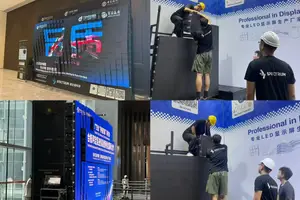
After installation, the equipment may be ready to power on.
But there is still a major difference between “powered on” and “fully operational.”
That difference is commissioning.
Motion Calibration: Making Every Unit Reach the Correct Position
A mechanical LED display consists of a large number of independently controlled motion units. During installation, slight positional deviations may occur between individual units.
The first step in commissioning is therefore motion calibration—bringing every motion unit back to a unified reference coordinate.
Spectrum Display’s control system uses encoders to record and correct physical coordinates in real time. After automatic homing during system startup, all motion units begin from the same reference position.
Once calibration is complete, the displacement accuracy of every unit is verified to ensure that it remains within the designed tolerance.
Content-Motion Synchronization: Making Visuals and Movement Work as One
The core value of a mechanical LED display is its ability to turn changes in digital content into physical movement.
If the visuals and movement are not synchronized, viewers immediately notice the disconnect.
During commissioning, the engineering team verifies whether information from the video content—including brightness, color, rhythm, and other parameters—can be translated accurately and in real time into displacement commands for individual motion units.
The team also verifies whether the delay between content playback and physical movement remains at the millisecond level.
The goal is to make the visual content and mechanical movement function as one integrated experience.
On-Site Environment Adaptation: Making the System Work Under Real Conditions
Laboratory conditions and real project environments are rarely identical.
At the actual site, power voltage may fluctuate, signal transmission distances may be longer, and ambient temperatures may be higher.
During commissioning, system parameters therefore need to be optimized according to actual site conditions, including:
- Power distribution
- Signal repeaters and transmission
- Heat dissipation strategies
This ensures that the system is not only functional under ideal factory conditions, but stable in its real operating environment.
Safety Testing: Making the Machine Know When to Give Way
All SPKI indoor models come standard with 3 kg intelligent anti-pinch protection.
During commissioning, the engineering team verifies whether the anti-pinch system can respond within milliseconds during high-speed operation, protecting both people and equipment.
Emergency-stop and reset functions must also be tested to confirm that they operate reliably.
Commissioning deliverables: motion calibration report, synchronization commissioning report, safety test report, and a complete system verified for stable operation.
3. Training: Enabling the Client to Operate Independently
Once commissioning is complete, the system can operate properly.
But “the system can operate” does not mean “the client can operate it independently.”
If the client cannot operate the equipment, create new content, or handle basic troubleshooting, every small adjustment will require supplier support.
Over time, this creates unnecessary operating costs and long-term dependence on the supplier.
Operational Training: Daily Use Without Depending on Engineers
Spectrum Display provides comprehensive training for the client’s operating team, including:
- System startup and shutdown procedures
- Preset mode switching
- Mobile APP control
- Playlist and program management
After training, ordinary operating personnel can independently handle routine system operation without requiring an engineer for every adjustment.
Content Creation Training: Giving Brands Content Independence
Content for a mechanical LED display is not simply a conventional video file—it also contains motion sequences.
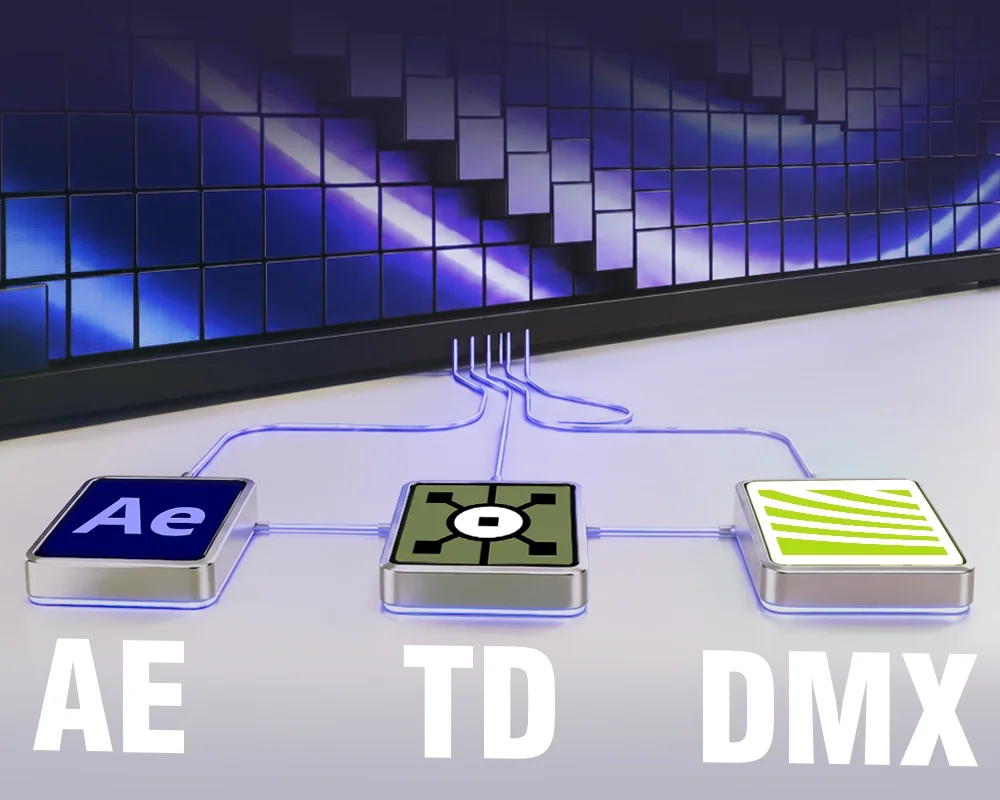
Spectrum Display provides a complete content creation toolchain, including:
- MotionMatrix4 AE plugin
- Mshow4
- TouchDesigner plugin
- UE5 plugin
Training covers how to use the AE plugin to convert video content into motion instructions, how to create 3D presentation content with Mshow4, and how to switch between preset modes through the mobile APP.
When the client’s own team can independently create and update new content, the project has achieved true operational independence.
Maintenance Training: Solving Simple Problems Without Waiting for an Engineer
Training also includes basic maintenance knowledge, such as:
- Identifying common alarms
- Performing basic reset procedures
- Replacing an individual LED module
These capabilities can significantly reduce the time and cost associated with routine maintenance.
Training deliverables: operation manual, content creation guide, training completion confirmation, and independent operational capability.
4. After-Sales Support: Delivery Is Not the End, but the Beginning of a Long-Term Partnership
The lifecycle of a custom LED project is usually measured in years.
Installation and commissioning account for only a small portion of that lifecycle. Long-term operation and maintenance are where a supplier’s real capabilities are tested.
Spare Parts Supply: Preventing “Waiting for Parts” From Becoming Downtime
For international projects, spare-parts availability directly affects system downtime.
Through its Huizhou manufacturing base and global logistics network, Spectrum Display supports the rapid delivery of critical spare parts to project sites around the world.
The goal is to prevent a minor component failure from turning into prolonged system downtime.
Remote Diagnostics: Not Every Software Issue Requires an Engineer to Fly to the Site
Many system issues do not require on-site repair.
Through remote diagnostics and technical guidance, most software and parameter-related problems can be resolved online.
For international projects, this can significantly reduce both maintenance time and service costs.
On-Site Engineering Support: When Remote Support Is Not Enough
When an issue cannot be resolved remotely, Spectrum Display has the capability to dispatch engineers to project sites worldwide.
Whether it is a product launch in North America, a landmark installation in the Middle East, or a commercial space in Southeast Asia, the engineering team can provide on-site support where the client needs it.
System Updates: Keeping the Equipment Aligned With Changing Content Needs
As operational requirements evolve, control software and content management systems also need to be updated.
Through software updates, content template libraries, and system optimization, Spectrum Display helps ensure that the equipment continues to perform effectively throughout its long operating lifecycle.
The Long-Term Value of Maintenance Architecture
The difference between front service and rear service becomes particularly important during the after-sales stage.
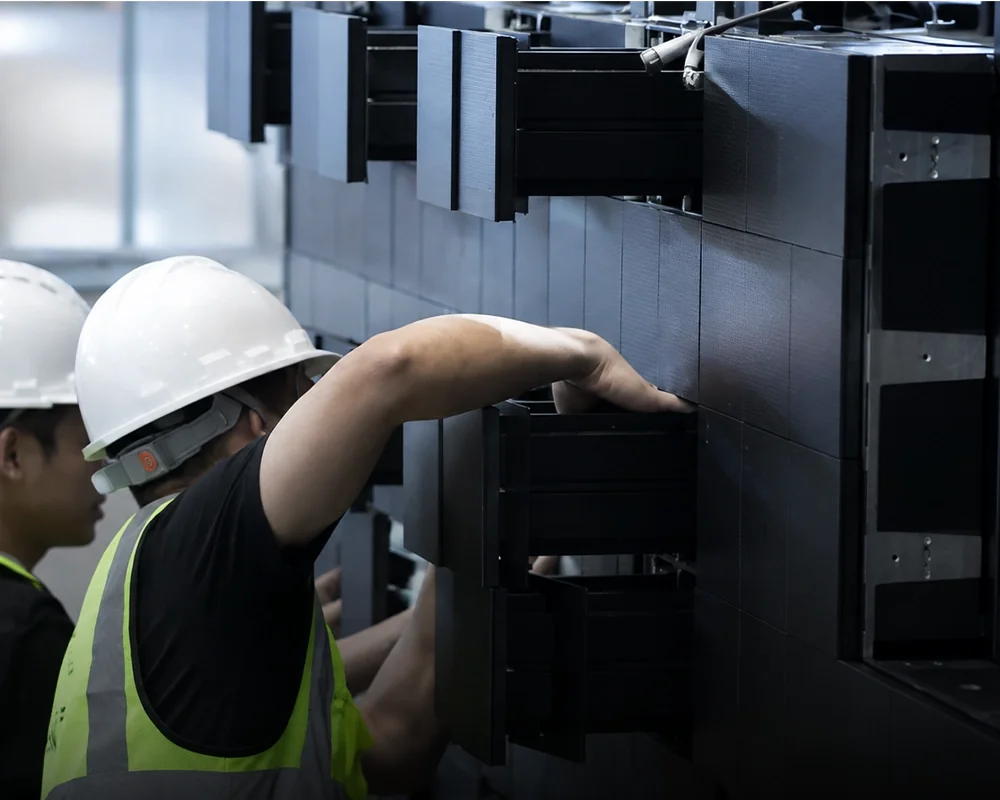
The SPKI-160’s front-service design allows technicians to replace modules without dismantling the ceiling or accessing the rear of the display. Maintenance can be performed directly from the front, reducing a task that might otherwise take half a day to as little as three minutes.
The SPKI-250’s rear-service architecture, on the other hand, allows high-mounted fixed installations to be serviced from a dedicated rear maintenance area, eliminating the need for aerial work platforms during routine maintenance.
After-sales deliverables: global spare-parts support, remote diagnostic capabilities, on-site engineering support, continuous system updates, and long-term stable system operation.
5. Why These Three Stages Determine the Long-Term Value of a Project
Installation, commissioning, training, and after-sales support each answer a different question.
| Stage | Core Question | Impact on the Project |
|---|---|---|
| Installation | Can the equipment be physically installed? | Determines whether the project can start |
| Commissioning | Can the system operate accurately and reliably? | Determines whether the project can function properly |
| Training | Can the client operate it independently? | Determines long-term operating costs |
| After-Sales Support | Will it still operate reliably three years later? | Determines full lifecycle value |
Installation completes the physical connection.
Commissioning determines whether the system can run properly.
Training determines whether the client can run it independently.
After-sales support determines whether it can still run reliably years later.
The value of a custom LED project is not defined by the moment installation is completed. It is defined by whether the system can still operate reliably and support continuous content creation after three years of real-world operation.
6. Frequently Asked Questions (FAQ)
Q1: How long does commissioning usually take after installation?
A: It depends on the complexity of the project. A small project may require one to two days, while a large project may require several days or even several weeks.
Commissioning typically includes motion calibration, content-motion synchronization, on-site environment adaptation, and safety testing.
Q2: What does client training usually include?
A: Training generally covers three areas:
- Operational training: startup and shutdown, preset mode switching, and APP control
- Content creation training: AE plugin, Mshow4, TouchDesigner, and UE5 plugins
- Maintenance training: alarm identification, reset procedures, and module replacement
Q3: What if the client does not have an in-house content team?
A: Spectrum Display can provide content creation support or help the client establish its own content creation capabilities.
For clients with an existing content team, training enables the team to independently develop new content. For clients without an in-house content team, content templates and remote content creation support can be provided.
Q4: What does after-sales support include?
A: After-sales support includes global spare-parts support, remote diagnostics, on-site engineering support, continuous system updates, and maintenance architecture support.
For outdoor projects, rear-service architecture allows technicians to service internal components from a safe maintenance area.
For indoor projects, front-service architecture eliminates the need to access the rear of the display.
Q5: How can a project owner evaluate a supplier’s after-sales capabilities?
A: Focus on five areas:
- Does the supplier have a global spare-parts support network?
- Does it provide remote diagnostics?
- Can it dispatch engineers to the project site when necessary?
- Does it provide ongoing software and system updates?
- Is the maintenance architecture—front service or rear service—properly designed for the project?
Q6: Why does “installation complete” not mean “project complete”?
A: Because installation only completes the physical integration of the system.
True delivery happens after commissioning makes the system operate accurately, training enables the client to operate it independently, and after-sales support helps the equipment remain stable and reliable three, five, or more years into operation.
These three stages determine the project’s long-term value.
▶Video · YouTubeDon't Sweat the Content ProductionWatch on YouTube →7. Conclusion
Installation does not mean the project is finished.
Key Takeaways
- Commissioning: Bring the system truly to life through motion calibration, content synchronization, environment adaptation, and safety testing.
- Training: Enable the client to operate independently through operational training, content creation training, and maintenance training.
- After-Sales Support: Delivery is not the end. Spare-parts supply, remote diagnostics, on-site support, system updates, and appropriate maintenance architecture all contribute to long-term reliability.
- Long-Term Value: Installation determines whether the project can start; commissioning determines whether it can run properly; training determines whether the client can run it independently; after-sales support determines whether it can still run reliably three years later.
- True Delivery: A project is truly delivered only when the client can operate the system independently, create and update content independently, and rely on the equipment for stable long-term operation.
Recommendations for Project Owners
- When selecting a supplier, do not evaluate only its installation capability. Evaluate its complete capabilities in commissioning, training, and after-sales engineering.
- Ask the supplier to provide a commissioning report, training plan, and after-sales support plan.
- Reserve sufficient time and budget for content creation. The long-term value of a custom mechanical LED installation ultimately depends on what content continues to run on it.
- Do not evaluate only the product. Evaluate the supplier’s long-term support capability: who will still be there to support the project three years after installation?
- To learn more about the complete project delivery process or discuss a customized solution, contact the Spectrum Display engineering team through the official website.