Is Your LED Supplier Just Selling Screens—or Delivering Engineering? What Does a One-Stop LED Engineering Partner Actually Do?
One-Sentence Definition: A true one-stop LED engineering partner does not consider the job finished once the screen is sold. From requirements analysis, site surveys, solution design and custom manufacturing to installation, commissioning and long-term maintenance, an engineering partner takes responsibility for the final project outcome. A screen supplier asks, “Has the equipment been shipped?” An engineering partner asks, “Can the system actually work? Will it work well? And will it still work reliably ten years from now?”
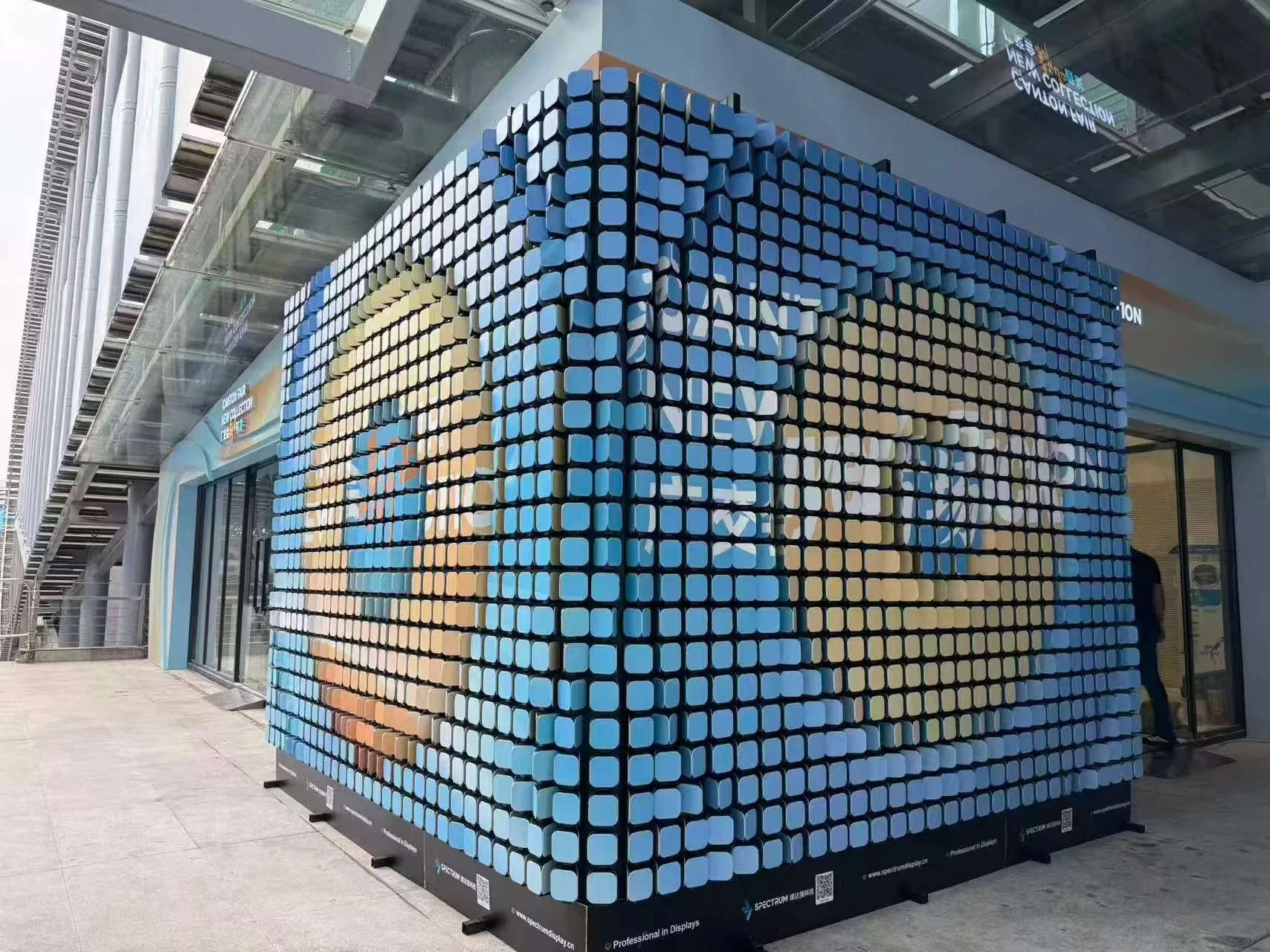
1. A Real-World Scenario: The Equipment Has Arrived, but the Problems Are Just Beginning
Imagine a complex LED project where the equipment has just arrived on site.
For the supplier, shipping the equipment may mean the job is complete.
But for the project owner, the real problems may only be beginning:
- Can the wall withstand the dynamic loads generated by mechanical movement?
- If there is only 350 mm of ceiling space, can the display actually fit?
- If something fails, how will technicians access the system for maintenance?
- Does the content team need programming skills to create kinetic content?
- Is the available power capacity sufficient?
- Will signal transmission remain stable?
These questions do not appear on a standard quotation or shipping document.
Yet they determine whether the project is simply usable—or too expensive and difficult to operate over the long term.
A screen-only supplier solves the question of “what to buy.”
A one-stop LED engineering partner solves the question of “how to make it work in the real world.”
In industry practice, more than half of the problems encountered in failed retractable mechanical LED projects are rooted not in the equipment itself, but in mismatched installation conditions.
Many project teams discover only after the equipment arrives that the wall cannot support the required load, there is insufficient maintenance space, or the available electrical capacity is inadequate.
By the time the design has to be changed on site, the cost of solving the problem may already have multiplied several times.
That is the fundamental difference between selling LED screens and delivering LED engineering.
2. Where Does the Responsibility of a Screen-Only Supplier End?
The business boundary of a screen-only supplier is relatively clear:
Manufacture the screen, ship it, and collect payment.
Its core capabilities are concentrated on the manufacturing side, including LED module production, cabinet assembly and display control system integration.
Its quotation tells you:
How much does the display cost per square meter? How long is the lead time? How many years of warranty are included?
But when a project involves any of the following conditions, a product-only supplier may simply respond:
“We cannot do that.”
Non-Standard Spaces
Irregular walls, restricted installation depth, ceiling-mounted installations
Special Motion Requirements
Extension and retraction, flipping, folding, lifting
Architectural Integration
Flush façade integration, unobstructed views, visual consistency with the architecture
Complex System Integration
Multi-system synchronization, long-distance signal transmission, distributed power design
Long-Term Operation and Maintenance
High-elevation maintenance, spare-parts supply, remote diagnostics
“Cannot do it” is not necessarily a question of whether the supplier is good or bad.
It is a question of role.
A screen-only supplier acts as a product provider. Its responsibility may end when the equipment is shipped.
A one-stop LED engineering partner acts as a project delivery partner.
Its responsibility extends to whether the completed system can continue operating reliably for the next ten years.
3. What Does a One-Stop LED Engineering Partner Actually Handle?
A true one-stop LED engineering partner needs to cover the complete project lifecycle:
| Stage | Core Work | Deliverable |
|---|---|---|
| 1. Requirements Analysis | Understand the experience the client wants, not just dimensions and specifications | Requirements analysis report |
| 2. Site Survey | On-site measurement, structural assessment and identification of constraints | Site survey report |
| 3. Solution Design | Mechanical structure design, motion control design, appearance and material design | Engineering drawings and 3D design |
| 4. Custom Manufacturing | Custom module production, mechanical tooling and complete system assembly | Customized equipment |
| 5. Factory Testing | Motion-cycle testing, protocol integration testing and fatigue testing | Test report |
| 6. Installation & Commissioning | Installation guidance, motion calibration and content-motion synchronization | Fully operational system |
| 7. Training & Handover | Content creation, system operation and maintenance training | Independent operating capability |
| 8. Long-Term Maintenance | Spare-parts supply, remote diagnostics, on-site support and system updates | Continuous and stable operation |
Each stage is part of the final project outcome.
4. Eight Stages: The Complete Scope of a One-Stop Engineering Partner
Stage 1: Requirements Analysis — Understand the “Experience,” Not Just the Dimensions
When a client says:
“I want a wall that moves.”
An engineering partner does not immediately ask:
“What size?”
Instead, the first questions are more likely to be:
“What is this space used for?”
“What do you want visitors to feel when they experience it?”
These questions may sound abstract, but the answers eventually translate into specific motion parameters, structural decisions and material choices.
Understanding the creative intent is the first step in building trust between the client and the engineering team.
Stage 2: Site Survey — Identify What the Building Will Not Allow Before It Becomes a Problem
Buildings do not always cooperate with creative concepts.
Typical constraints include:
- Limited installation depth
- Non-standard dimensions
- Structural limitations
- Insufficient power capacity
- Inadequate signal infrastructure
A one-stop engineering partner identifies these constraints at the beginning of the project and puts every limitation on the table.
The earlier a constraint is discovered, the earlier an engineering solution can be developed.
Stage 3: Solution Design — Start from the Project, Not from a Product Model
Engineering design is not simply about selecting a standard product from a catalog.
A true engineering partner starts with the architectural drawings and redefines the display around the actual project requirements—including the mechanical structure, motion logic and control system.
In one custom project, the engineering team developed 180 × 240 mm LED modules specifically for each 900 mm-wide folding screen section, achieving an overall resolution of 6750 × 1560 pixels.
Every pixel was positioned exactly where the project required it to be.
Stage 4: Custom Manufacturing — Custom LED Modules and Mechanical Structures
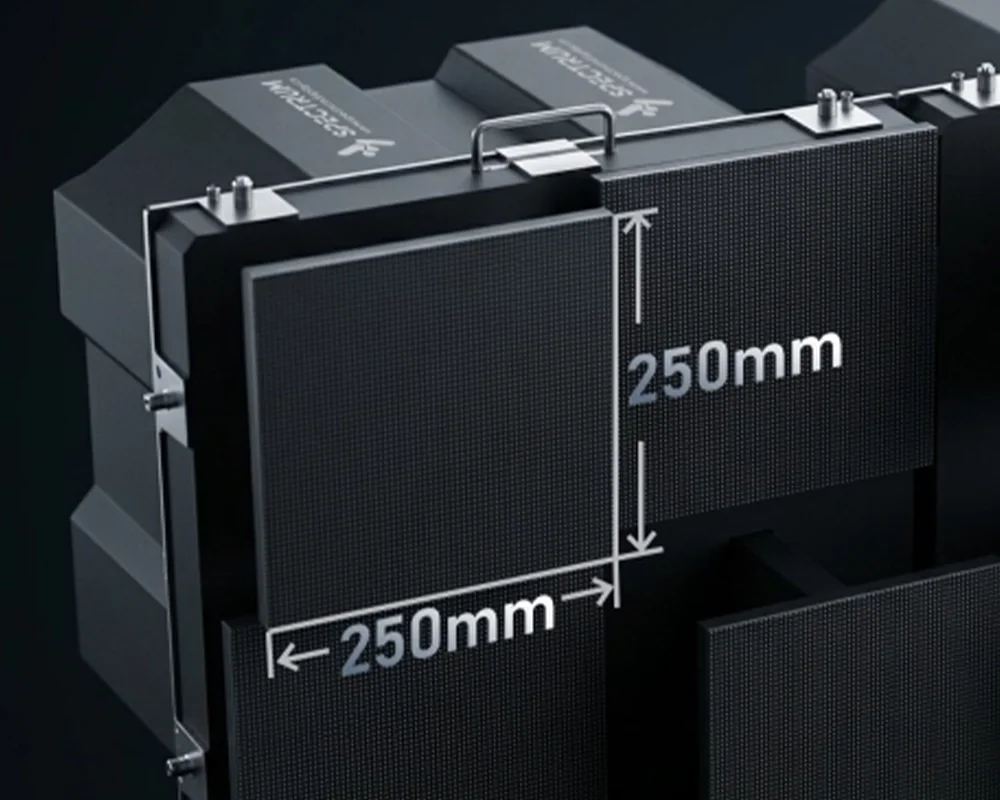
Spectrum Display’s R&D and manufacturing base in Huizhou, located in the heart of the Greater Bay Area’s advanced manufacturing ecosystem, supports a closed-loop production workflow.
The process covers everything from the in-house design and prototyping of core PCB boards and custom tooling for high-precision mechanical structures to automated LED module SMT production and complete system assembly.
For non-standard LED projects, this integrated manufacturing capability allows the LED display, mechanical structure, electronics and control system to be developed as one complete engineered system.
Stage 5: Factory Testing — Rehearse the Site Before Going to Site
Before formal delivery, each customized mechanical display wall is assembled and pre-commissioned at the factory.
Each motion unit undergoes thousands of movement cycles to verify that a 0.15-second switching speed remains stable and reliable.
Every completed matrix wall also undergoes integrated testing with protocols such as DMX512 and ArtNet.
Core motion components must pass continuous high-speed fatigue testing before leaving the factory.
Spectrum Display’s equipment has accumulated more than 18,000 hours of high-intensity, failure-free operational testing, while the complete system is designed for a service life exceeding 50,000 hours.
The objective is simple:
Find problems in the factory—not after the equipment arrives on site.
Stage 6: Installation & Commissioning — The Final 100 Meters
Completing the physical installation is only the first step.
The real challenge is making sure the physical movement of the display precisely matches the visual content.
On site, the engineering team completes:
- Motion calibration
- Display and motion synchronization
- Control system commissioning
- Parameter optimization based on actual site conditions
For a mechanical LED system, “the screen turns on” does not mean “the project is complete.”
The display, mechanical system, control system and content must work together as one integrated system.
Stage 7: Training & Handover — The Project Is Not Truly Delivered Until the Client Can Operate It Independently
Spectrum Display provides comprehensive training for the client’s content and operations teams.
This includes:
- How to use Mshow4 to create 3D presentation content
- How to use the After Effects plugin to create kinetic motion content
- How to control system power and playback progress through the mobile app
- How to perform routine operation and maintenance
Only when the client can independently operate the system and create or update content is the project considered truly handed over.
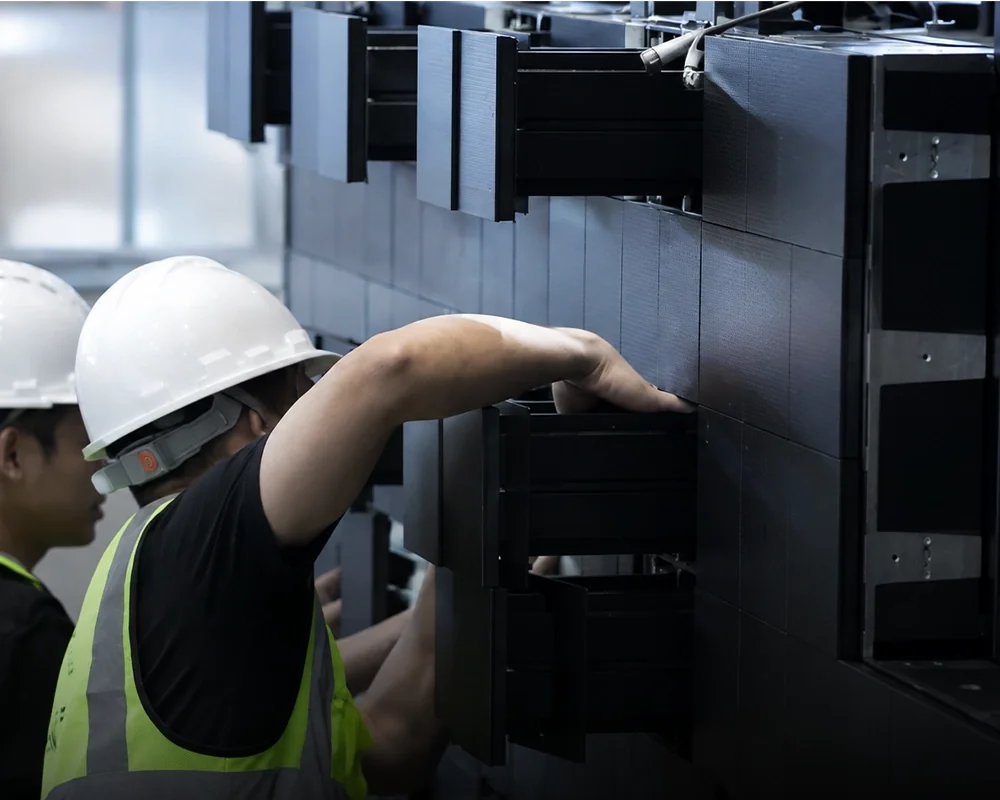
Stage 8: Long-Term Maintenance — Delivery Is Not the Finish Line
An engineering partnership continues after commissioning.
Spectrum Display provides long-term support through:
- Global spare-parts support
- Remote diagnostics
- On-site engineering assistance
- Continuous system updates
For outdoor projects, rear-maintenance architecture allows technicians to service internal components from a safe maintenance area.
For indoor projects, front-maintenance design eliminates the need for technicians to access the rear of the display.
The goal is not simply to make the system work on opening day.
It is to keep the system serviceable and operational throughout its entire lifecycle.
5. Case Study: Singapore Bar Ceiling Project — From “Impossible to Install” to a “Breathing Ceiling”
A premium bar in Singapore wanted to install a kinetic LED display on the ceiling.
There were two major constraints:
The available ceiling depth was extremely limited, and there was no room for a rear maintenance corridor.
Under a screen-only approach, the answer might simply have been:
“It cannot be installed.”
But Spectrum Display approached the requirement as an engineering problem.
Starting with the site conditions, the engineering team determined that the project required an ultra-slim 330 mm system depth combined with front maintenance.
That led to the selection of the SPKI-160 retractable mechanical LED display.
Ultimately, a 1440 × 3840 mm kinetic LED matrix was integrated into the ceiling, transforming an otherwise unused architectural surface into a “breathing ceiling.”
When the music begins, individual LED units extend, retract, rise and fall with the rhythm.
Guests naturally look up, take photos and capture videos of the moving ceiling.
This is the value of an engineering partner:
Not simply telling the client what cannot be done, but finding out how it can be done.
6. Frequently Asked Questions (FAQ)
Q1: What is the difference between a one-stop LED engineering partner and a conventional LED supplier?
A: A conventional supplier primarily acts as a product provider, with its responsibility centered on manufacturing and shipping the equipment.
A one-stop LED engineering partner acts as a project delivery partner. It supports the project from requirements analysis, site survey and solution design through custom manufacturing, installation, commissioning and long-term maintenance—and takes responsibility for the overall project outcome.
Q2: What does a one-stop engineering partner do during the early stages of a project?
A: Early-stage work includes requirements analysis, site surveys and solution design.
Requirements analysis identifies the experience the client wants to create. The site survey verifies dimensions, structural conditions and project constraints. Solution design translates these requirements into mechanical structures, motion-control systems, materials and engineering drawings.
The purpose of this work is to ensure, before manufacturing begins, that the system can be installed and maintained properly.
Q3: Why do complex LED projects need an engineering partner?
A: Complex LED projects often involve non-standard spaces, special motion requirements, architectural integration and multiple interconnected systems.
A product-only supplier may not be able to answer questions such as:
“Can the wall support the dynamic load?”
“How will technicians access the system if something fails?”
“Can the content team operate it independently?”
These are the less visible engineering risks that an end-to-end project delivery approach is designed to solve.
Q4: What services does Spectrum Display provide as an engineering partner?
A: Spectrum Display provides end-to-end engineering services covering requirements analysis, system design, product development, equipment manufacturing and professional consulting.
Specific services include:
- Site surveys
- Custom mechanical structure design
- Motion control system development
- Content creation tools
- Installation and commissioning support
- Content team training
- Long-term operation and maintenance support
Q5: How can I tell whether an LED supplier is truly an engineering partner?
A: Evaluate five areas:
- Does the company have proven experience with complex projects?
- Does it provide site surveys and custom engineering?
- Does it have proprietary control systems and content tools?
- Does it provide installation, commissioning and training?
- Does it provide long-term operation and maintenance support?
If a supplier can provide only a product specification sheet and quotation, its role is primarily that of a product provider rather than a full engineering partner.
Q6: How does a one-stop LED engineering partner charge for a project?
A: Pricing generally consists of two components: equipment costs and engineering service costs.
Equipment costs depend on display specifications and quantity.
Engineering service costs depend on project complexity, site conditions and the scope of services required.
For this reason, complex LED projects typically require a project-specific solution and quotation.
▶Video · YouTubeWhere Creative Vision Meets Engineering ExcellenceWatch on YouTube →7. Conclusion
How large is the difference between selling an LED screen and delivering a complete engineered LED project?
The fundamental difference is responsibility:
One is responsible for the equipment. The other is responsible for the project.
| Comparison | Screen-Only Supplier | One-Stop LED Engineering Partner |
|---|---|---|
| Role | Product provider | Project delivery partner |
| Responsibility | Primarily through equipment shipment | Through project delivery and long-term operation |
| Core Capabilities | Manufacturing efficiency, cost control | Mechanical engineering, motion control, content ecosystem, installation, maintenance and project delivery |
| When They Get Involved | After receiving an RFQ | During the project concept stage |
| Delivery Model | Ship, install and power on | Design → engineering → manufacturing → installation → commissioning → operation & maintenance |
| Long-Term Value | Equipment itself | Equipment + content + service + sustainable operation |
Key Takeaways
1. The boundary of a screen-only supplier: It solves “what to buy”, but not necessarily “how to make it work.”
2. The complete scope of a one-stop engineering partner: Requirements analysis → site survey → solution design → custom manufacturing → factory testing → installation & commissioning → training & handover → long-term maintenance.
3. The value of an engineering partner: The goal is not simply to tell the client “it cannot be done,” but to determine “how it can be done.”
4. Real-project proof: In the Singapore bar ceiling project, an apparently impossible installation became a “breathing ceiling” through the combination of the ultra-slim SPKI-160 mechanical LED system and front-maintenance engineering.
5. How to evaluate a potential engineering partner: Look for complex project experience, site-survey capability, custom engineering, proprietary control systems and content tools, installation and commissioning support, training, and long-term maintenance capabilities.
Recommendations for Project Owners
- Involve the engineering partner during the project planning stage, rather than waiting until the equipment has already been manufactured to determine how it will be installed.
- Do not evaluate suppliers based only on quotations. Ask whether they can answer three practical questions: Can it be installed? Can it be maintained? Can it remain reliable over the long term?
- Choosing an engineering partner is a form of long-term insurance for the project. It affects how the system performs three, five and even ten years after installation.
- For more information about engineering services or to discuss a customized solution, contact the Spectrum Display team through the official website.