Front vs. Rear Maintenance for Kinetic LED Displays: What Happens If You Choose the Wrong One?
One-Sentence Definition: Front maintenance and rear maintenance are two different service approaches for kinetic LED displays. Front maintenance allows all servicing to be completed from the display side without requiring rear access, while rear maintenance requires a dedicated service corridor behind the screen. Choosing the wrong maintenance method can either waste valuable installation space or turn every future service operation into a complicated and costly “high-altitude exercise.”
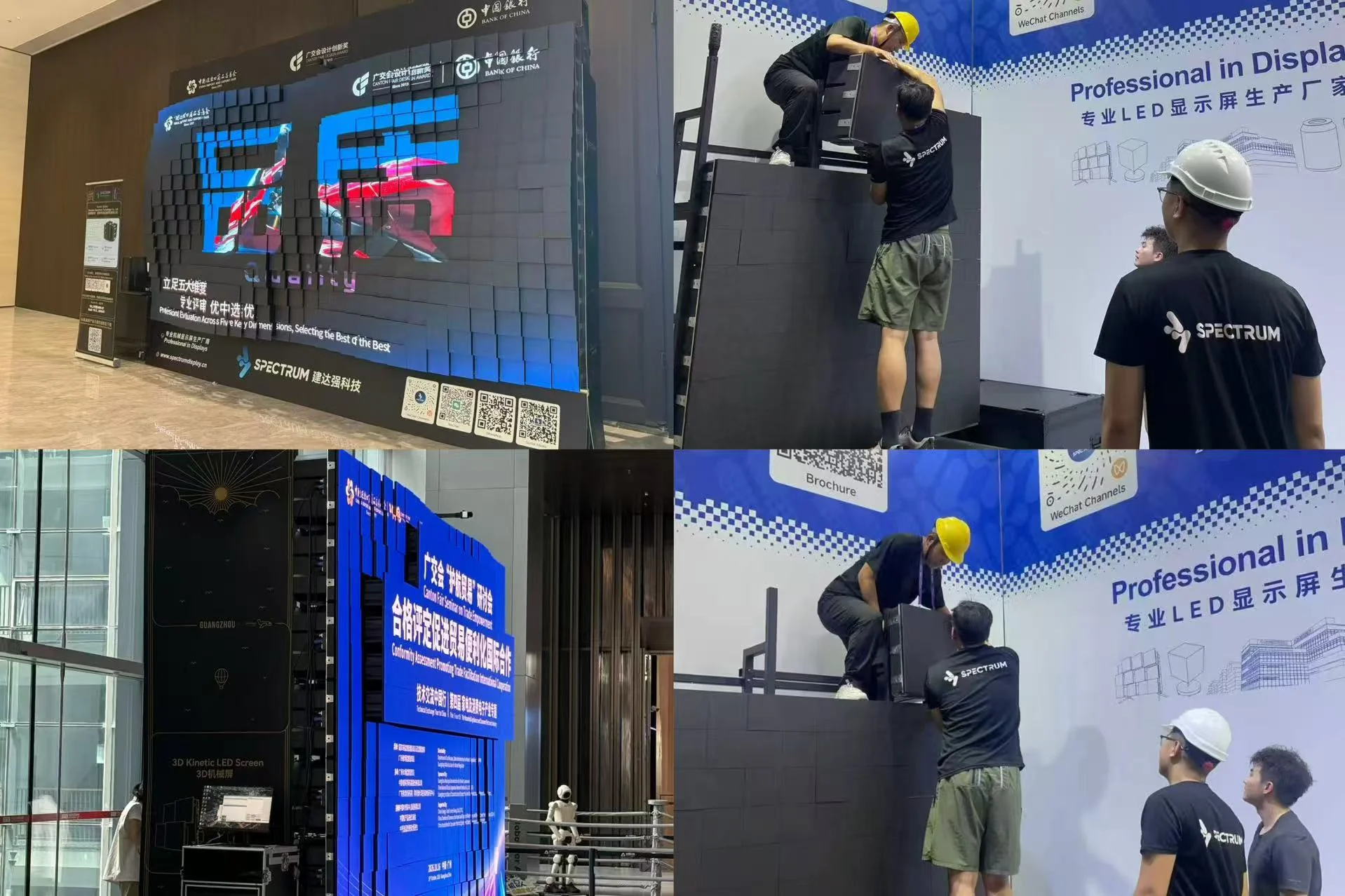
1. An Underestimated Decision: Maintenance Method
During the planning stage of a kinetic LED display project, most teams focus on questions such as:
How large is the display? How long is the motion stroke? How impressive will the visual effect be?
But one decision may look like a minor detail on the engineering drawings while continuing to affect the project for the next five or ten years:
Should the system use front maintenance or rear maintenance?
The impact of this decision is much greater than many project teams expect.
It determines:
- Whether the display can be installed directly against a wall
- How much space must be reserved behind the display
- The labor and time required for every future service operation
- The safety and equipment costs associated with maintaining high-elevation installations
More importantly, the maintenance method cannot simply be changed later.
Once the display has been installed, the wall has been closed, and the supporting structure has been finalized, changing the maintenance architecture may cost ten times more than planning it correctly from the beginning.
For this reason, maintenance is not something to consider only during installation.
It is an engineering decision that must be made during the project planning stage.
2. Front Maintenance: Service Everything from the Display Side
What Is Front Maintenance?
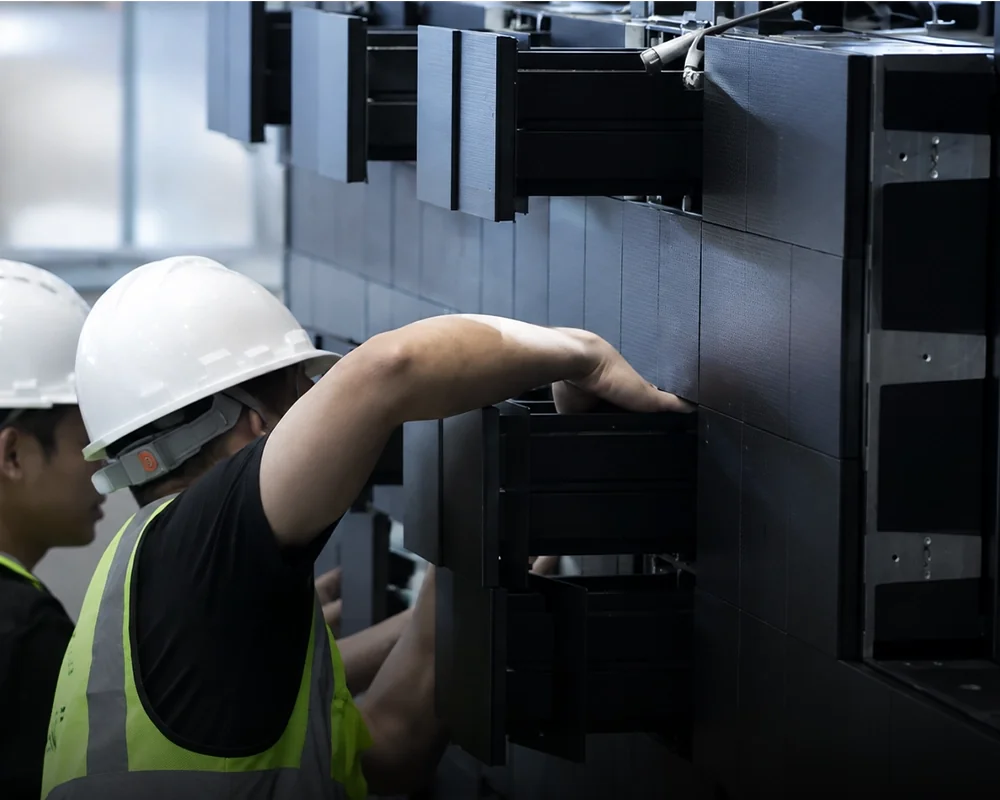
Front maintenance means that all major service operations — including LED module replacement, power supply replacement, receiving card replacement, and mechanical system servicing — can be completed from the front of the display.
There is no need to access the rear of the screen, and no dedicated rear maintenance corridor is required.
Key Advantages of Front Maintenance
No rear service space required.
A front-serviceable kinetic LED display can be installed directly against a wall or even integrated into the wall structure.
For projects with severely limited installation depth, this may be the only practical solution.
Greater installation flexibility.
Because no rear service corridor is required, the display can be installed in locations such as:
- Ceilings
- Retail windows
- Wall-integrated installations
- Column wraps
- Other space-constrained architectural areas
Safer and more convenient servicing.
Technicians can access the system from the display side without entering the space behind the screen.
Depending on the installation environment, this can eliminate the need for complex rear-access platforms or other dedicated service infrastructure.
Spectrum Display Front-Maintenance Models
| Model | System Depth | Finished Installation Depth | Maintenance Method | Typical Applications |
|---|---|---|---|---|
| SPKI-128 | 380 mm | 400 mm | Front maintenance | Premium retail windows, high-end stores, science & technology museums |
| SPKI-160 | 330 mm | 350 mm | Front maintenance | Ceiling installations, column wraps, corridors, space-constrained applications |
Typical SPKI-160 Project: Singapore Bar Ceiling Installation
A premium bar in Singapore installed an SPKI-160 kinetic LED display in the ceiling.
The display measures 1440 × 3840 mm.
The project had two major spatial constraints: limited ceiling depth and no room for a rear maintenance corridor.
The SPKI-160’s 330 mm ultra-slim body combined with its front-maintenance architecture allowed the display to fit into the restricted ceiling cavity.
Maintenance can be performed from the display side without requiring technicians to enter the ceiling cavity behind the system.
For this type of project, front maintenance is not merely a convenience — it is what makes the installation possible.
3. Rear Maintenance: Leave a Service Path Behind the Screen
What Is Rear Maintenance?
Rear maintenance means that servicing is performed from behind the display.
A dedicated maintenance corridor must therefore be reserved behind the screen.
Technicians enter this service area to access components such as motion mechanisms, power supplies, control cards, and other internal systems.
Key Advantages of Rear Maintenance
More working space for technicians.
A rear maintenance corridor provides sufficient operating space for replacing larger components and performing more complex servicing tasks.
Well suited to high-elevation fixed installations.
For displays installed high above the ground in shopping mall atriums, airports, outdoor landmarks, and similar environments, a dedicated rear service corridor allows technicians to perform maintenance in a safer and more accessible working environment.
This can reduce dependence on aerial work platforms or other external high-elevation access equipment.
Individual units can be serviced more independently.
In large fixed installations, a rear-maintenance architecture can allow technicians to access individual motion units from behind without dismantling large sections of the display.
Spectrum Display Rear-Maintenance Models
| Model | System Depth | Finished Installation Depth | Maintenance Method | Typical Applications |
|---|---|---|---|---|
| SPKI-250 | 330 mm | 330 mm + service corridor | Rear maintenance | Large fixed installations, exhibition rental, high-elevation projects |
| SPKO-320 | 650 mm | 750 mm | Rear maintenance | Outdoor advertising, commercial streets, shopping centers |
| SPKO-500 | 1430 mm | 1650 mm | Rear maintenance | Urban landmarks, building façades, large outdoor projects |
Typical SPKI-250 Application: High-Elevation Fixed Installation
For kinetic LED displays installed more than ten or even several dozen meters above the ground in shopping mall atriums, airports, and other high-elevation environments, the SPKI-250 uses a rear-maintenance architecture.
During the initial planning stage, a standard internal maintenance corridor of approximately 600–800 mm can be reserved behind the display.
Technicians can then enter the protected rear service area to perform maintenance rather than relying on external aerial access equipment.
For long-term fixed installations, this can significantly improve maintenance accessibility and safety.
4. The Cost of Choosing Wrong: How Difficult Can Future Maintenance Become?
Choosing the wrong maintenance architecture can create problems that are difficult — and sometimes impossible — to solve after installation.
Scenario 1: Limited Space, but Rear Maintenance Was Selected
Result: The display may not fit at all.
In applications such as retail windows, column wraps, corridors, and ceiling installations, a rear-maintenance system may require more than 600 mm of additional service space behind the display.
In many commercial environments, that space simply does not exist.
Real project example: Singapore bar ceiling installation.
The ceiling cavity had limited depth and could not accommodate a rear maintenance corridor.
If a rear-serviceable model had been selected, the installation would not have been feasible.
The combination of the SPKI-160’s 330 mm ultra-slim body and front-maintenance design made it possible to integrate the kinetic LED display into the ceiling cavity.
Scenario 2: High-Elevation Fixed Installation, but Front Maintenance Was Selected
Result: Every maintenance operation can become a high-altitude challenge.
For displays installed high above the ground in shopping mall atriums, airports, or outdoor landmarks, front maintenance means technicians must access the display surface from the front.
Depending on the installation, this may require scaffolding or aerial work platforms.
According to industry data cited in the project planning context, the rental and operation cost of an aerial work platform for a single service operation can reach a five-figure amount.
A kinetic LED display may operate for five to ten years.
Over the full project lifecycle, accumulated maintenance costs can become substantial.
More importantly, working at height introduces additional safety risks.
Scenario 3: Trying to Add a Maintenance Corridor After Installation
Result: The cost may be ten times higher than reserving it from the beginning.
A maintenance corridor cannot realistically be treated as an afterthought.
It should be reserved during the building construction and system design stage.
Once walls are closed and structural work is complete, creating a new maintenance corridor may require:
- Removing finished walls
- Rerouting electrical and signal cables
- Modifying structural components
- Rebuilding and refinishing the affected area
This is not only a cost issue.
It can also become a feasibility issue.
In many completed buildings, there may simply be no physical space available to create a new service corridor.
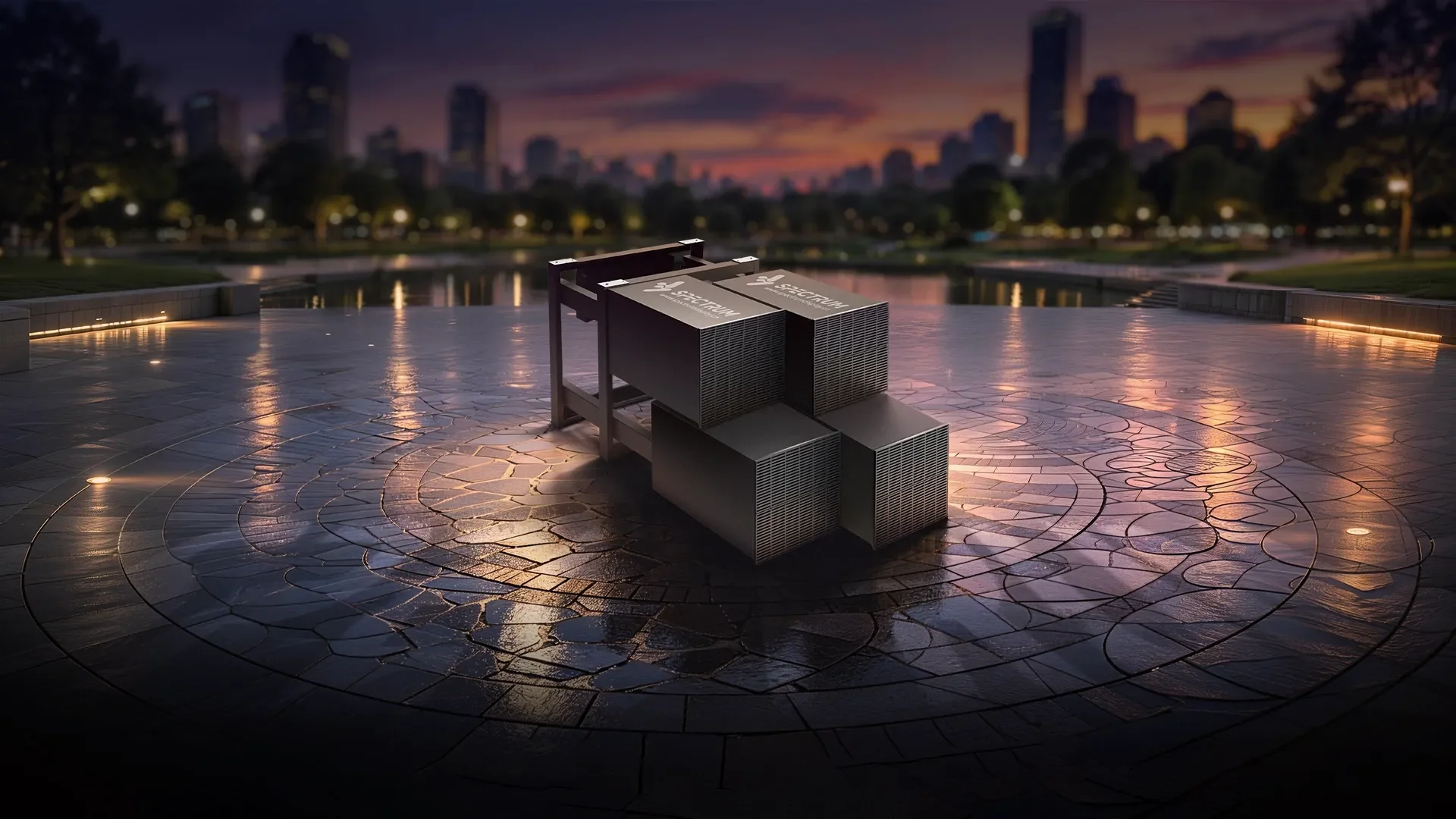
5. A Three-Step Decision Guide: Which Maintenance Method Is Right for Your Project?
Step 1: Look at the Installation Location
| Installation Location | Recommended Maintenance Method | Why |
|---|---|---|
| Wall-mounted installation | Front maintenance | No rear service space required |
| Wall-integrated installation | Front maintenance | Rear access may be impossible |
| Ceiling installation | Front maintenance | Ceiling cavity may not accommodate a service corridor |
| Retail window | Front maintenance | Limited installation depth |
| Column wrap | Front maintenance | Rear access is typically unavailable |
| High-elevation fixed installation | Rear maintenance | Front servicing may require costly and risky high-altitude access |
| Outdoor landmark | Rear maintenance | Dedicated service access improves maintenance safety |
| Large exhibition hall | Rear maintenance | Sufficient space may be available for a service corridor |
Step 2: Evaluate the Available Space
| Space Condition | Recommended Maintenance Method |
|---|---|
| ≥600 mm available behind the display | Rear maintenance is feasible |
| <400 mm available behind the display | Front maintenance is the preferred solution |
| Rear of the display is completely enclosed | Front maintenance is required |
| Display is installed directly against an architectural surface | Front maintenance is required |
Step 3: Consider the Project Type
| Project Type | Recommended Maintenance Method | Why |
|---|---|---|
| Exhibition rental | Rear maintenance (SPKI-250) | Supports rapid servicing with independent rear access |
| Premium retail window | Front maintenance (SPKI-160) | Limited space and no practical rear access |
| Ceiling installation | Front maintenance (SPKI-160) | No room for a conventional rear corridor |
| High-elevation fixed installation | Rear maintenance (SPKI-250) | Reduces the need for external high-altitude servicing |
| Outdoor landmark | Rear maintenance (SPKO series) | Dedicated service access improves long-term maintenance safety |
6. Frequently Asked Questions (FAQ)
Q1: What is the main difference between front maintenance and rear maintenance?
A: Front maintenance allows servicing to be completed from the front of the display without requiring rear access.
Rear maintenance requires a dedicated service corridor behind the screen, with servicing performed from the rear.
Front maintenance is generally better suited to space-constrained installations, while rear maintenance is often better suited to large fixed or high-elevation projects.
Q2: Which Spectrum Display models support front maintenance, and which use rear maintenance?
A: Spectrum Display’s SPKI-128 and SPKI-160 support front maintenance and are designed for space-constrained applications.
The SPKI-250 and SPKO series use rear-maintenance architectures and are suited to large fixed installations, high-elevation applications, and major outdoor projects.
Q3: Can a front-maintenance kinetic LED display be installed directly against a wall?
A: Yes.
Because no rear maintenance corridor is required, a front-serviceable display can be installed close to a wall or integrated into the architectural surface.
The SPKI-160 has a finished installation depth of only approximately 350 mm, allowing it to integrate into space-constrained architectural environments.
Q4: How much space should be reserved for a rear maintenance corridor?
A: A standard rear maintenance corridor typically requires approximately 600–800 mm of clear space behind the display.
This space allows technicians to enter the service area and perform maintenance safely.
It should be incorporated into the architectural and structural design from the beginning.
Q5: Can a maintenance corridor be added later?
A: In most projects, this is highly impractical.
Once walls have been closed and the structure finalized, adding a maintenance corridor may require extensive demolition, rewiring, structural modification, and reconstruction.
The cost can be many times higher than reserving the space during initial construction, and in some buildings it may not be physically feasible at all.
Q6: What happens if the wrong maintenance method is selected?
A: There are two common consequences.
If a rear-maintenance system is selected for a space-constrained installation, the display may simply not fit.
If a front-maintenance system is selected for a high-elevation fixed installation, every future service operation may require scaffolding, aerial work equipment, additional labor, and more complex safety procedures.
▶Video · YouTubeFrom Installation to Motion — onsite installation and commissioningWatch on YouTube →7. Conclusion
The maintenance method of a kinetic LED display is not something to decide during installation.
It is an engineering decision that should be finalized during project planning.
Key Takeaways
1. Front Maintenance
All major servicing is performed from the display side without requiring rear access.
It is ideal for wall-mounted, embedded, ceiling-mounted, retail-window, column-wrap, and other space-constrained installations.
2. Rear Maintenance
A dedicated service corridor is reserved behind the display.
It is well suited to high-elevation fixed installations, outdoor landmarks, and large venues where sufficient rear space is available.
3. Choosing the Wrong Method Has Long-Term Consequences
Selecting rear maintenance for a space-constrained project may make installation impossible.
Selecting front maintenance for a high-elevation project can make every future service operation significantly more complicated and expensive.
4. Maintenance Access Cannot Be an Afterthought
Rear maintenance corridors should be incorporated into the building and system design before construction is finalized.
Trying to create access later can dramatically increase costs or may simply be impossible.
5. Use a Three-Step Decision Process
Installation location → available space → project type
These three factors should determine the maintenance architecture before the final kinetic LED system is selected.
Recommendations for Project Teams
- Determine the maintenance method during the project planning stage rather than waiting until installation to discover that the system cannot be installed or serviced properly.
- For space-constrained applications, prioritize front-maintenance models such as SPKI-128 and SPKI-160.
- For high-elevation fixed installations and large outdoor projects, consider rear-maintenance models such as SPKI-250 and the SPKO series.
- If sufficient rear space is available, reserve the maintenance corridor during the building construction stage. Every centimeter planned for service access today can reduce operating and maintenance costs over the next decade.
- For more information about maintenance architectures or model selection for a specific project, contact the Spectrum Display team through its official website.