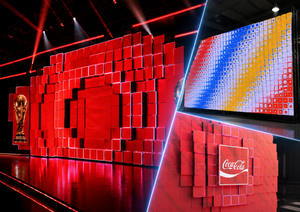
The Space Enabler: How Kinetic Screens Redefine Spatial Narratives
In traditional spatial design, screens are often passive "information windows"—flat, illuminated panels. But when a screen gains the ability to move physically, it evolves from a display terminal into a space enabler. It no longer just conveys information; it begins to shape environments, guide emotion, and tell dynamic stories.
We are witnessing a shift: from static displays to programmable environments, from one-way viewing to multi-sensory immersion. The Kinetic Screen is central to this transformation, merging the infinite variability of digital content with the tangible presence of physical space, offering architects, designers, and brand managers an unprecedented storytelling tool.
Scene 1: Spatial Revolution—When Walls Begin to "Breathe"
The essence of spatial narrative lies in conveying emotion and ideas through environment. Kinetic screens inject soul into various settings with their unique "breath" and vitality.
· Corporate Showrooms: From "Statement" to "Dialogue"
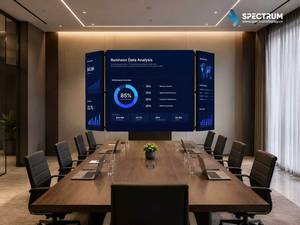
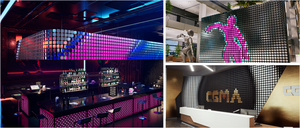
Traditional heritage walls are static graphics. A "story wall" built with the SPKI-160 series can undulate gently with a presenter's rhythm. It can pulse like an energy surge during a talk on breakthrough innovation or ripple outward like waves when showcasing global reach. This transforms a linear tour into an immersive dialogue, allowing corporate culture to be felt and experienced, not just read.
· Luxury Retail Windows: From "Display" to "Theater"
Luxury is defined by exquisite craftsmanship and intangible aura. The ultra-precise SPKI-128 series, with its ≤1.5mm seam and silk-like motion, is the ideal stage for limited-edition watches or haute jewelry. The screen becomes the lead actor, not the backdrop—simulating the flow of fabric, the shimmer of a halo, or mechanistically deconstructing a product's design. It turns the window into a micro-theater where the brand story unfolds every second.
· Public Art & Retail Spaces: From "Decoration" to "Landmark"
In an atrium or terminal, a kinetic screen can become a gathering "digital beacon." It can change its form and content in real-time based on footfall, time, or even weather data—pulsing for a festival or flowing like a gentle breeze. It gives public space the ability to sense and respond, turning passersby into participants and creating unique place memories and social media moments.
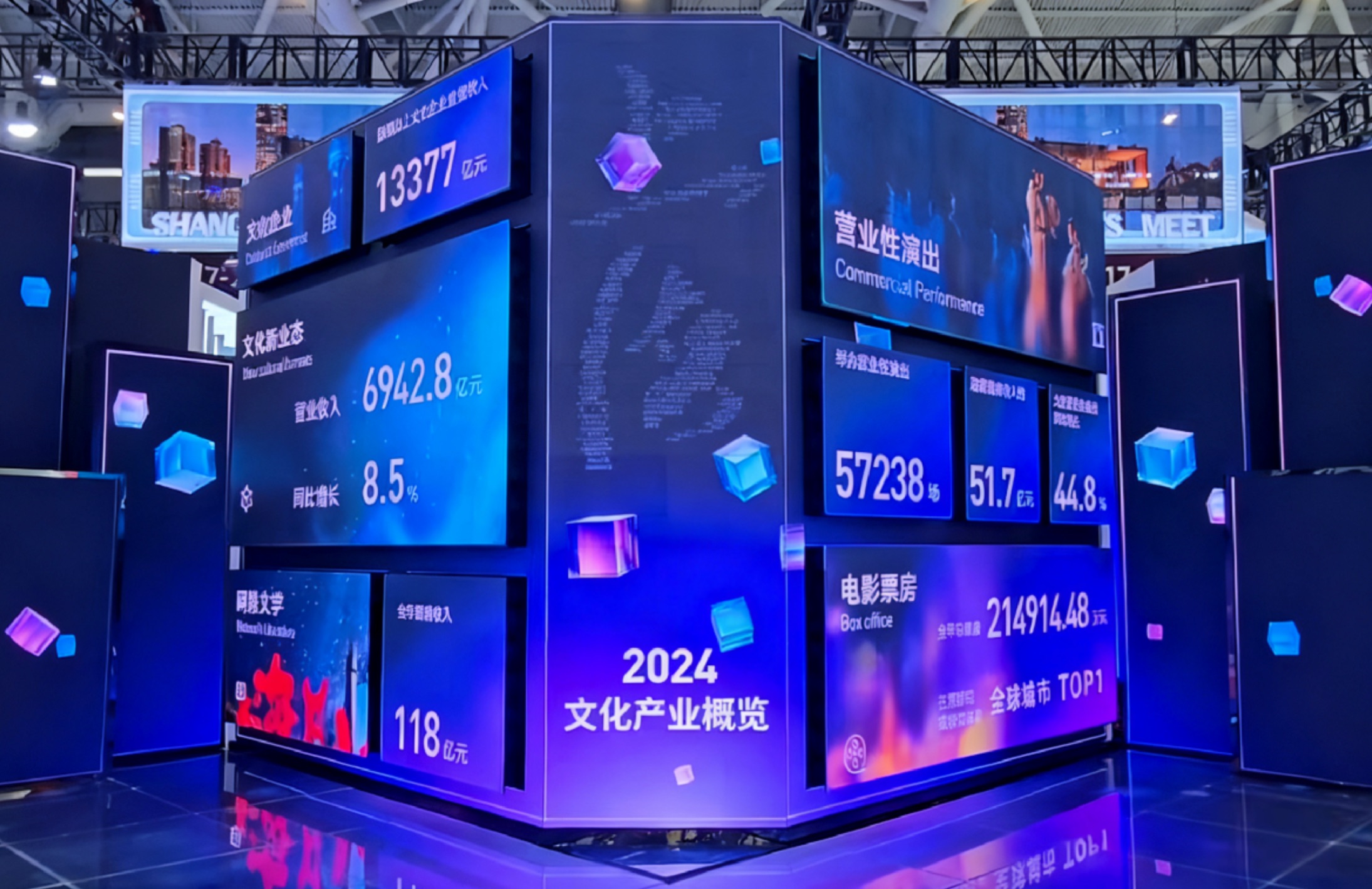
Scene 2: The Art of Precision—Hardware Philosophy for Spatial Aesthetics
Different spaces demand distinct balances of beauty, precision, and practicality. Choosing the right kinetic model is the first step to realizing a concept perfectly, much like a designer selects materials.
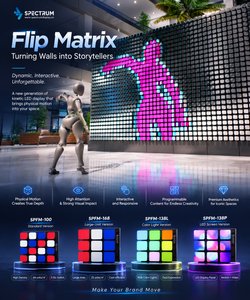
SPKI-128: For the Perfectionist
· Design Philosophy: Ultimate precision and invisible aesthetics.
· Spatial Fit: For luxury retail, high-end hotels, and private clubs where detail is paramount. Its minimal module size (128mm) and highest unit density (61/㎡) create the smoothest wave curves, ensuring absolute visual integrity and refinement even under close scrutiny, satisfying the architect's quest for a pure surface.
SPKI-160: The Universal Key
· Design Philosophy: The golden balance of performance and deployment efficiency.
· Spatial Fit: The premier choice for corporate showrooms, pop-ups, and art exhibitions. It delivers impressive kinetic impact while its quick-install design and flight-case transport perfectly suit frequently updated commercial spaces and rental markets, making large-scale installation as efficient as assembling modular furniture.
SPKI-250: The Invisible Engine for Grand Spaces
· Design Philosophy: Powerful reliability and maintenance-friendly design.
· Spatial Fit: Designed for museum centerpieces, permanent ceremonial backdrops, and architectural atrium giant screens. Its unique rear-service design allows full maintenance from behind the screen, eliminating the need for front-side scaffolding—solving a global challenge for large-scale permanent installations and freeing creativity from future constraints.
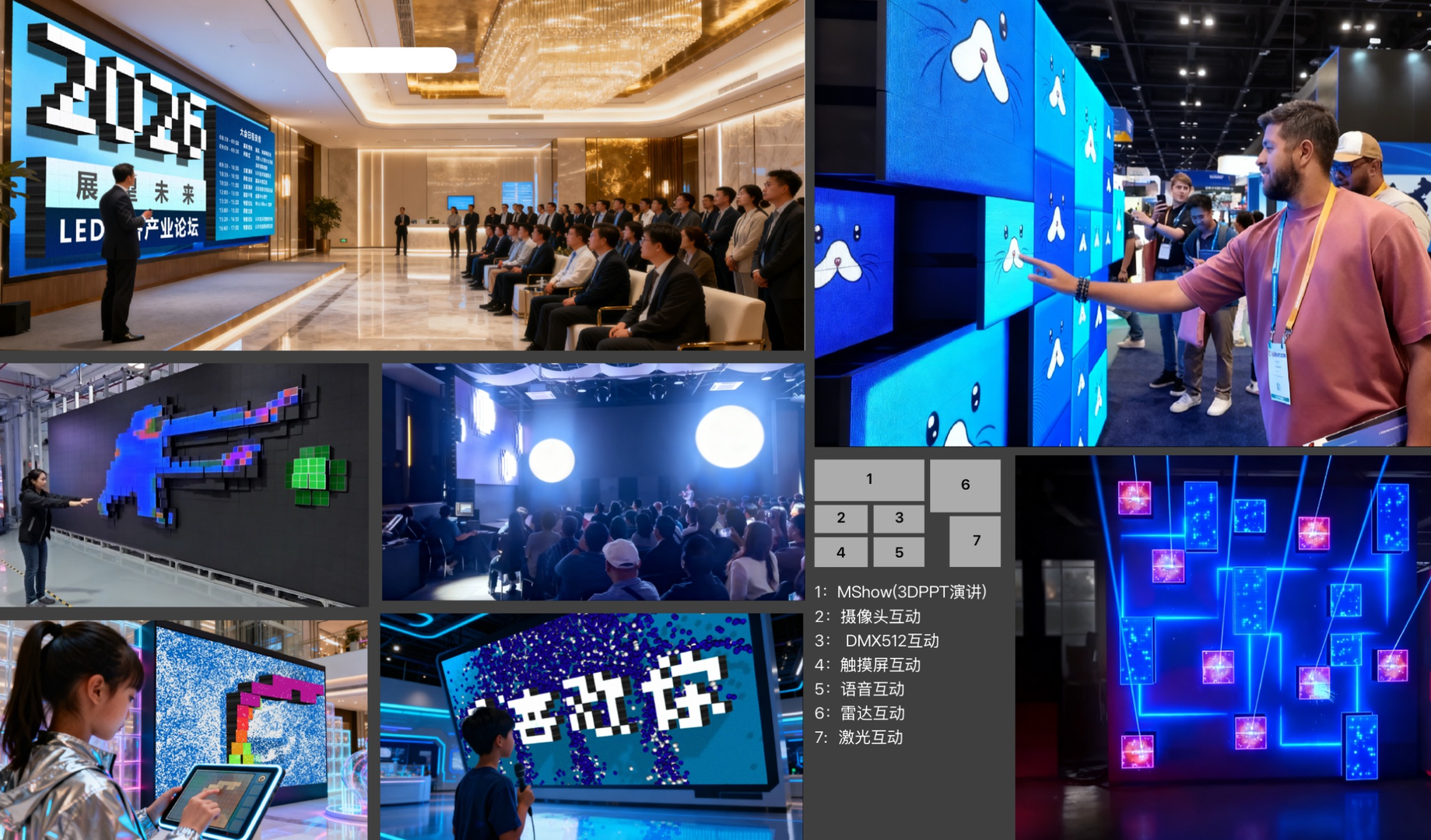
Scene 3: Direct Translation of Ideas—Turning Design Thought into Physical Motion
The greatest tools are those that fade away, letting creativity flow directly. For designers, the biggest hurdle is often translating dynamic concepts into machine instructions.
Thus, we built a software ecosystem that integrates directly into the creative workflow:
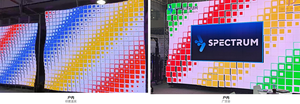
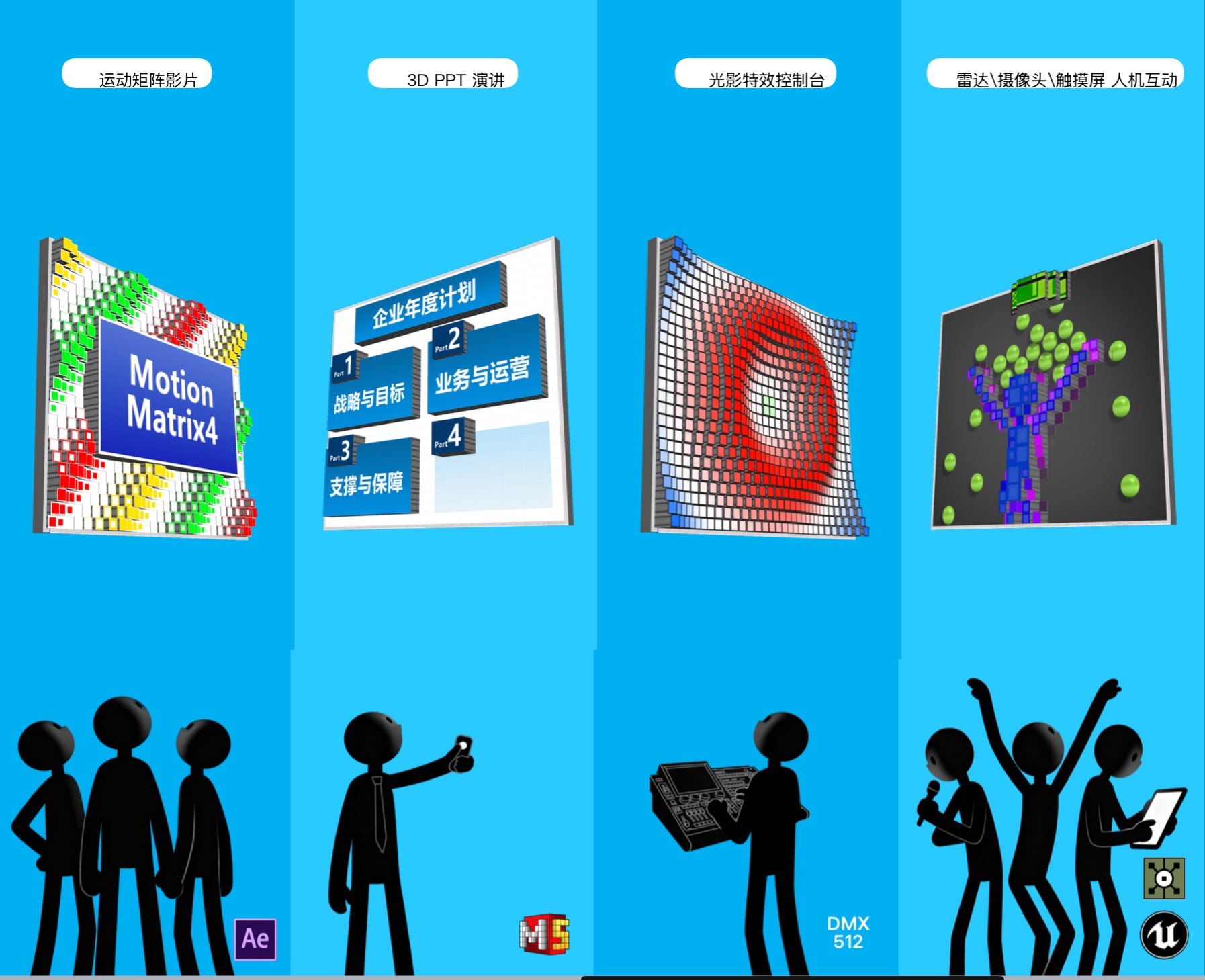
· After Effects Plugin: Grayscale "height maps" designed in AE drive the screen's physical motion directly. Motion and visual design are unified (WYSIWYG), enabling precise, cinematic kinetic creativity.
· TouchDesigner / Unreal Engine 5 Support: Opens doors to projects demanding real-time interaction and hyper-immersive experiences. By connecting sensors, the screen can respond to movement, sound, or environmental data, making space truly interactive. In UE5, you can build unreal scenes with real physics and lighting, blurring the line between virtual and real.
· From Code to Curated Art: We know not every designer is a programmer. Beyond powerful plugins, we offer a vast library of proven, high-quality kinetic content templates. Designers can quickly find inspiration and adapt assets like a material library, drastically lowering the barrier and time cost for dynamic content creation.
Conclusion: Choose a Narrative Partner, Not a Hardware Vendor
When considering kinetic narrative for space, you're choosing more than equipment—you're selecting a long-term partner who understands spatial language and can help translate concepts into emotion.
The core value of Spectrum Display lies in providing a complete "Programmable Aesthetic" toolchain. From the hardware matrix matching spatial needs, to the software ecosystem integrating with design workflows, to the ready-to-use creative asset library—we ensure every spark of inspiration can seamlessly become programmable physical motion, thereby reshaping space and moving people.
We go beyond building screens. We enable spaces, empowering every wall to tell a compelling story.