Is a Kinetic Screen Safe in Public Spaces? Key Safety Factors to Check Before Installation
One-Sentence Definition: When a kinetic screen is installed in a public space such as a shopping mall atrium, exhibition hall, or airport, safety is far more than a slogan. It is a system-level engineering requirement involving anti-pinch protection, structural load capacity, power distribution, environmental limits, and installation standards. If any one of these requirements is not properly addressed, it can become a serious hidden risk.
1. When the Screen Starts Moving, New Safety Risks Appear
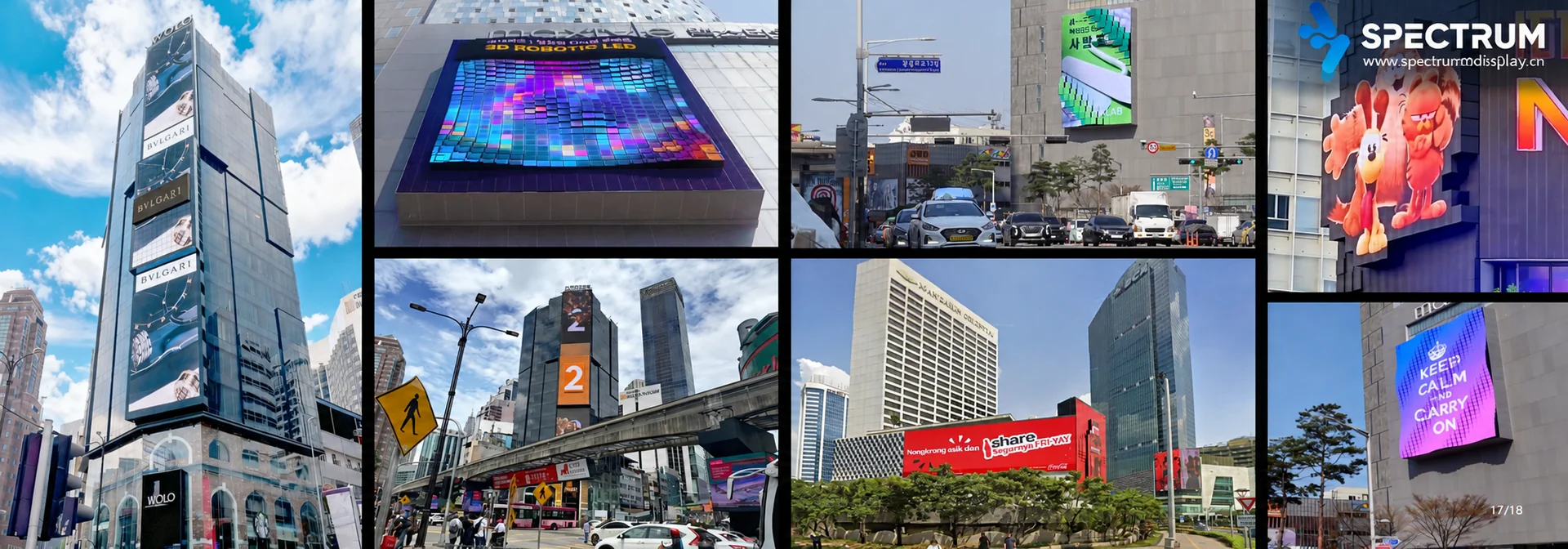
In public spaces such as shopping malls, exhibition halls, and airports, a conventional LED display is essentially a suspended illuminated structure. Its primary physical safety risks are related to structural failure and falling components.
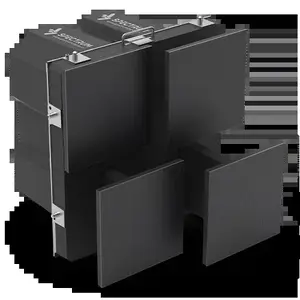
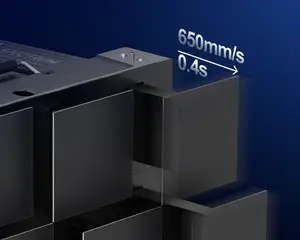
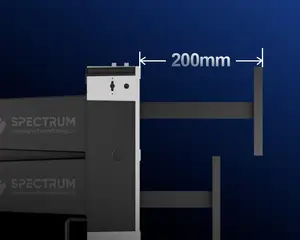
But when that display becomes a kinetic screen—such as the SPKI-166, with a 230mm physical stroke and motion speeds of up to 650mm/s—the safety requirements become significantly more complex.
The system not only carries substantial physical weight but also contains hundreds or even thousands of independently moving mechanical units.
In a busy public environment, a motion failure, electrical fault, or even a loose structural component can create a serious safety hazard.
For Shenzhen Spectrum Technology Co., Ltd. (Spectrum Display), safety is treated as a fundamental engineering requirement throughout project delivery. Before installation and commissioning, engineers must carefully evaluate the following five critical areas.
2. Safety Factor 1: Anti-Pinch Protection — The Screen Must Stop When It Encounters an Obstacle
This is one of the most important safety considerations in a public environment.
If a visitor reaches toward a moving module out of curiosity, or if a child approaches the display while it is moving, the system must respond immediately.
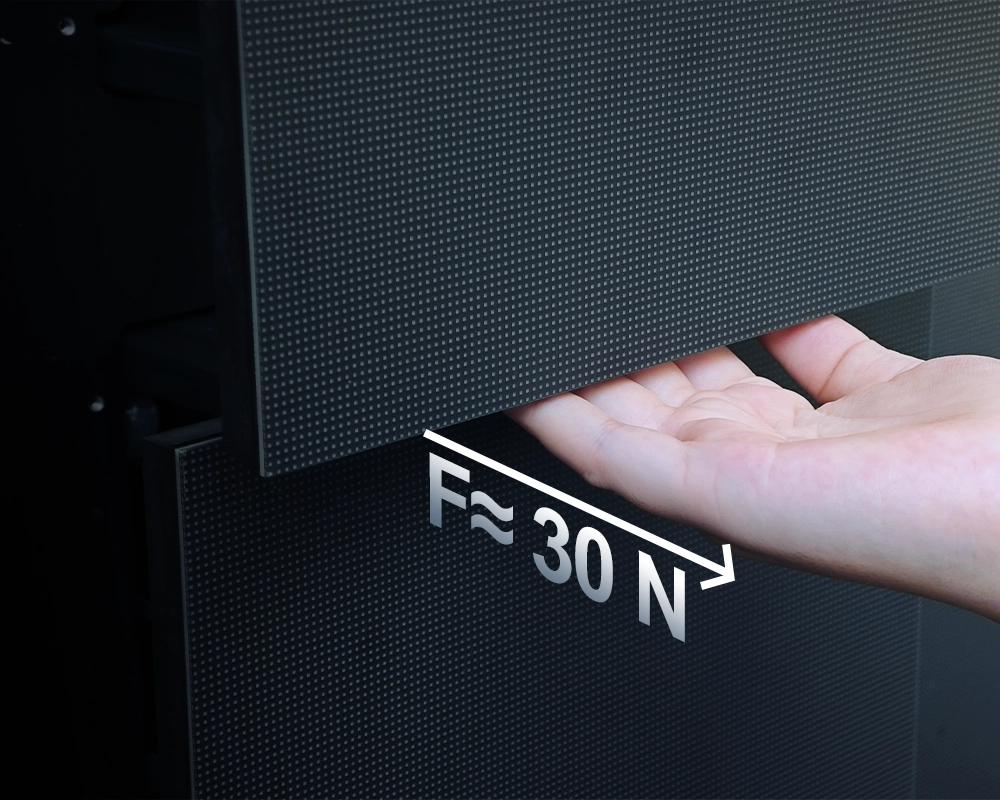
Key Specification: 3kg Anti-Pinch Force Threshold
The SPKI-166 is equipped with a sensitive protection system. Its built-in control algorithm and high-precision sensing system continuously monitor changes in motor torque.
- If resistance reaches or exceeds 3kg while a module is extending or retracting, the system identifies the condition as an obstruction.
- Millisecond-Level Emergency Stop: The motor is immediately disabled and power to the drive is cut, stopping the motion at its current position.
- Automatic Slow Reset: After remaining stationary for several seconds to confirm safe conditions, the module returns smoothly toward its starting position, helping reduce the risk of pinching injuries.
Engineering Check: During onsite installation and commissioning, engineers should verify that anti-pinch protection has not been incorrectly disabled or altered and that each independent motion unit can properly trigger the emergency protection mechanism.
3. Safety Factor 2: Structural Load — How Do You Safely Support a Moving LED Array?
A kinetic screen is significantly heavier and mechanically more complex than a conventional LED display.
If the supporting wall, ceiling, or suspension structure is inadequate, structural failure could have serious consequences.
Key Specification: 72kg/m² System Weight
The SPKI-166 uses lightweight die-cast aluminum cabinets, with each cabinet weighing approximately 18kg, bringing the overall screen weight to approximately 72kg/m².
However, static weight is only part of the engineering calculation.
Engineering Checks
1. Dynamic Load
When hundreds or thousands of motion units extend simultaneously within a 0.4-second full-stroke cycle, they generate reaction forces.
The supporting structure must therefore be designed not only for static weight but also for long-term vibration, repeated motion, and potential resonance.
2. Suspension Anchor Points
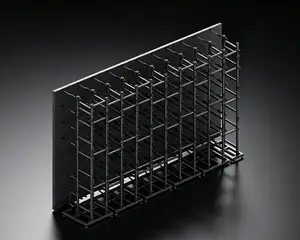
For overhead installations, the load-bearing connection between the suspension structure and the building must undergo structural calculations by qualified engineers.
Anchors, bolts, and other fastening components must comply with applicable structural and building standards.
3. Wall Reinforcement
For wall-mounted installations, lightweight partition structures may require additional internal reinforcement. The supporting structure must ultimately transfer the load to a suitable load-bearing structure rather than relying on decorative wall finishes alone.
4. Safety Factor 3: Power and Heat Dissipation — The Hidden Electrical and Thermal Risks
Electrical safety becomes especially important in high-traffic public spaces.
Key Specification: 920W/m² Power Consumption
A 100m² kinetic screen installation operating at full load can have a peak power demand approaching 100kW.
If cables are undersized, electrical systems are aging, or power distribution is improperly designed, the risk of overheating and electrical failure increases significantly.
Engineering Checks
1. Power Supply Requirements
For projects above 3kW, a 380V three-phase, five-wire power supply should be used, with the load properly balanced across all three phases. Current on each single-phase circuit should not exceed 16A.
The SPKI-166 uses an independent power-distribution design to help prevent localized overload.
2. Thermal Management
A kinetic screen contains motors, driver boards, and other electronic components that generate heat during operation.
The SPKI-166 uses an open self-cooling structure with auxiliary fan cooling. Engineers should ensure that ventilation around the rear of the display is not obstructed and that the installation environment provides sufficient airflow.
3. Protective Grounding
All metal cabinets must be properly connected to protective earth (PE) to minimize electrical leakage and shock risks.
5. Safety Factor 4: Environmental Limits — How Temperature and Humidity Affect Mechanical Lifespan
Precision mechanical structures are particularly sensitive to corrosion, condensation, contamination, and changes in lubrication performance.
Installing an indoor kinetic screen system in an unsuitable environment can significantly shorten its service life.
Key Specifications: 0–40°C Operating Temperature / ≤70% RH Operating Humidity
The SPKI-166 is an indoor model and has defined environmental requirements.
Engineering Checks
1. Prevent Condensation
Humidity above 70% RH may increase the risk of condensation on precision mechanical components and guide rails, potentially leading to electrical faults or corrosion.
For basements, humid climates, or environments with prolonged seasonal humidity, additional dehumidification may be required.
2. Control Dust and Contaminants
The operating environment should be free from excessive dust and oil mist.
If interior construction is still underway—for example, wood cutting, grinding, or other dust-producing work—the kinetic screen system should not be operated prematurely. Dust entering precision guide rails and moving components can damage the mechanism.
3. Maintain the Correct Temperature Range
Extremely cold environments or excessive heat around ceilings and enclosed spaces can affect electronic protection systems, motors, and lubricants.
The operating environment should therefore remain within the specified 0–40°C range.
6. Safety Factor 5: Installation and Maintenance — Creating a Complete Safety Boundary
The physical movement of a kinetic screen means it cannot be installed exactly like a conventional static LED wall.
Engineering Checks
1. Reserve a Clear Motion Zone
The SPKI-166 has a maximum physical stroke of 230mm.
At least 0.5 meters of clear space should be maintained in front of the screen. Exhibits, fixed barriers, furniture, or other objects should not be placed within the motion range where they could interfere with the moving modules.
2. Secondary Fall Protection
For overhead installations, in addition to the primary cabinet locking and connection system, secondary safety cables are recommended as an additional fall-protection measure.
3. Maintenance Safety
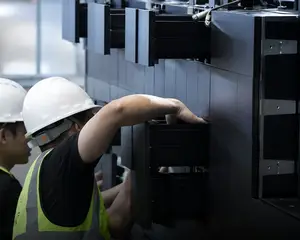
The SPKI-166 supports both front and rear maintenance.
For rear maintenance, the service corridor should provide a stable and unobstructed working surface. For front maintenance at height, technicians should use appropriate access equipment and fall-protection measures and avoid forceful or improper module removal.
▶Video · YouTubeTouch It. Watch It React. — the screen responds to the visitor in real timeWatch on YouTube →
7. Frequently Asked Questions (FAQ)
Q1: What happens if a visitor deliberately pushes against a moving module?
A: The SPKI-166 uses a sensitive 3kg anti-pinch threshold. If resistance exceeds the defined threshold, the motor is immediately disabled and motion stops, helping protect both the mechanism and the person interacting with the display. After remaining stationary for several seconds, the system can return to its normal position.
Q2: There are many power and signal cables behind a kinetic screen. Does this create a fire risk?
A: The SPKI-166 uses an industrial CAN bus architecture, helping simplify cabling and reduce potential fault points. Cables are designed with protective measures and flame-retardant requirements.
Electrical safety still depends on correct project-level engineering, including properly sized circuit breakers, residual-current protection, cables, grounding, and power-distribution systems.
Q3: Does the front of the screen need a glass protective barrier?
A: Generally, a glass enclosure is not required and may interfere with the physical 3D effect.
A more common approach is to establish an appropriate safety boundary approximately 0.5 meters in front of the display using subtle floor markings, low barriers, landscaping elements, or other spatial-design methods that encourage visitors to maintain a safe distance without compromising the visual experience.
Q4: How can the anti-pinch system be verified after installation?
A: After installation and commissioning, the engineering team can use a calibrated force gauge to perform multiple test-point inspections.
A controlled force exceeding the 3kg threshold is applied to an extending module to verify that the system immediately disables the motor and stops the movement. The response can then be recorded as part of the commissioning process.
Q5: Can the SPKI-166 be used outdoors or in semi-outdoor environments, such as a covered balcony?
A: No. The SPKI-166 is designed as an indoor model. It is not designed for rain exposure or outdoor environmental conditions, and its specified operating humidity is limited to ≤70% RH.
For semi-outdoor or outdoor environments, an outdoor model from the SPKO series with the appropriate environmental protection specifications should be selected instead.
8. Conclusion
There is no room for shortcuts when a moving LED system is installed in a public space.
The safety of a kinetic screen installation depends not on a single feature, but on the interaction between mechanical protection, structural engineering, electrical design, environmental control, installation practices, and long-term maintenance.
Key Takeaways
- 3kg Anti-Pinch Protection: Rapid motor disable and emergency stopping help protect both people and the mechanical system.
- 72kg/m² Structural Load: The SPKI-166 uses a lightweight design, but every installation still requires proper structural load verification.
- 920W/m² Power Demand: High-power installations require properly engineered three-phase power distribution, thermal management, and protective grounding.
- 0–40°C / ≤70% RH Operating Environment: Controlling condensation, dust, humidity, and temperature helps protect precision mechanical components.
- Defined Safety Boundaries: Adequate clearance must be maintained in front of moving modules, while overhead installations should incorporate appropriate secondary fall-protection measures.
For more product information or a customized project safety assessment, contact the Spectrum Display team through the Spectrum Display official website.