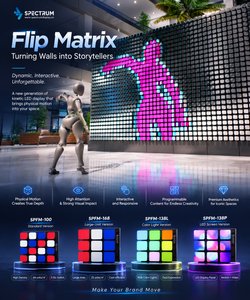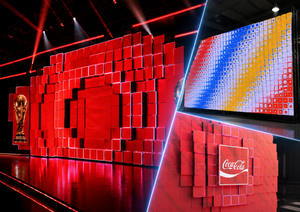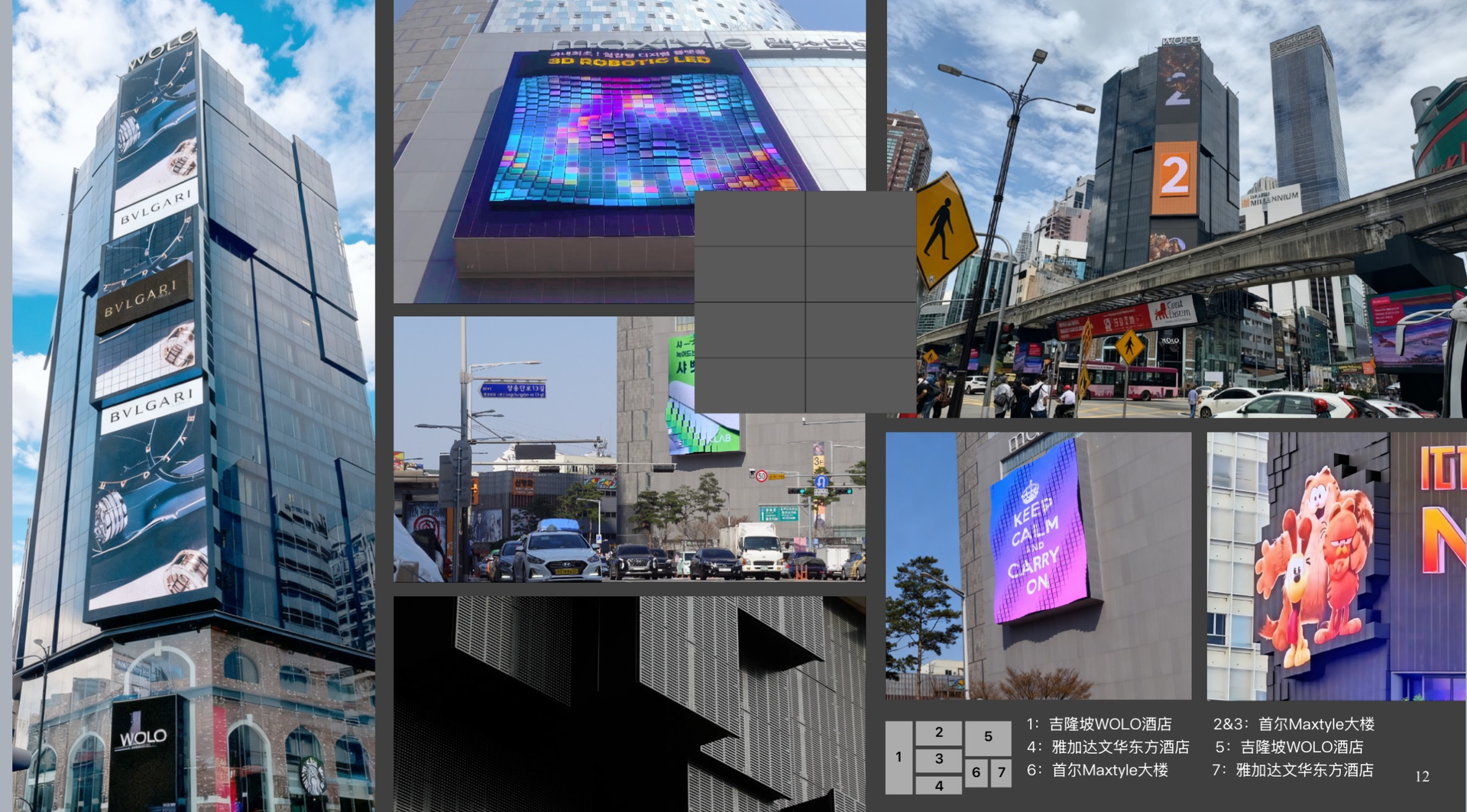
Kinetic Screen Solutions for Harsh Environments
In data centers, command hubs, or outdoor plazas across the Middle East and Southeast Asia, displays face challenges far beyond the ordinary. Extreme temperatures, persistent humidity, salt spray corrosion, and 24/7 operational loads test not only a product's performance limits but directly impact core business safety and stability. In such scenarios, choosing a display means selecting an "engineering partner" built to endure and perform with absolute reliability.
We understand that standard commercial design specifications are inadequate for extreme environments. Spectrum's engineering philosophy is rooted in deep, proactive R&D to solve complex challenges. Our products are born to meet the most demanding conditions.
Part 1: The Extreme Challenge – When Environment is the Ultimate Test
In high-temperature, high-humidity settings, the failure of traditional displays is systemic and often irreversible.
Thermal Runaway & Structural Failure: When ambient temperatures consistently exceed 60°C, LED junction temperatures can easily surpass critical thresholds (typically 125°C). This causes the encapsulating epoxy resin to undergo a glass transition, its thermal expansion coefficient skyrocketing, leading to physical deformation, solder joint failure, circuit disconnection, and permanent damage.
Accelerated Aging & Performance Decay: Heat is the primary driver of lumen depreciation (irreversible brightness loss). It accelerates phosphor decay, silicone yellowing, and the proliferation of internal chip defects, causing screen brightness and color uniformity to degrade rapidly, significantly shortening lifespan.
System Stability Crisis: In electromagnetically complex environments or over long-distance deployments, traditional communication protocols (e.g., RS485) are susceptible to interference. This can cause large-scale kinetic units to "drop offline" or lose synchronization, throwing meticulously designed dynamic visuals into chaos.
Part 2: A Systematic Defense – Building a Moat of Reliability Through R&D Depth
Facing systemic risks requires systematic engineering solutions. We start from first principles, building defenses against each challenge.
· Challenge 1: Long-Term Stability & Thermal Management
· Our Solution: Beyond "Cooling," Achieving "Thermal Equilibrium." We employ fully die-cast aluminum cabinets and aerodynamically validated thermal structures. Rather than simply adding fans, we build efficient heat conduction paths and low-resistance airflow channels to ensure core components remain within safe thermal windows even under sustained heat. Key components are selected to industrial or automotive-grade standards, guaranteeing a rated lifespan of >50,000 hours that remains reliable under extreme stress.
· Challenge 2: Absolute Control Stability in Harsh Environments
· Our Solution: Rejecting Generic Protocols, Developing a High-Reliability CAN Bus System. We too were once constrained by the instability of sourced communication components. Our response was to develop our own control system based on automotive-grade CAN bus protocol:
· Anti-Interference & Error Correction: Built-in high-grade isolation chips effectively guard against EMI, ensuring signal integrity in bad electrical environments.
· Identity Recognition & Auto-Networking: Each kinetic unit has a unique ID. The system automatically recognizes and networks upon power-up, completely avoiding configuration chaos caused by traditional COM port reassignment.
· Massive Unit Synchronization: A single system can stably control over 65,000 independent kinetic units, providing a solid foundation for mega-projects.
· Challenge 3: The "Quiet" Imperative in Critical Environments
· Our Solution: Servo Silent Motors & Low-Noise Structural Design. In environments demanding high concentration like data centers or command halls, operational noise must be strictly constrained. We use closed-loop servo systems—replacing noisy, inefficient open-loop stepper motors—combined with vibration-damping structures and dynamic optimization to keep operational noise at a library-quiet level (45-55 dB).
Part 3: Predictive Maintenance – Managing Risk Before It Manifests
True reliability lies not just in "not breaking," but in being predictable and manageable.
· Granular, Endpoint-Level Management: Our system enables direct communication between a computer and every single kinetic unit. You can remotely monitor each unit's real-time status (temperature, current, position), perform independent calibration, or update firmware, achieving "cellular-level" health management for vast display arrays.
· Intelligent Alerts & Diagnostics: The system allows setting thresholds for key parameters. If an anomalous trend is detected (e.g., a unit's temperature trending high), it triggers an early warning, transforming reactive repair into proactive maintenance and preventing interruptions during critical missions.
Part 4: Why Spectrum? – Engineering Mindset for Complexity
When faced with extreme demands, system integrators and component assemblers are quickly exposed. Spectrum represents a different path:
R&D Driven by Pain Points: Our decision to independently develop the core CAN bus control system was born from early struggles with supply chain instability. This "pain-point-first" R&D culture ensures our solutions target the root cause.
Designed for Validation: Our product standards stem from a deep understanding of极限 scenarios like data centers and Middle Eastern outdoors. Every design detail undergoes rigorous environmental simulation and fatigue testing, not merely compliance for常规 commercial use.
Delivering Ultimate Peace of Mind: We deliver not just a product that meets specs, but a systematically validated, reliable system. Its ultimate value is the irreplaceable stability and assurance it provides in the harshest environments.
Conclusion
When environmental challenges become a key variable for project success, your choice determines the outcome. Spectrum is committed to being your most trusted display solutions partner in challenging environments. Through deep engineering, we transform extreme conditions into a stage to demonstrate product reliability.
We provide more than a screen. We deliver a certainty you can trust for your mission-critical operations.