What Should Engineers Check Before Installing a Mechanical LED Wall in a Building?
One-sentence definition:
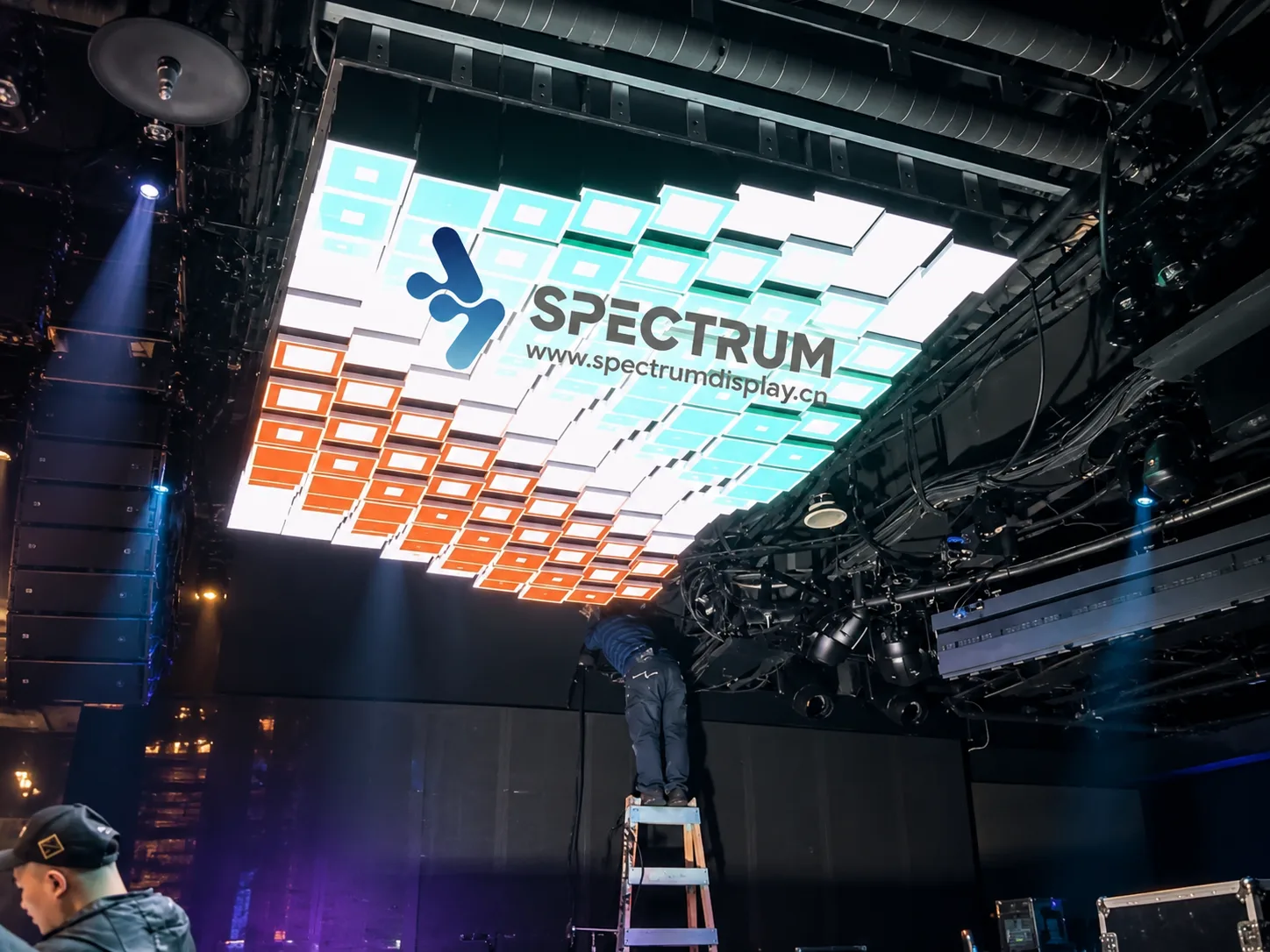
A mechanical LED wall is not a plug-and-play product that can simply be installed after purchase. It is an engineered system that must be deeply integrated with the building itself. Before installation, the engineering team needs to answer five fundamental questions: Can the structure support the load? Is there enough installation depth? How will maintenance be carried out? Are the power and signal systems sufficient? And can the environmental conditions be controlled?
Contents
- Why Installation Can Be Harder Than Manufacturing
- Check 1: Structural Load — Can the Wall Support It?
- Check 2: Space — Is There Enough Room for Mechanical Movement?
- Check 3: Maintenance — How Will Technicians Access the System?
- Check 4: Power and Signal — The Invisible Lifelines
- Check 5: Environment — Temperature, Humidity, Vibration, and Electromagnetic Interference
- Conclusion: A Proper Site Survey Determines the Next Three Years of the Project
1. Why Installation Can Be Harder Than Manufacturing
There is a rule that has been repeatedly proven in mechanical LED projects:
90% of product-related problems can be solved in the factory, but 90% of onsite installation problems can only be solved onsite.
A factory offers standardized production lines, experienced engineers, and a controlled environment.
The installation site is completely different.
The wall may not be perfectly vertical.
The ceiling may not be level.
The reserved power point may be three meters away from where it should be.
The maintenance corridor may be too narrow even to fit the required tools.
According to Spectrum Display’s engineering experience, whether a mechanical LED project can be delivered smoothly depends heavily on the quality of the pre-installation site survey.
When the survey is done properly, installation becomes a matter of following the drawings.
When it is not, the onsite team is forced to improvise.
And every improvised solution consumes time and budget.
In industry practice, many failures in 3D Kinetic LED projects are not caused by the equipment itself, but by mismatched installation conditions.
Teams may only discover after delivery that the wall cannot support the load, the maintenance space is insufficient, or the available power capacity is inadequate.
By that point, changing the solution can cost several times more.
So before a mechanical LED wall becomes part of a building, what exactly should the engineering team check?
2. Check 1: Structural Load — Can the Wall Support It?
A mechanical LED wall is considerably heavier than a conventional LED display.
The weight of a standard LED screen mainly comes from the modules and cabinets.
A mechanical LED wall adds motors, linear guides, transmission mechanisms, and control systems.
Using Spectrum Display’s SPKI Series as an example:
| Model | Weight per m² | Typical Application | Notes |
|---|---|---|---|
| SPKI-128 | 152kg/m² | Science museums, luxury retail | High-density units; reinforced structure required |
| SPKI-160 | 75kg/m² | Shopping mall storefronts, corridor and column applications | Suitable for standard commercial wall structures |
| SPKI-250 | 48kg/m² | Large fixed installations, high-altitude projects | Larger units reduce weight per square meter |
| SPKO-500 | 180kg/m² | Outdoor building facades | Requires professional steel support structure |
Before installation, engineers must confirm three things.
What Is the Wall Made Of?
Concrete?
Brick?
Light-gauge steel framing?
Glass curtain wall?
Different substrates require completely different fixing methods.
A concrete wall may allow chemical anchors, while a lightweight partition may require the load to be transferred directly to the primary building structure.
Can the Building Handle Dynamic Loads?
A mechanical LED wall does not create only static load.
When a large number of modules extend and retract at the same time, the system generates additional dynamic forces.
These forces can significantly exceed the static weight.
This cannot be handled by rough estimation.
A structural engineer should calculate the dynamic load accurately.
Is an Independent Steel Structure Required?
If the existing wall cannot support the system, the engineering team may need to design a separate load-bearing steel structure.
This can affect both the visual design and the use of space.
For large projects, Spectrum Display typically uses rectangular steel framing such as 80 × 40 × 3mm sections, with triangular reinforcement to distribute loads more evenly.
▶Video · YouTubeWhere Creative Vision Meets Engineering Excellence — what goes into a large kinetic LED wallWatch on YouTube →
3. Check 2: Space — Is There Enough Room for Mechanical Movement?
A mechanical LED wall is not a flat panel that can simply be attached to a surface.
It needs room to move.
Extension Stroke
Every motion unit requires physical space for forward and backward travel.
SPKI-160 has a maximum extension stroke of 200mm, while SPKO-500 can reach 600mm.
Before installation, the engineering team must confirm that there is enough clearance in front of the display for the full motion range.
System Depth
Mechanical LED walls are also much deeper than conventional LED screens.
| Model | Body Depth | Finished Depth | Space Requirement |
|---|---|---|---|
| SPKI-128 | 380mm | 400mm | Rear clearance or front-maintenance access required |
| SPKI-160 | 330mm | 350mm | Suitable for ultra-shallow wall-mounted installation |
| SPKI-250 | 330mm | Plus maintenance corridor | Rear maintenance space required |
| SPKO-500 | 1430mm | 1650mm | Large structural support required |
In space-limited projects, a difference of only a few dozen centimeters can determine whether the system can be installed at all.
The 330mm body depth of SPKI-160, combined with front maintenance, makes it particularly suitable for shopping mall windows, corridor installations, and column-wrapping scenarios.
Maintenance Corridor
For rear-maintenance models, at least 600mm of maintenance clearance should be reserved behind the screen.
This area is needed not only for future servicing but also for installation work.
Power and Signal Routing
A mechanical LED wall carries power, display signal, and motion-control data at the same time.
The building must therefore provide sufficient cable-tray space and a practical routing path before installation begins.
▶Video · YouTubeFrom Installation to Motion — the space a kinetic screen actually needsWatch on YouTube →
4. Check 3: Maintenance — How Will Technicians Access the System?
This is one of the most overlooked questions in the early stages of a project, yet it has a major impact on long-term operating cost.
At the beginning, everyone focuses on brightness, visual impact, and movement.
Three years later, when one module or motor needs to be replaced, a different question becomes much more important:
How does a technician get to it?
Front Maintenance or Rear Maintenance?
This is a fundamental decision that should be made before the screen is installed.
| Maintenance Method | Representative Models | Suitable Applications | Main Advantage |
|---|---|---|---|
| Front maintenance | SPKI-128 / SPKI-160 | Wall-mounted, recessed, and ceiling installations | No rear space required; all service work can be completed from the front |
| Rear maintenance | SPKI-250 / SPKO Series | Large fixed installations and high-altitude projects | More working space and easier internal servicing |
Is the Maintenance Route Accessible?
For rear-maintenance installations, engineers need to check the height, width, lighting, and ventilation of the maintenance corridor.
They also need to confirm that technicians can work safely and comfortably inside it.
In a shopping mall atrium, for example, a screen without a dedicated maintenance path may require an aerial work platform every time a single module needs attention.
A single maintenance visit can become extremely expensive.
Is There Enough Space to Replace Large Components?
A large mechanical LED wall may occasionally require the replacement of motors, linear guides, or other substantial components.
Before installation, the project team must confirm that these parts can physically be transported through the building and into the maintenance area.
▶Video · YouTubeDesigned for lightning-fast setup — installation and service efficiency in practiceWatch on YouTube →
5. Check 4: Power and Signal — The Invisible Lifelines
A mechanical LED wall is an electromechanical system.
It needs power not only for the LED display, but also for the motors and motion-control system.
That means the electrical demand is significantly higher than that of a conventional LED display.
Is the Power Capacity Sufficient?
For Spectrum Display’s SPKI Series, the power allocation per square meter is approximately:
- SPKI-128: 1250W/m²
- SPKI-160: 965W/m²
- SPKI-250: 720W/m²
Before installation, engineers must confirm whether the building’s electrical system can provide sufficient capacity.
Is the Power Connection in the Right Place?
For large projects, Spectrum Display may use independent floor-by-floor power distribution.
Power is taken from the electrical shaft on each floor to reduce voltage drop and simplify maintenance.
Before installation, the team must confirm the distance between the power source and the screen, as well as the cable-routing path.
Is the Signal System Compatible?
The motion-control system supports standard protocols including DMX512, Art-Net, and sACN.
Before installation, engineers should check whether the building’s existing control system is compatible or whether signal conversion equipment will be required.
Is Long-Distance Transmission Stable?
In large projects, the distance between the control room and the display may exceed 100 meters.
Signal attenuation should therefore be evaluated before installation.
Signal repeaters or other transmission solutions may be needed for longer runs.
6. Check 5: Environment — Temperature, Humidity, Vibration, and Electromagnetic Interference
A mechanical LED wall is a precision electromechanical system and has clear environmental requirements.
Temperature and Heat Dissipation
Mechanical LED systems generate heat not only from the LED modules but also from motors, drivers, and control electronics.
Before installation, the engineering team must evaluate the ventilation and heat-dissipation conditions of the site.
The SPKI Series uses open self-cooling with fan assistance and is designed for an operating environment of approximately 0–40°C.
Humidity and Protection
In humid environments, electrical components face a higher risk of corrosion and short circuits.
Outdoor projects must therefore meet appropriate protection requirements.
The SPKO Series reaches IP65, allowing it to operate under conditions such as heavy rain and dust.
Vibration and Structural Stability
The physical movement of a mechanical LED wall generates vibration.
Before installation, the building structure should be evaluated to determine whether it can absorb these forces and whether additional vibration-isolation measures are needed.
Electromagnetic Interference
Motors can generate electromagnetic interference during operation.
The engineering team should identify nearby high-interference sources such as large transformers and high-voltage cables and introduce shielding measures if necessary.
Spectrum Display’s experience with the Mandarin Oriental Jakarta project illustrates the importance of environmental engineering.
In a tropical environment with high temperatures, humidity above 80%, and annual rainfall above 2,000mm, a combination of semi-enclosed self-cooling, waterproofing, and anti-corrosion treatment was used to support stable long-term operation.
▶Video · YouTubeOutdoor Kinetic Screen in Motion — engineering for sun, rain and salt airWatch on YouTube →
7. Conclusion: A Proper Site Survey Determines the Next Three Years of the Project
Whether a mechanical LED wall can be installed smoothly, operate reliably, and remain easy to maintain is largely decided before the installation begins.
Key Takeaways
| Survey Area | Core Question | Key Reference |
|---|---|---|
| Structural Load | Can the building support both static and dynamic loads? | SPKI-160: 75kg/m²; SPKI-128: 152kg/m² |
| Space | Is there enough room for movement, body depth, maintenance, and cabling? | SPKI-160 body depth: 330mm; finished depth: 350mm |
| Maintenance | Front or rear access? Is the maintenance path reachable? | Front maintenance requires no rear access; rear maintenance typically needs 600–800mm |
| Power & Signal | Is there enough electrical capacity and protocol compatibility? | SPKI-160: 965W/m²; DMX512 / Art-Net / sACN supported |
| Environment | Are temperature, humidity, vibration, and EMI under control? | Indoor: 0–40°C; outdoor: IP65 |
Recommendations for Project Owners
Bring the engineering team into the project during the early design stage, rather than waiting until the equipment has already been manufactured.
Confirm structural load, installation depth, electrical capacity, and signal conditions as early as possible.
The earlier constraints are identified, the easier they are to solve.
Do not underestimate maintenance access.
The maintenance strategy can determine operating costs for the next five to ten years.
For more information about site surveys and engineering planning, contact the Spectrum Display team through: