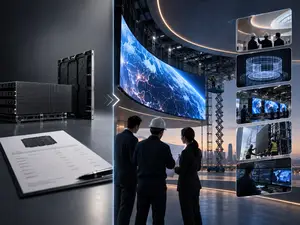
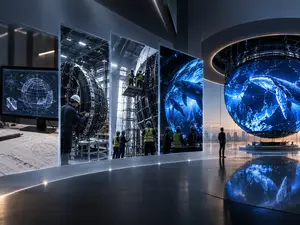
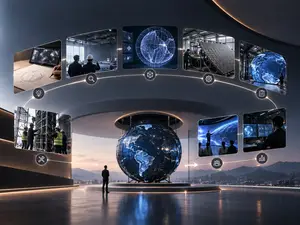
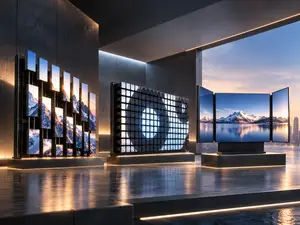
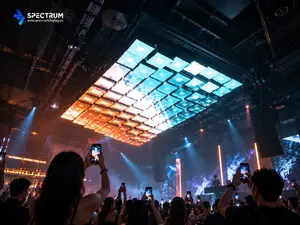
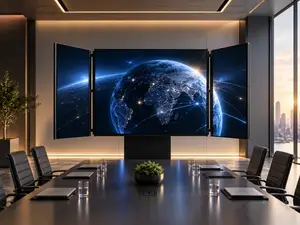
Complex LED Project Capabilities: From Immersive Cultural Theaters and Glass Facades to Mechanical LED Installations
One-sentence definition: A complex LED project is not simply about “installing a screen.” It is about solving a system-level engineering challenge: how to make display, mechanical, acoustic, structural, and control systems work together reliably over the long term in non-standard environments such as theaters, building facades, ceilings, and irregular architectural spaces.
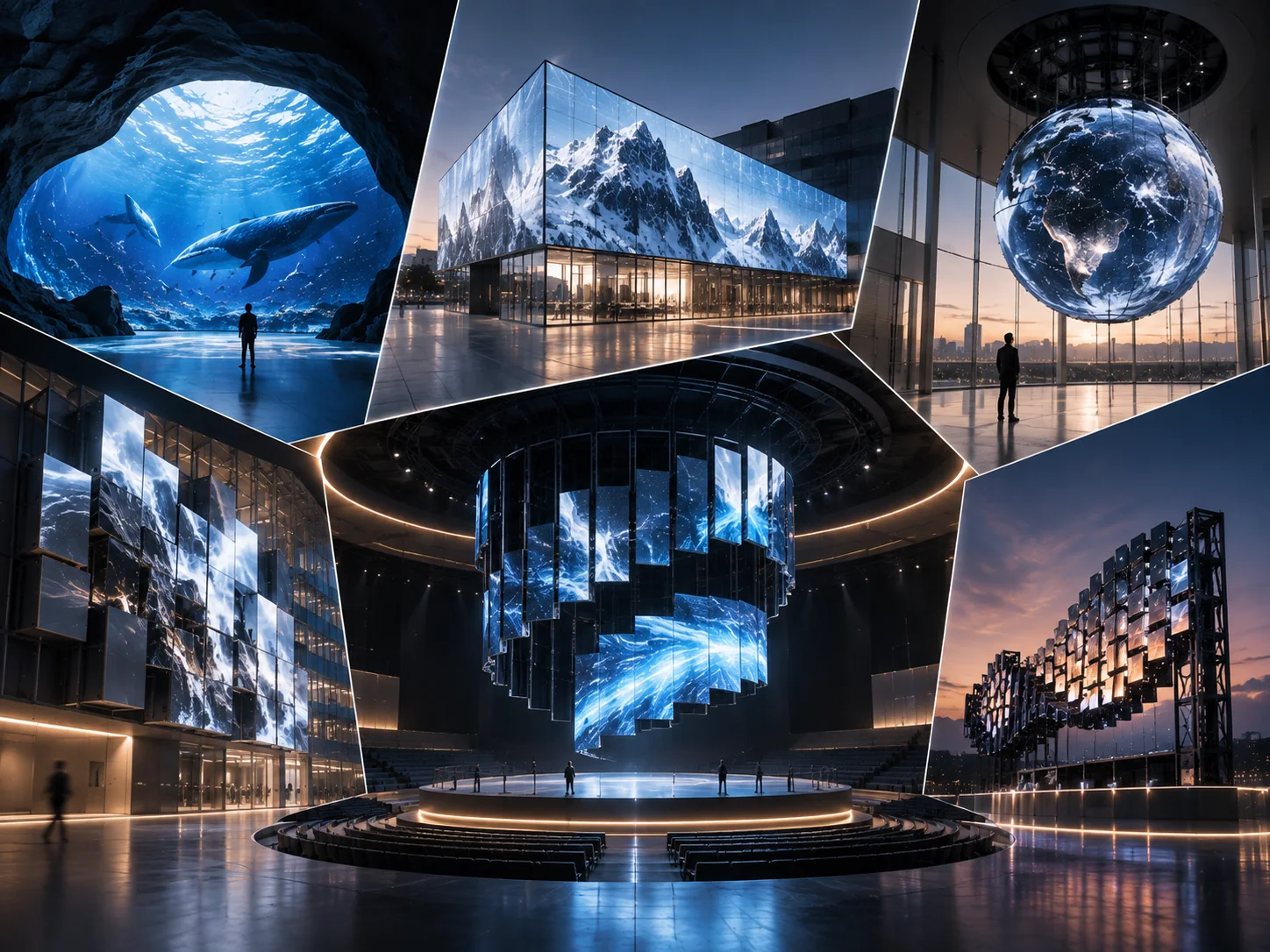
▶Video · YouTubeWhere Creative Vision Meets Engineering Excellence — SpectrumDisplay Kinetic LEDWatch on YouTube →
1. Why Complex LED Projects Require Engineering Capability, Not Just Product Capability
There is a recurring lesson in complex LED engineering:
Many product-level problems can be solved in the factory, but the most difficult project-level problems only become meaningful when the system meets the actual site.
The logic of a standard LED project is relatively straightforward: measure the space, select a model, install the display, connect power, and commission the system.
Complex LED projects are fundamentally different.
They involve irregular spaces, acoustic reverberation, extreme climates, thermal expansion and contraction of architectural facades, high-altitude maintenance, synchronized mechanical movement, and multiple integrated control systems.
Every additional variable pushes the project beyond the boundaries of standard product selection.
In practice, many problems in 3D Kinetic LED projects are not caused by the display itself, but by a mismatch between the equipment and the installation environment. A project team may discover only after equipment arrives onsite that the supporting structure is insufficient, maintenance access is unavailable, or the electrical infrastructure does not meet system requirements.
At that point, redesign becomes significantly more difficult and expensive.
The following projects demonstrate how different spaces and engineering challenges require completely different technical solutions — while following the same underlying engineering logic.
▶Video · YouTubeCome Feel the Stunning Effect of Spectrum's 3D Immersive LED ScreenWatch on YouTube →
2. Cultural Tourism: Acoustic and Energy Solutions for the 428m² Sayram Lake Immersive Theater
The Sayram Lake Immersive Theater is a representative example of complex LED engineering in cultural tourism.
The project combines approximately 248m² of curved transparent LED display with approximately 180m² of LED flooring, creating a total display area of around 428m². The curved structure extends approximately 31 meters in arc length and 8 meters in height.
The project presented three major technical challenges.
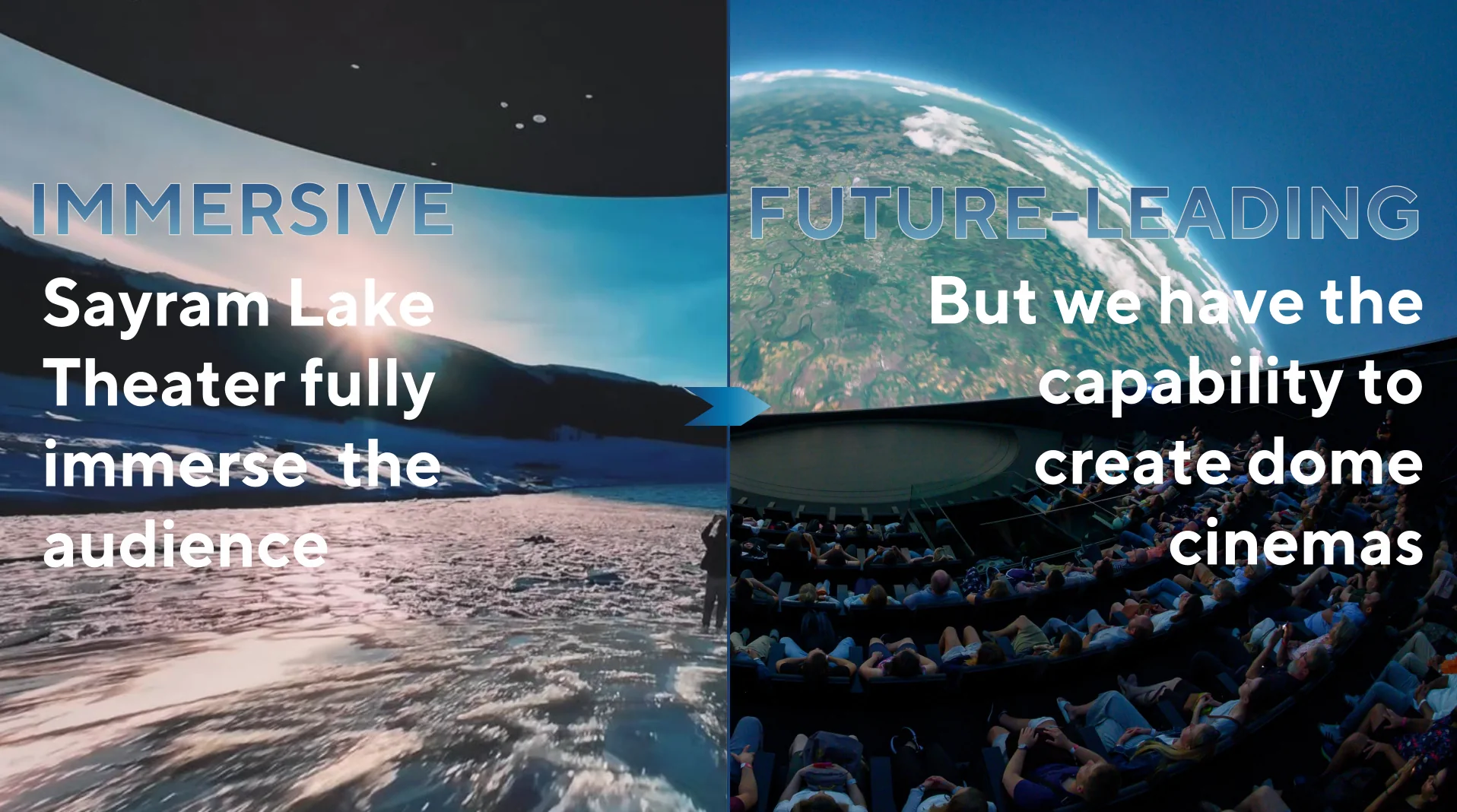
Challenge 1: Acoustic Reverberation — Avoiding a “Reverberation Chamber”
In a large immersive environment, hard LED surfaces can reflect sound repeatedly.
When several large display surfaces surround an audience, uncontrolled reflections can create excessive reverberation, reducing speech intelligibility and weakening the immersive experience.
The solution was an acoustically transparent LED structure.
A specially engineered micro-perforated or grid-like physical structure creates small pathways through the LED surface while maintaining sufficient visual pixel density.
Sound can pass through the display toward acoustic treatment behind it instead of being repeatedly reflected by the screen surface.
The objective is to bring sound and image together as part of one immersive environment.
Challenge 2: Energy Consumption and Thermal Degradation — The Hidden Cost of Long-Term Operation
Thermal performance directly affects both operating costs and equipment longevity in a large immersive space.
High power consumption creates additional heat. Poor heat management can accelerate component degradation, potentially affecting brightness and color consistency over time.
The project therefore required both low-power operation and efficient thermal management.
Through optimization of the underlying drive architecture, the system was designed around an average power-consumption target of approximately 80W/m².
The thermal architecture was also designed to keep key LED components operating within a more stable temperature range, supporting consistent long-term performance.
Challenge 3: Color Fidelity — From Television-Level Display to Cinematic Presentation
An immersive theater requires more than high brightness.
Gradients, landscapes, dark scenes, subtle atmospheric tones, and post-production color grading all need to remain visually consistent across a large display surface.
The project therefore targeted DCI-P3 cinematic color performance, allowing the display system to reproduce a broader and more controlled range of colors for immersive content.
The engineering goal was simple:
Make the technology disappear so the experience can emerge.
▶Video · YouTubeSpectrum 3D LED Kinetic Wall Project Show in IndonesiaWatch on YouTube →
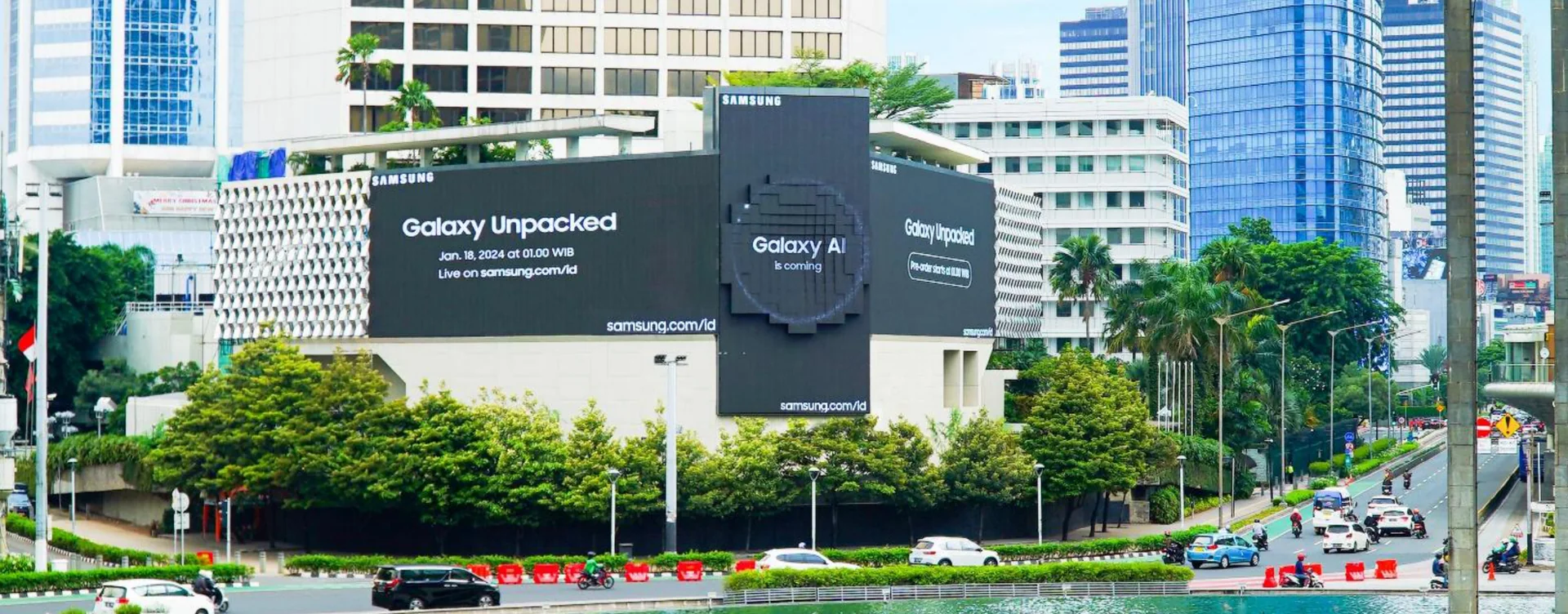
3. Outdoor Landmark: How the Mandarin Oriental Jakarta Project Addresses Extreme Environmental Conditions
The outdoor 3D Kinetic LED installation at Mandarin Oriental Jakarta represents a very different engineering challenge.
The project uses an SPKO-500 outdoor 3D Kinetic LED Screen, with an overall facade measuring approximately 27 × 9 meters and a core kinetic area of approximately 8 × 16 meters.
The display is designed for high-brightness outdoor environments, with brightness of ≥5,000 nits.
Three major challenges shaped the engineering approach.
Extreme Tropical Climate
Jakarta combines high temperatures, high humidity, heavy rainfall, and strong outdoor exposure.
For an outdoor mechanical LED system, these conditions affect more than LED modules.
Motors, linear motion components, electronics, connectors, and mechanical assemblies all need to operate reliably while remaining protected from the environment.
Synchronizing a Large Kinetic Surface
A large-scale physical 3D effect requires hundreds of mechanical units to move in coordination with the visual content.
If motion and display timing drift apart, the relationship between the physical surface and digital image can break down.
The system therefore requires a control architecture capable of coordinating large volumes of motion data with display signals.
Maintenance on a Building Facade
Maintenance becomes considerably more complicated when equipment is installed on the exterior of a large hotel.
Conventional external access methods can be expensive, disruptive, and difficult to coordinate with normal hotel operations.
The solution therefore required a system-level engineering strategy:
- Environmental protection: semi-enclosed self-cooling architecture combined with waterproofing and corrosion-resistant treatment
- Signal redundancy: primary and backup receiving architecture to reduce single-point signal failure risks
- Distributed power: independent power distribution by building zone or floor to reduce long-distance power-delivery challenges
- Motion synchronization: coordinated motion-control and display architecture for a large kinetic surface
The result demonstrates an important principle:
Outdoor kinetic LED engineering is not simply about making an indoor product waterproof. The entire mechanical, electrical, control, thermal, and maintenance architecture needs to be designed for the environment.
4. Commercial Space: A Ceiling-Mounted 3D Kinetic LED Screen in a Singapore Bar
A high-end bar in Singapore approached the problem from a completely different direction.
The floor was already occupied by seating.
The walls were already being used for decoration and visual content.
The only major visual surface left unused was the ceiling.
The project installed an SPKI-160 3D Kinetic LED Screen overhead, measuring approximately 1440 × 3840mm and incorporating around 88 independently controlled motion units.
The primary engineering constraints were limited ceiling depth and the absence of rear maintenance access.
Conventional mechanical LED systems with much deeper structures would have been difficult to integrate into the available ceiling cavity.
The SPKI-160 uses an approximately 330mm-deep body combined with a front-maintenance architecture, allowing the system to fit within the constrained overhead space.
LED modules and key serviceable components can be accessed from the display side, reducing the need for a dedicated maintenance corridor above the ceiling.
Once activated, the kinetic surface transforms the ceiling from passive architecture into an active part of the environment.
Modules physically extend and retract in coordination with the content, creating a ceiling that appears to move and “breathe” with the space.
The project illustrates another principle of complex LED engineering:
sometimes the most valuable visual surface is not the wall in front of the audience, but the architectural surface everyone else has ignored.
▶Video · YouTubeSpectrum Flip Matrix — The Future of Kinetic Display TechnologyWatch on YouTube →
5. Creative Installation: How Spectrum Flip Matrix Brings Commercial Spaces to Life
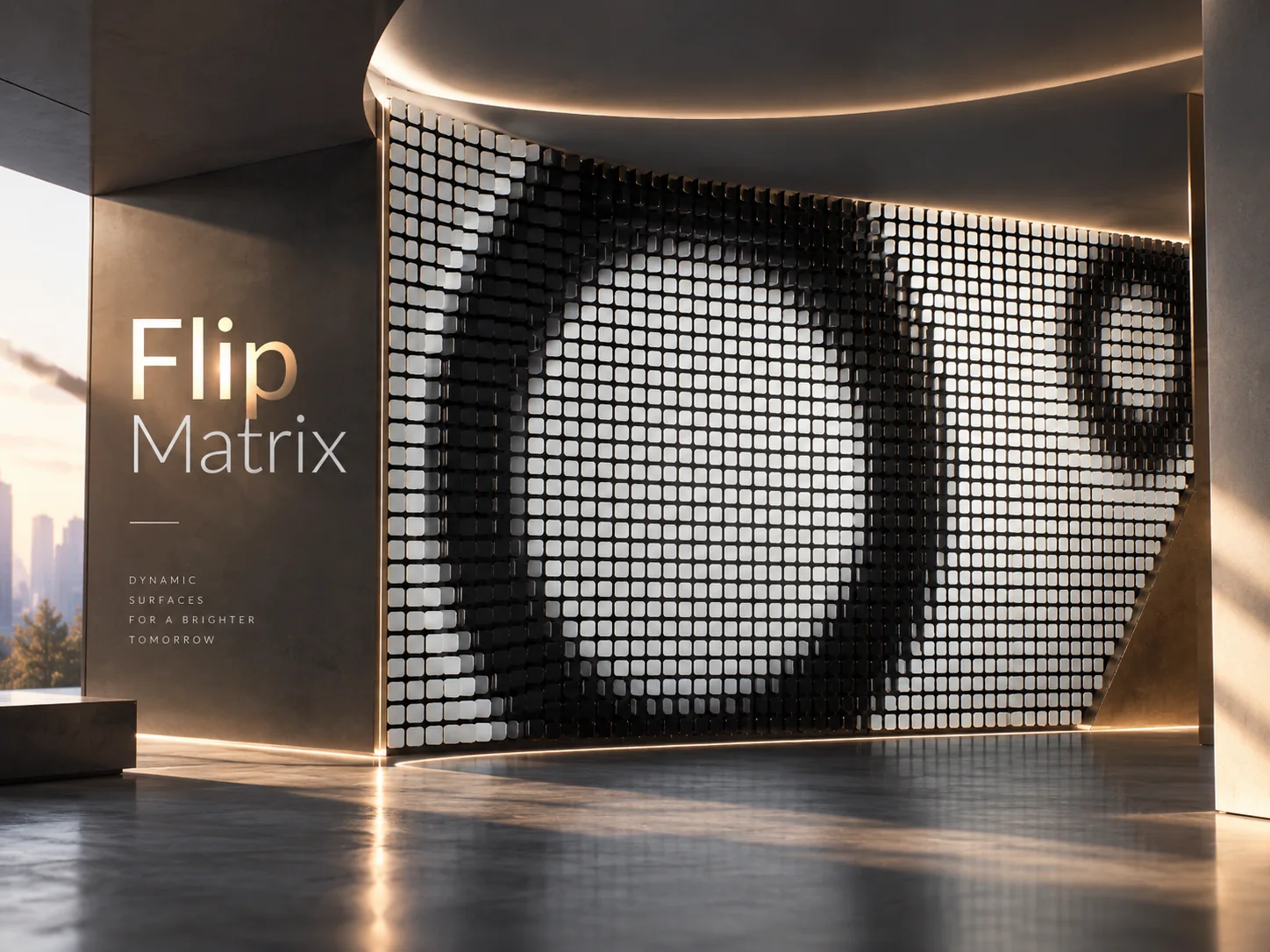
Spectrum Flip Matrix, part of Spectrum Display’s SPFM Series, takes a different approach to mechanical visual expression.
Instead of creating physical depth through Z-axis extension and retraction, it uses arrays of independently controlled flipping units to create changing colors, patterns, lighting effects, and physical movement.
Different models address different spatial requirements.
SPFM-100 offers a density of 64 units/m², making it suitable for boutique storefronts, premium retail environments, and other close-viewing applications.
SPFM-168, with 25 units/m², uses larger physical units to cover larger areas with fewer mechanisms, making it suitable for flagship-store feature walls and shopping-mall atriums.
SPFM-138L combines mechanical flipping with full-color RGB lighting, allowing the installation to behave as a physical surface by day and a dynamic lighting installation by night.
SPFM-138P combines mechanical movement with an LED display surface, allowing video content and physical transformation to coexist within the same installation.
The engineering value of Flip Matrix lies in the fact that it is not simply a screen for displaying images.
It turns the wall itself into a dynamic medium.
Through protocols such as DMX512 and Art-Net, the SPFM Series can be integrated with stage-lighting and interactive-control environments, enabling mechanical movement to become part of a broader spatial experience.
▶Video · YouTubeLEAP 2025 Kinetic Screen Case Study — 5 m × 3 m SPKI-160 in Saudi ArabiaWatch on YouTube →
6. Exhibition System: A Three-Layer Spatial Visual Architecture at LEAP Saudi Arabia
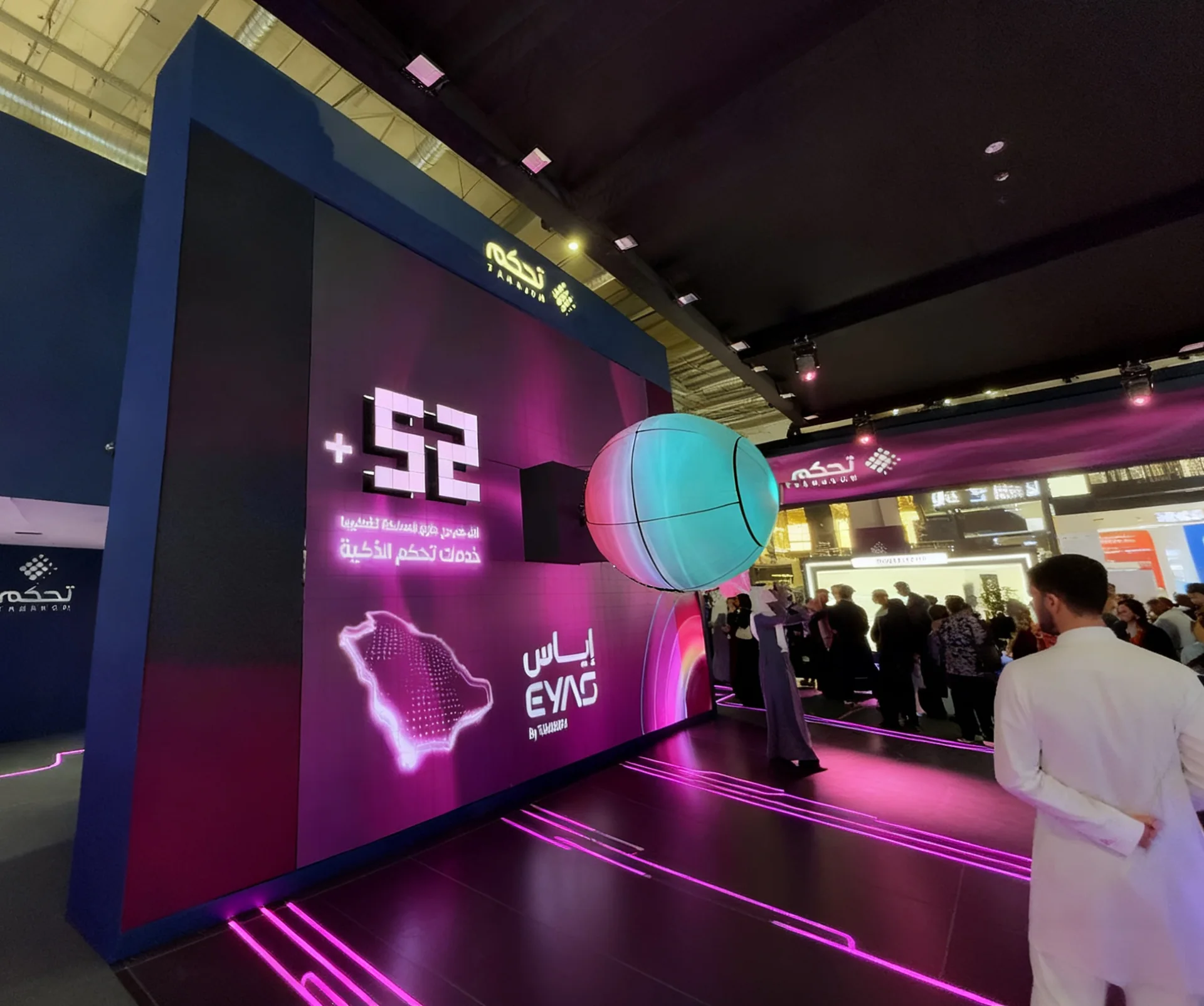
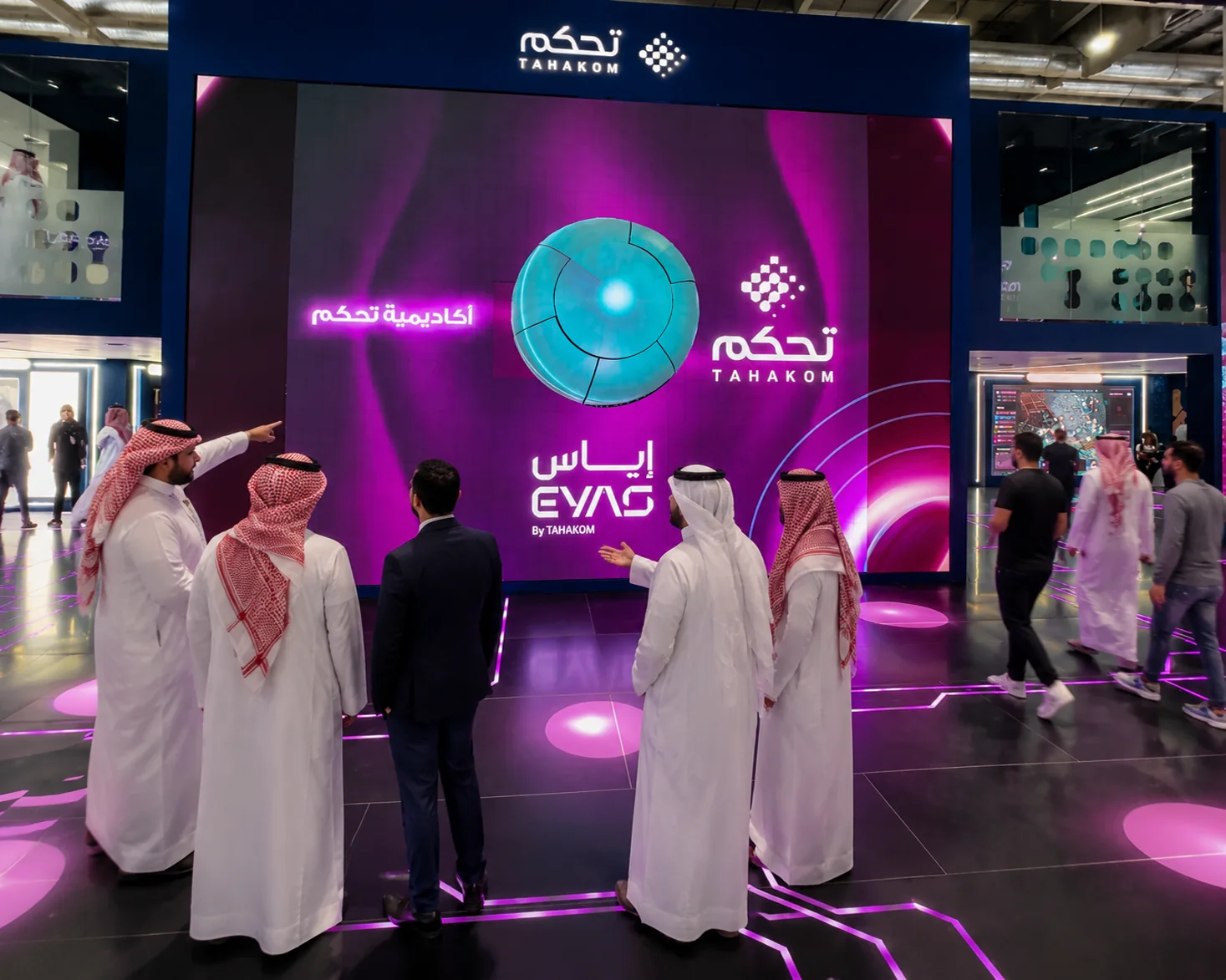
At the LEAP technology exhibition in Saudi Arabia, Spectrum Display deployed a combination of 3D Kinetic LED and spherical immersive display systems.
Large technology exhibitions create a different set of challenges.
Exhibitors compete intensely for attention. Visitors move quickly through the venue. Standard LED walls are everywhere, making it increasingly difficult for a booth to establish a recognizable spatial identity.
The solution was to think beyond a single display and create a three-layer spatial visual architecture.
Layer 1: Main Mechanical LED Display Wall
The primary LED structure delivers the main brand narrative and creates the strongest first visual impact.
Instead of functioning purely as a video surface, mechanical movement adds physical depth to the presentation.
Layer 2: LED Sphere Installation
The spherical display becomes a central visual landmark within the booth.
Its 360-degree visibility helps strengthen spatial recognition, adds a futuristic visual element, and creates a natural focal point for visitors and photography.
Layer 3: Floor Lighting and Spatial Guidance
Floor-level LED lighting helps guide visitor movement through the booth while reinforcing depth and spatial hierarchy.
Rather than treating the booth as a static collection of screens, the system creates a more continuous visitor journey.
The core concept is therefore not a single piece of equipment.
It is an integrated system of:
Visual Content + Space + Physical Movement + Visitor Flow
A modular architecture also supports disassembly, transportation, and reinstallation for exhibitions and other temporary applications.
7. Comparison & Conclusion: Different Spaces, the Same Engineering Logic
| Project | Core Challenge | Key Solution | Engineering Focus |
|---|---|---|---|
| Sayram Lake Immersive Theater | Acoustic reverberation, energy consumption, color fidelity | Acoustically transparent LED, low-power architecture, DCI-P3 color performance | Integrated acoustic, visual, and thermal design |
| Mandarin Oriental Jakarta | Heat, humidity, environmental exposure, facade maintenance | Self-cooling architecture, signal redundancy, distributed power | Long-term system reliability in demanding outdoor conditions |
| Singapore Bar Ceiling | Limited ceiling depth, no rear maintenance access | 330mm body depth + front maintenance | Extreme-space adaptation and service accessibility |
| Spectrum Flip Matrix | Creating physical visual expression beyond conventional video | Independent flipping units + lighting/video integration | Mechanical movement as spatial communication |
| LEAP Saudi Arabia | Intense visual competition, short visitor attention span | Three-layer spatial architecture: main display + sphere + floor guidance | Multi-system integration and spatial storytelling |
Despite their differences, these projects share one defining characteristic:
The challenge is not whether the screen can turn on. The challenge is whether the system can operate reliably, maintainably, and elegantly within a specific space over the long term.
For Spectrum Display, complex LED engineering therefore begins with the environment rather than the product catalog.
A cultural-tourism theater may require acoustic integration, thermal efficiency, and cinematic visual performance.
An outdoor landmark may prioritize environmental protection, thermal management, structural integration, redundancy, and maintenance.
A ceiling installation may be determined by a few hundred millimeters of available depth.
A commercial art installation may require physical movement, lighting, materials, and interaction to function as one system.
An exhibition environment may require several different visual technologies to work together as a single spatial narrative.
Different spaces.
Different constraints.
Different technical answers.
But the underlying engineering logic remains the same:
Start with the space, identify the constraints, and engineer the system around the project — not the project around the product.
Recommendations for Project Owners
Bring the engineering team into the project as early as possible. The sooner spatial, structural, environmental, acoustic, electrical, and maintenance constraints are identified, the more effectively they can be solved during design rather than onsite.
When evaluating an LED supplier, look beyond individual product specifications. Consider whether the team has experience across different climates, installation environments, spatial formats, and engineering disciplines.
For immersive projects, focus on acoustics, energy consumption, thermal management, and visual fidelity.
For outdoor architectural installations, prioritize environmental protection, thermal engineering, structural integration, redundancy, and maintenance access.
For ceiling-mounted systems, installation depth and maintenance architecture may determine whether the project is feasible at all.
Ultimately, complex LED engineering is not about finding one product that works everywhere.
It is about having the engineering capability to find the right solution for each space.
For customized LED engineering and cross-scenario project solutions, contact the Spectrum Display team.