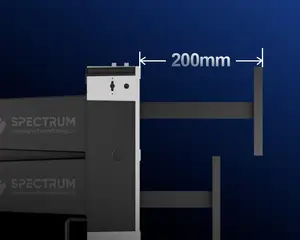
Where Should You Install a 230 mm Stroke Kinetic Screen? Six Applications for the SPKI-166
One-Sentence Definition: The SPKI-166 is not a one-size-fits-all LED display. It is an indoor kinetic screen designed for applications requiring greater physical depth, rapid motion response, and flexible installation. With a 230 mm motion stroke, full extension in as little as 0.4 seconds, P1.53 fine-pitch display option, and lightweight 18 kg cabinet, it transforms conventional flat screens into dynamic three-dimensional installations across six key indoor applications.
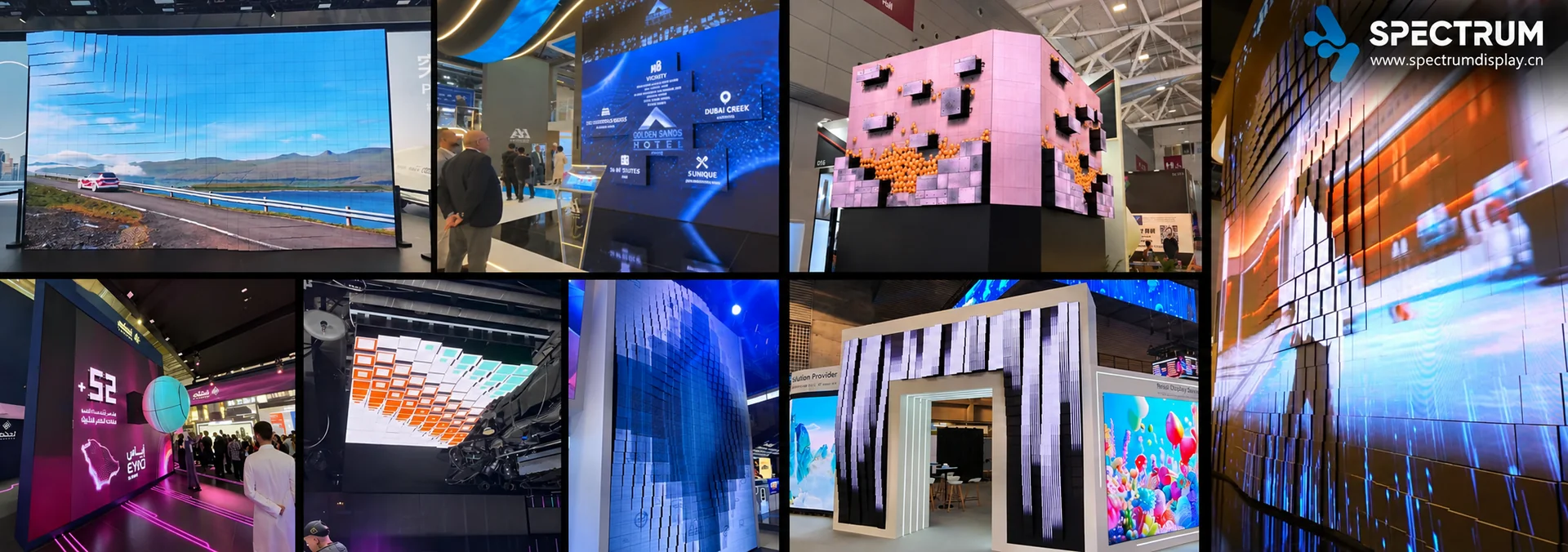
1. Why Application Requirements Matter More Than Specifications
In our previous article, we explored the SPKI-166's core specifications: 230 mm motion stroke, 650 mm/s maximum speed, full extension in 0.4 seconds, P1.53 fine-pitch display, 0.2 mm visual gap, and 18 kg cabinet.
But technical specifications alone do not determine a product's value. Even an advanced kinetic screen needs the right environment to deliver its intended visual effect.
The SPKI-166 is designed for indoor projects where conventional flat LED displays cannot provide sufficient physical depth, or where other kinetic screen configurations may not fully meet the required motion and installation conditions.
Let's explore six applications using a practical approach: project requirements, technical advantages, and why the SPKI-166 is a suitable choice.
2. Application 1: Premium Corporate Showrooms — Bringing Brand Stories into Physical Space
Project Requirements: Corporate showrooms represent a company's identity and capabilities. Visitors often view displays from relatively short distances, making image clarity and visual impact especially important.
Why Choose the SPKI-166?
1. P1.53 Fine-Pitch Display: The SPKI-166 offers P1.53 and P1.888 pixel pitch options. Its 0.2 mm visual gap, supported by a 0.4 mm LED chip offset, helps create a more continuous display surface. The P1.53 configuration is particularly suitable for detailed graphics, product presentations, and close-range viewing.
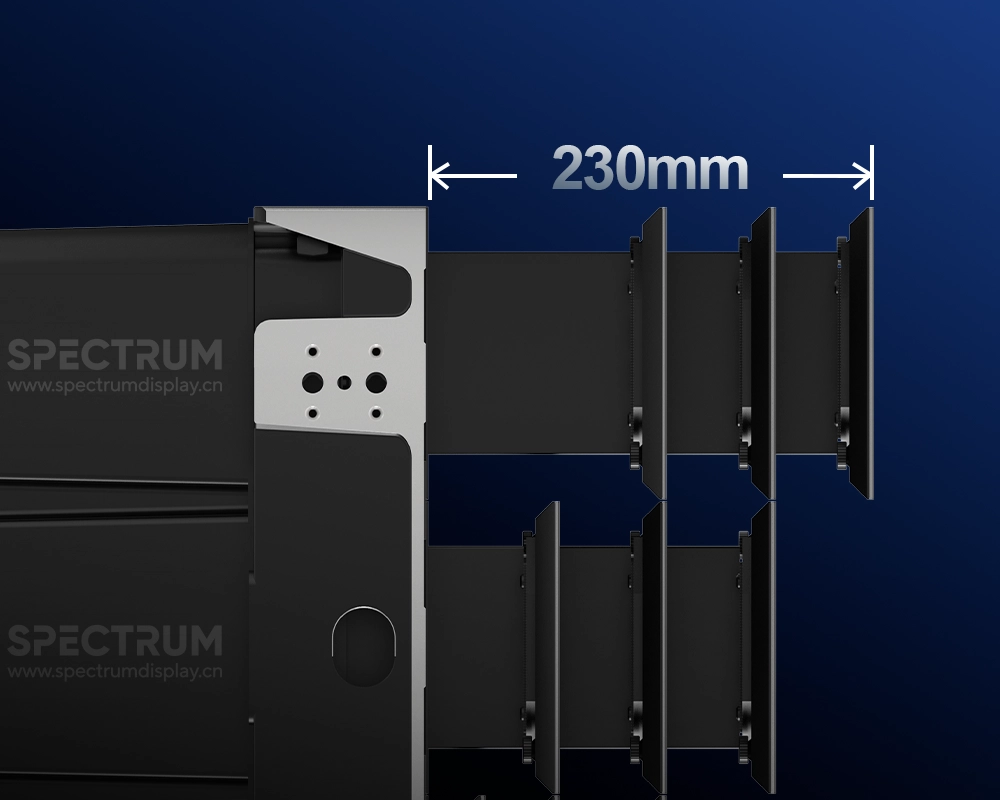
2. 230 mm Physical Depth: When presenting products such as automotive components or semiconductor technology, the moving modules can physically extend outward, adding real depth to digital imagery. This creates an effect that conventional flat LED screens cannot reproduce through mechanical movement alone.
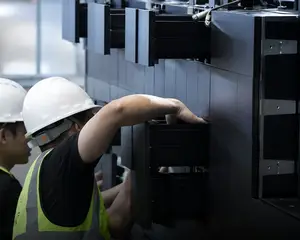
3. Front and Rear Maintenance: Corporate showrooms often require wall integration or customized architectural structures. The SPKI-166 supports both front and rear maintenance, providing greater flexibility when rear access is restricted.
Best suited for: Corporate headquarters, automotive showrooms, technology exhibition centers, and premium brand experience spaces.
3. Application 2: Commercial Spaces and Shopping Mall Atriums — Creating a Dynamic Visual Landmark
Project Requirements: Shopping malls need distinctive attractions that capture attention and encourage visitors to explore the space. As conventional LED displays become increasingly common, physical movement can offer a different visual experience.
Why Choose the SPKI-166?
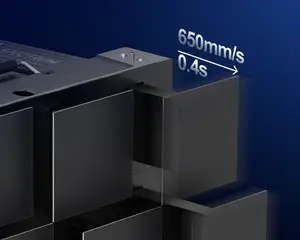
1. Rapid Physical Movement: With a maximum speed of 650 mm/s and full extension in as little as 0.4 seconds, the SPKI-166 can create dynamic surface transformations, making the display stand out from stationary digital signage.
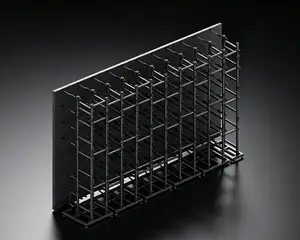
2. Lightweight Modular Construction: Each 500 × 500 mm cabinet weighs 18 kg and contains nine independent motion units. The modular format supports flexible suspended and architectural installations, subject to structural and dynamic-load calculations.
3. Three-Dimensional Viewing Experience: Its 230 mm motion stroke creates visible changes in surface depth. Visitors approaching from different angles can experience changing relief patterns, making the installation an attractive subject for photography and video.
Best suited for: Shopping mall atriums, luxury retail spaces, commercial lobbies, and indoor digital landmarks.
4. Application 3: Brand and Product Launch Events — Synchronizing Motion with Key Moments
Project Requirements: Product launches depend on anticipation, dramatic reveals, and coordinated visual effects. The LED screen should become part of the performance rather than serving only as a background.
Why Choose the SPKI-166?
1. Fast One-Way Extension: The SPKI-166 can extend its modules through the full 230 mm stroke in as little as 0.4 seconds, making it suitable for rapid physical effects during countdowns, product reveals, and musical transitions.
2. DMX512 Control Integration: Spectrum Display provides a dedicated DMX512 data interface, enabling compatible stage-lighting systems to coordinate kinetic movement with lighting cues and programmed show sequences.
3. Fine-Pitch Visual Presentation: With P1.53/P1.888 pixel pitch options and brightness of at least 600 nits, the SPKI-166 supports detailed brand graphics and presentation content. Camera performance should be verified against the actual refresh settings and filming environment.
Best suited for: Automotive launches, technology product announcements, corporate events, and premium brand presentations.
5. Application 4: Stage Productions and Live Performances — Greater Freedom for Kinetic Stage Design
Project Requirements: Touring productions and live performances often require equipment that is modular, transportable, and adaptable to different stage structures.
Why Choose the SPKI-166?
1. Lightweight Cabinet Design: Each cabinet weighs approximately 18 kg, allowing individual units to be handled and assembled in modular configurations. Actual installation time and crew requirements depend on the complete stage design.
2. Flexible Mounting Options: The SPKI-166 supports suspended, stacked, wall-mounted, and face-up configurations. These options give stage designers more freedom to create dynamic backdrops, overhead installations, and custom kinetic structures.
3. Anti-Pinch Protection: The system features a specified 3 kg anti-pinch release-load threshold to help reduce risks associated with mechanical contact. Appropriate clearances, barriers, and safety procedures remain essential, especially in performance environments.
Best suited for: Indoor concerts, theatrical productions, corporate performances, exhibition stages, and live entertainment events.
6. Application 5: Art Installations and Science Museums — Turning Digital Data into Physical Sculpture
Project Requirements: Art galleries and science museums often need engaging ways to communicate abstract concepts, scientific principles, and digital information.
A kinetic screen can make these ideas visible through actual physical movement.
Why Choose the SPKI-166?
1. Physical Data Visualization: Its 230 mm motion stroke allows digital information to be translated into changing three-dimensional forms. Wind patterns, sound frequencies, and abstract datasets can become moving surface structures through suitable content programming.
2. Combined Visual and Mechanical Effects: Fine-pitch LED imagery works alongside physical surface movement to create layered presentations. Animations involving ocean waves, geometric sculptures, or scientific simulations can gain an additional spatial dimension.
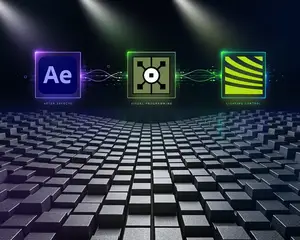
3. Programmable Motion Control: Spectrum Display's MotionMatrix4 and other creative tools enable designers to develop motion sequences suited to exhibition narratives. For quiet gallery environments, operating noise should be evaluated during project testing.
Best suited for: Science museums, digital art galleries, technology museums, multimedia exhibitions, and kinetic art installations.
7. Application 6: Interactive Experience Spaces — Making the Environment Respond
Project Requirements: Interactive exhibitions aim to transform visitors from passive viewers into active participants. Physical feedback can make these experiences more engaging.
Why Choose the SPKI-166?
1. Interactive Software Ecosystem: Spectrum Display provides TD2Matrix for TouchDesigner and UE2Matrix for Unreal Engine 5. These plugins support the development of real-time interactive applications using compatible hardware such as LiDAR sensors, cameras, microphones, and touchscreens.
2. Physical Interaction Feedback: Imagine a visitor approaching the screen and triggering a moving wave, or raising a hand to create a rising geometric form.
By combining sensor inputs, interactive software, and motion-control programming, the SPKI-166 can respond with actual mechanical movement rather than visual effects alone.
3. Rapid Motion Capability: Its fast extension performance supports responsive interactive designs, although total response time also depends on sensor processing, software, communication, and motion settings.
Best suited for: Interactive museums, immersive exhibitions, digital experience centers, and technology-driven entertainment spaces.
8. SPKI-166 Application Selection Guide
| Application | Primary Requirements | Key SPKI-166 Advantages |
|---|---|---|
| Premium Corporate Showrooms | Close-range viewing, detailed visuals, wall integration | P1.53 option, 0.2 mm visual gap, front and rear maintenance |
| Shopping Mall Atriums | Strong visual impact, suspended installations | 230 mm stroke, 18 kg modular cabinet, dynamic physical relief |
| Brand Launch Events | Rapid visual transitions, music and lighting synchronization | 0.4-second fastest full extension, DMX512 integration |
| Stage Productions | Modular installation, flexible mounting, safety | 18 kg cabinet, multiple mounting options, 3 kg anti-pinch release-load specification |
| Art Installations and Museums | Physical data visualization, sculptural movement | 230 mm physical depth, programmable kinetic content |
| Interactive Experience Spaces | Sensor integration, real-time physical feedback | TouchDesigner/UE5 plugins, LiDAR and camera integration |
The SPKI-166 is particularly attractive when a project requires several of these capabilities simultaneously, such as fine-pitch imagery, substantial physical movement, and flexible maintenance access.
▶Video · YouTubeDifferent Forms. Endless Display Possibilities.Watch on YouTube →9. Frequently Asked Questions (FAQ)
Q1: Can the SPKI-166 be assembled into a large kinetic screen?
A: Yes. The SPKI-166 uses a modular cabinet structure and industrial CAN bus communication architecture, allowing multiple cabinets to form larger displays.
Each square meter contains approximately 36 independent motion units. A 50 m² installation would therefore involve approximately 1,800 units.
The final system size depends on controller capacity, structural design, power distribution, maintenance access, and the project environment.
Q2: Can the SPKI-166 operate in a shopping mall atrium during hot summer weather?
A: The SPKI-166 is designed for indoor operation. The project's ambient temperature, humidity, ventilation, and solar exposure must remain within the manufacturer's approved operating conditions.
For atriums with significant sunlight exposure or elevated temperatures, additional thermal evaluation may be necessary.
Indoor equipment should not be treated as suitable for outdoor or uncontrolled environments without technical confirmation.
Q3: Do interactive installations always require custom programming?
A: Not necessarily. Simple interactive effects may be developed using existing templates and compatible software workflows.
However, complex experiences involving visitor tracking, gesture recognition, real-time graphics, or interactive games typically require additional integration.
Spectrum Display's TouchDesigner and UE5 plugins provide development tools that can support these applications.
Q4: Does the SPKI-166 support irregular or customized installation shapes?
A: The SPKI-166 uses modular cabinets that can be incorporated into customized display layouts and structures.
However, irregular shapes, angled arrangements, and non-standard installations require engineering evaluation.
Cabinet connections, movement clearances, structural support, cable routing, and maintenance access must all be verified before implementation.
10. Conclusion
The value of a kinetic screen depends on how effectively its technical capabilities serve the project environment.
The SPKI-166 is particularly suitable for indoor installations that need real physical depth, rapid movement, detailed LED imagery, and installation flexibility.
Key Takeaways
- Corporate Showrooms: P1.53 fine-pitch imagery and a 230 mm motion stroke support compelling brand presentations.
- Commercial Spaces: Fast movement and physical relief help create distinctive visual landmarks.
- Product Launches: Full extension in as little as 0.4 seconds and DMX512 integration support dramatic stage effects.
- Stage Productions: Lightweight modular cabinets and flexible installation options support creative stage design.
- Art Installations: Programmable physical movement transforms digital concepts into kinetic sculpture.
- Interactive Experiences: TouchDesigner, UE5, and compatible sensors enable visitors to interact with a physically moving display.
The SPKI-166 is not designed to replace every indoor LED display. Its strength lies in projects where physical movement adds meaningful value to the visual experience.
For technical specifications, project evaluation, or a customized SPKI-166 solution, contact Spectrum Display through its official website: