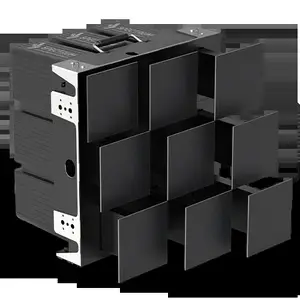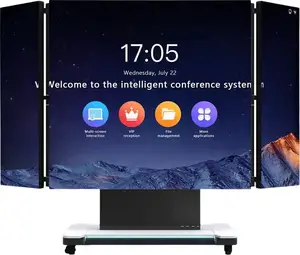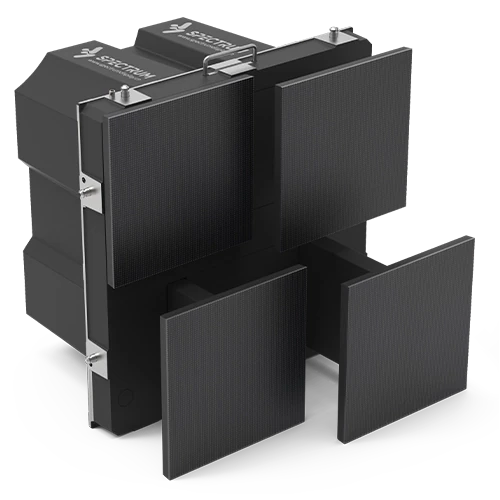
SPKI-166, SPKI-160, or SPKI-250? How to Choose the Right Indoor 3D Kinetic LED Screen
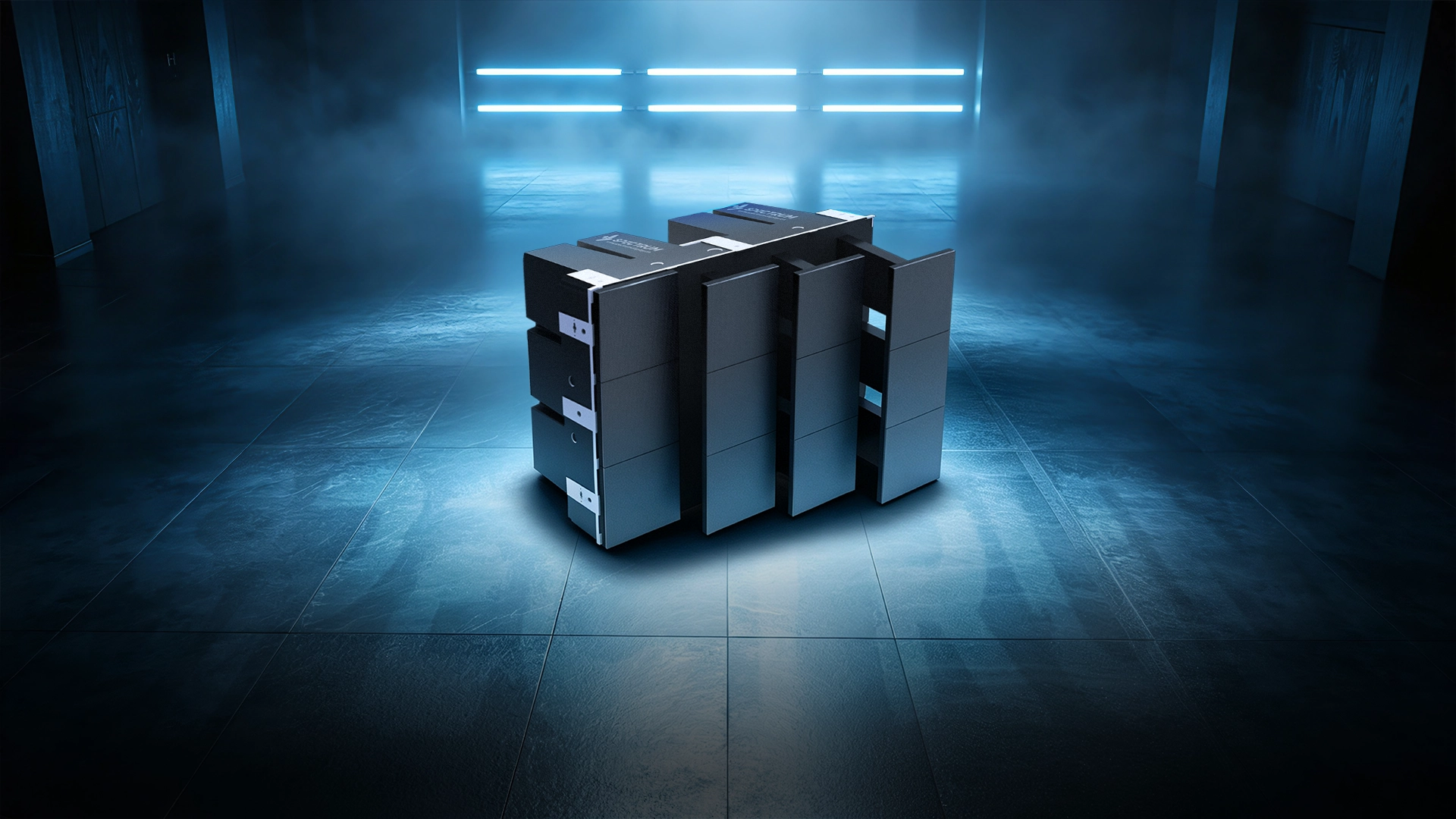
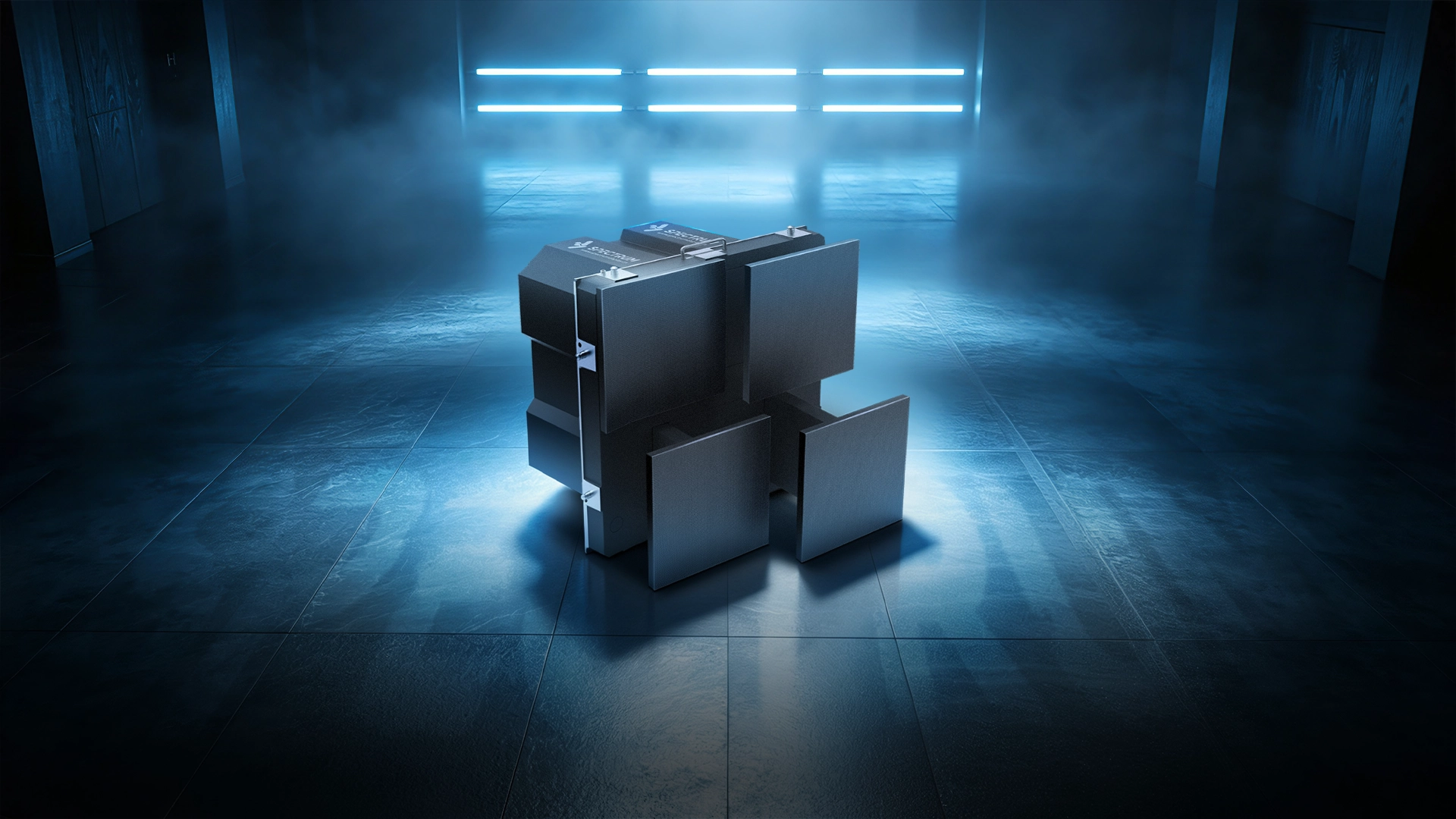
One-Sentence Definition: SPKI-166, SPKI-160, and SPKI-250 are all indoor 3D kinetic LED screens from Spectrum Display, but they are not positioned as “better” or “worse” versions of one another. Instead, they are designed for three different engineering requirements: SPKI-166 focuses on greater physical depth and dual-side maintenance, SPKI-160 prioritizes an ultra-slim structure for space-constrained installations, while SPKI-250 uses larger motion units for large-scale installations and monumental visual impact.
Contents
- Why Is There No “Best Model,” Only the “Right Model”?
- Core Specification Comparison: Understanding the Differences at a Glance
- Selection Factor 1: Physical Depth and Motion Speed
- Selection Factor 2: Installation Depth and Maintenance Method
- Selection Factor 3: Motion Unit Density and Viewing Distance
- Selection Guide: Where Does the SPKI-166 Fit?
- Frequently Asked Questions (FAQ)
- Conclusion
1. Why Is There No “Best Model,” Only the “Right Model”?
When purchasing a kinetic LED system, customers often ask one question:
“You have the SPKI-166, SPKI-160, and SPKI-250. Which one is the best?”
This is a classic example of falling into the “specification mindset.”
In the world of mechanical LED systems, a larger or smaller number does not necessarily indicate better or worse performance. Instead, each model represents a different engineering trade-off and is optimized for different project conditions.
Want an ultra-slim display mounted as close to the wall as possible? Installation depth becomes the priority.
Want to cover a very large wall? Larger motion units and longer viewing distances may make more sense.
Want stronger physical 3D depth? You need a longer extension stroke.
The key to product selection is therefore not finding a model that is “best at everything,” but identifying the model that most effectively solves the constraints of your specific space.
In this guide, we compare three indoor 3D kinetic LED screens from Spectrum Display—SPKI-166, SPKI-160, and SPKI-250—and explain how to choose between them from an engineering perspective.
2. Core Specification Comparison: Understanding the Differences at a Glance
| Comparison | SPKI-166 | SPKI-160 | SPKI-250 |
|---|---|---|---|
| Module Size | 165.6 × 165.6mm | 160 × 160mm | 248.5 × 248.5mm |
| Pixel Pitch Options | P1.53 / P1.888 | P1.98 | P1.56 / P1.95 / P2.6 |
| Motion Units per m² | 36 units/m² | 38.6 units/m² | 16 units/m² |
| Maximum Extension Stroke | 230mm | 200mm | 200mm |
| Maximum Extension Speed | 650mm/s | 600mm/s | 500mm/s |
| Fastest Full-Stroke Time | 0.4s | 0.4s | 0.5s |
| Cabinet Depth | 350mm | 330mm | 330mm + maintenance corridor |
| Cabinet Weight | 18kg | 23.3kg | 13kg |
| Maintenance Method | Front + Rear Maintenance | Front Maintenance | Rear Maintenance |
| Core Positioning | Greater depth, high speed, dual-side maintenance | Ultra-slim, space-constrained installations | Large motion units, large-scale installations, long viewing distances |
3. Selection Factor 1: Physical Depth and Motion Speed
SPKI-166: Greater Physical Depth for Stronger Visual Impact
The SPKI-166 offers the longest extension stroke of the three models at 230mm.
What does an additional 30mm of physical travel mean in practice?
When displaying content involving strong outward movement, explosions, pulses, or other dramatic motion effects, the modules can project farther from the original screen surface. From side viewing angles, this creates a more pronounced three-dimensional relief effect.
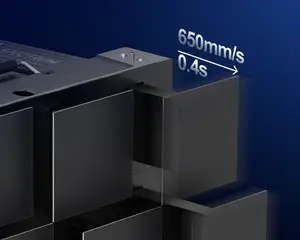
Combined with a maximum speed of 650mm/s and a 0.4-second full-stroke time, the SPKI-166 is designed for projects that require high-impact physical motion.
If a project prioritizes dramatic 3D depth, fast movement, or strong visual effects that remain visible from oblique viewing angles, the SPKI-166 is the strongest choice among the three.
SPKI-160: A Balanced Choice for Most Applications
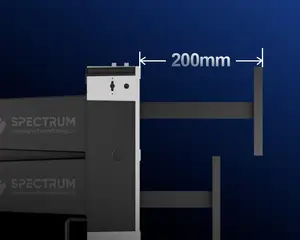
The SPKI-160 provides a 200mm extension stroke and a maximum speed of 600mm/s.
For most exhibitions, showrooms, commercial displays, and conventional video content, this level of performance is already sufficient to create a highly visible physical 3D effect.
Its strength lies not in maximizing one individual specification, but in balancing motion performance with a particularly compact installation structure.
SPKI-250: Monumental Impact Through Larger Motion Units
The SPKI-250 provides a 200mm extension stroke and a maximum speed of 500mm/s.
Although its movement is slower than the SPKI-166 and SPKI-160, each motion unit measures 248.5 × 248.5mm.
Viewed from a distance, these larger moving blocks create broader physical changes across the display surface, producing a slower, heavier, and more monumental sense of movement.
4. Selection Factor 2: Installation Depth and Maintenance Method
This is often the factor that determines whether a kinetic LED screen can actually be installed—and how easy it will be to maintain after installation.
SPKI-160: The Ultra-Slim Specialist for Space-Constrained Installations
The SPKI-160 has a cabinet depth of only 330mm, making it the slimmest of the three models.
It supports front maintenance, allowing the system to be installed close to a wall without requiring a rear maintenance corridor.
This makes it particularly suitable for applications where installation space is extremely limited, such as shopping mall windows, narrow corridors, and other wall-integrated commercial spaces.
SPKI-250: Rear Maintenance for Large and High-Mounted Installations
The SPKI-250 also has a cabinet depth of 330mm, but additional rear maintenance space is required.
It uses a rear-maintenance architecture, making it particularly suitable for large permanent installations in high-ceiling spaces such as shopping mall atriums and airports.
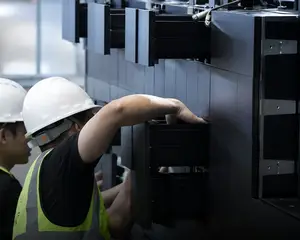
With a properly designed rear maintenance corridor, technicians can access the system from behind the display rather than relying on aerial work platforms for routine servicing.
SPKI-166: Flexible Front and Rear Maintenance
The SPKI-166 has a cabinet depth of 350mm, slightly deeper than the SPKI-160, but it gains an important engineering advantage: both front and rear maintenance are supported.
If there is no service space behind the wall, technicians can maintain the system from the front. If the final installation provides a rear access corridor, the system can also be serviced from behind.
This gives project designers greater flexibility when dealing with complex or changing site conditions.
At the same time, the SPKI-166 cabinet weighs only 18kg, compared with 23.3kg for the SPKI-160, helping reduce handling and installation effort on site.
5. Selection Factor 3: Motion Unit Density and Viewing Distance
SPKI-250: Designed for Long Viewing Distances and Large-Scale Coverage
The SPKI-250 uses only 16 motion units per square meter.
Fewer motors and fewer motion units are required to cover the same display area. For screens exceeding 100m² and projects where the primary viewing distance is more than 5 meters, the larger-unit architecture can significantly reduce system control complexity and overall project cost while maintaining strong physical impact from a distance.
This makes the SPKI-250 particularly suitable for large-scale installations and long-distance viewing.
SPKI-166 and SPKI-160: Higher Motion Density for Close Viewing
The SPKI-166 provides 36 motion units/m², while the SPKI-160 provides approximately 38.6 units/m².
Their motion-unit densities are relatively similar, making both models more suitable for applications where audiences view the display at closer distances.
The SPKI-166 also offers a P1.53 fine-pitch option. For high-end corporate showrooms or premium commercial spaces where viewers may stand only 1–2 meters from the display, the higher pixel density can deliver a finer, more detailed image.
6. Selection Guide: Where Does the SPKI-166 Fit?
Within Spectrum Display’s indoor kinetic LED lineup, the SPKI-166 can be positioned as an advanced, well-balanced model that combines greater physical depth, fast motion, high-resolution options, and flexible maintenance.
| Project Requirement | Recommended Model | Why |
|---|---|---|
| Extremely narrow storefront or close-to-wall installation | SPKI-160 | 330mm ultra-slim structure, front maintenance, no rear service space required |
| Very large high-mounted atrium, airport, or landmark installation | SPKI-250 | Large motion units, rear-maintenance architecture, optimized for large areas and long viewing distances |
| Stronger physical 3D depth and high-speed visual impact | SPKI-166 | 230mm maximum stroke and 650mm/s maximum speed |
| Complex installation requiring flexible front/rear access | SPKI-166 | Supports both front and rear maintenance with an 18kg lightweight cabinet |
| Close-range viewing requiring P1.53 fine-pitch image quality | SPKI-166 | P1.53 option for higher pixel density and finer image detail |
In one sentence:
SPKI-160 is optimized around minimum installation depth, SPKI-250 around large-scale coverage with larger motion units, while SPKI-166 preserves high-end motion performance and image quality while adding greater flexibility in maintenance and cabinet weight.
▶Video · YouTubeDesigned for Lightning-Fast Setup at Rental EventsWatch on YouTube →
7. Frequently Asked Questions (FAQ)
Q1: Does the extra 30mm of stroke on the SPKI-166 make a noticeable visual difference compared with the SPKI-160?
Yes. With a kinetic LED screen, a longer physical stroke allows the modules to project farther from the original display plane, creating a stronger three-dimensional relief effect. The additional 30mm can be particularly noticeable from side viewing angles and in content designed around strong physical depth.
Q2: Can all three models be combined into larger LED installations?
Yes. All three models support modular assembly.
However, the SPKI-250 uses larger motion units and is therefore better suited to large-scale installations, while the SPKI-166 and SPKI-160 are better suited to applications requiring finer physical motion and closer viewing distances.
Q3: Why does the SPKI-166 have a lighter 18kg cabinet than the SPKI-160 at 23.3kg despite offering a longer stroke?
The SPKI-166 uses a new die-cast aluminum architecture and an optimized internal structural design. This allows the system to increase motion performance while reducing overall cabinet weight.
Q4: Can the SPKI-166 be installed if there is no maintenance corridor behind the screen?
Yes. The SPKI-166 supports front maintenance.
As long as the supporting installation structure is properly designed, technicians can remove and service the relevant modules from the front of the display.
Q5: Can all three models be integrated with professional lighting consoles?
Yes. The series supports industrial-standard control protocols such as DMX512 and Art-Net, allowing the kinetic LED system to be integrated with professional lighting and show-control environments.
8. Conclusion
Choosing a kinetic LED screen is not about selecting the model with the highest specifications. It is about selecting the model that best fits the physical and engineering requirements of the project.
The key differences can be summarized as follows:
- SPKI-160: 330mm ultra-slim structure + front maintenance — designed for space-constrained projects where the screen needs to stay close to the wall.
- SPKI-250: 16 motion units/m² + rear maintenance — designed for very large installations, high-mounted applications, and long viewing distances.
- SPKI-166: 230mm maximum stroke + 650mm/s maximum speed + front and rear maintenance + 18kg lightweight cabinet — designed for projects seeking stronger physical 3D impact without sacrificing installation and maintenance flexibility.
For more product information or a project-specific model recommendation, contact the Spectrum Display team through the official website: