Front or Rear Maintenance for a Kinetic LED Screen? Why Does the SPKI-166 Support Both?
One-Sentence Definition: Front maintenance on a kinetic LED screen means servicing and removing modules from the front of the display, while rear maintenance means accessing components through a service corridor behind the screen. Through a specialized structural design, the SPKI-166 is one of the few models in Spectrum Display’s indoor series to support both front and rear maintenance, eliminating the traditional trade-off between limited installation space and long-term maintenance efficiency.
Contents
- A Difficult Either-Or Choice for System Integrators
- The Engineering Reality: Front Maintenance vs. Rear Maintenance
- How Does the SPKI-166 Support Both?
- Practical Scenarios: Maintenance Strategies for Three Installation Methods
- How Much Can the Right Maintenance Method Save?
- Frequently Asked Questions (FAQ)
- Conclusion
1. A Difficult Either-Or Choice for System Integrators
During the planning stage of a mechanical LED project, system integrators and designers often find themselves debating the same issue.
The spatial designer says:
“This screen has to be installed directly against the wall. There is no space behind it, so front maintenance is essential.”
The maintenance engineer says:
“This wall is more than ten meters high. If we use front maintenance, every service visit will require scaffolding or an aerial work platform. We need a rear service corridor.”
In the past, this could become a dead end because most kinetic LED screens supported only one maintenance method.
Choose front maintenance, and servicing a high-mounted installation could become expensive. Choose rear maintenance, and tens of centimeters of valuable indoor space may have to be sacrificed for a service corridor.
The project team is forced to compromise between spatial aesthetics and long-term maintenance.
The SPKI-166 changes that equation. As an indoor 3D kinetic LED screen supporting both front and rear maintenance, it uses an optimized mechanical structure to address a problem that has long challenged project designers and system integrators.
2. The Engineering Reality: Front Maintenance vs. Rear Maintenance
To understand the value of the SPKI-166, it is important to first understand the fundamental engineering differences between the two maintenance approaches.
1. Front Maintenance: Preserving Valuable Installation Space
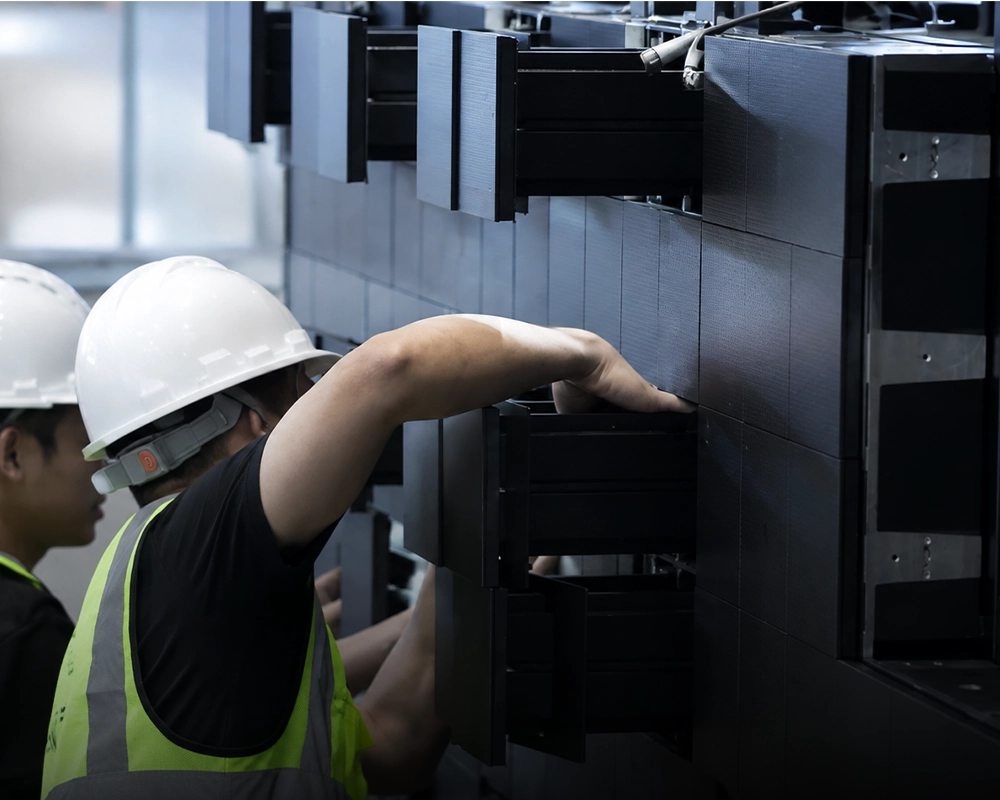
How it works: Technicians work from the front of the display and use dedicated tools or magnetic structures to remove LED modules or internal motion assemblies directly.
Engineering advantage: The screen can be installed close to the wall without requiring a rear service corridor, potentially saving at least 600mm of installation depth.
Typical applications: Recessed wall installations, premium retail windows, and fixed wall-mounted displays.
2. Rear Maintenance: Prioritizing Service Efficiency and Safety
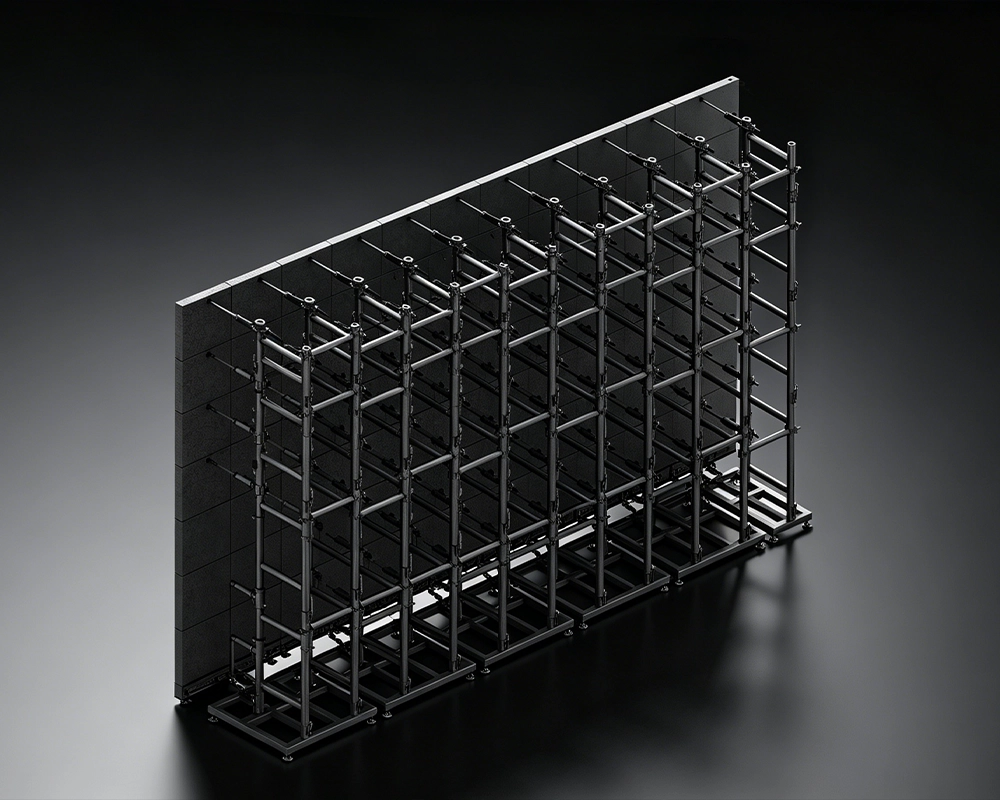
How it works: A service corridor, typically 600–800mm wide, is reserved behind the screen. Technicians enter the corridor, open the rear cover, and access internal components for inspection or replacement.
Engineering advantage: The larger working space makes maintenance easier without disturbing the front display surface. In some maintenance situations, components can also be accessed without shutting down the entire display system.
Typical applications: High-mounted installations in shopping mall atriums, large exhibition-hall installations, and projects requiring frequent routine inspections.
3. How Does the SPKI-166 Support Both Front and Rear Maintenance?
Customers sometimes ask:
“If front and rear maintenance each have their own advantages, why not simply build both access methods into every cabinet?”
The reason is that doing so usually leads directly to greater cabinet depth, more weight, and higher cost.
The SPKI-166 addresses this challenge through structural optimization, balancing dual-sided maintenance access with a relatively compact mechanical design.
350mm Cabinet Depth
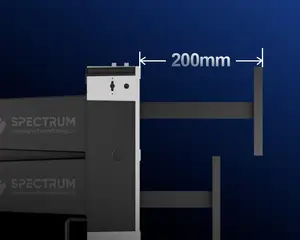
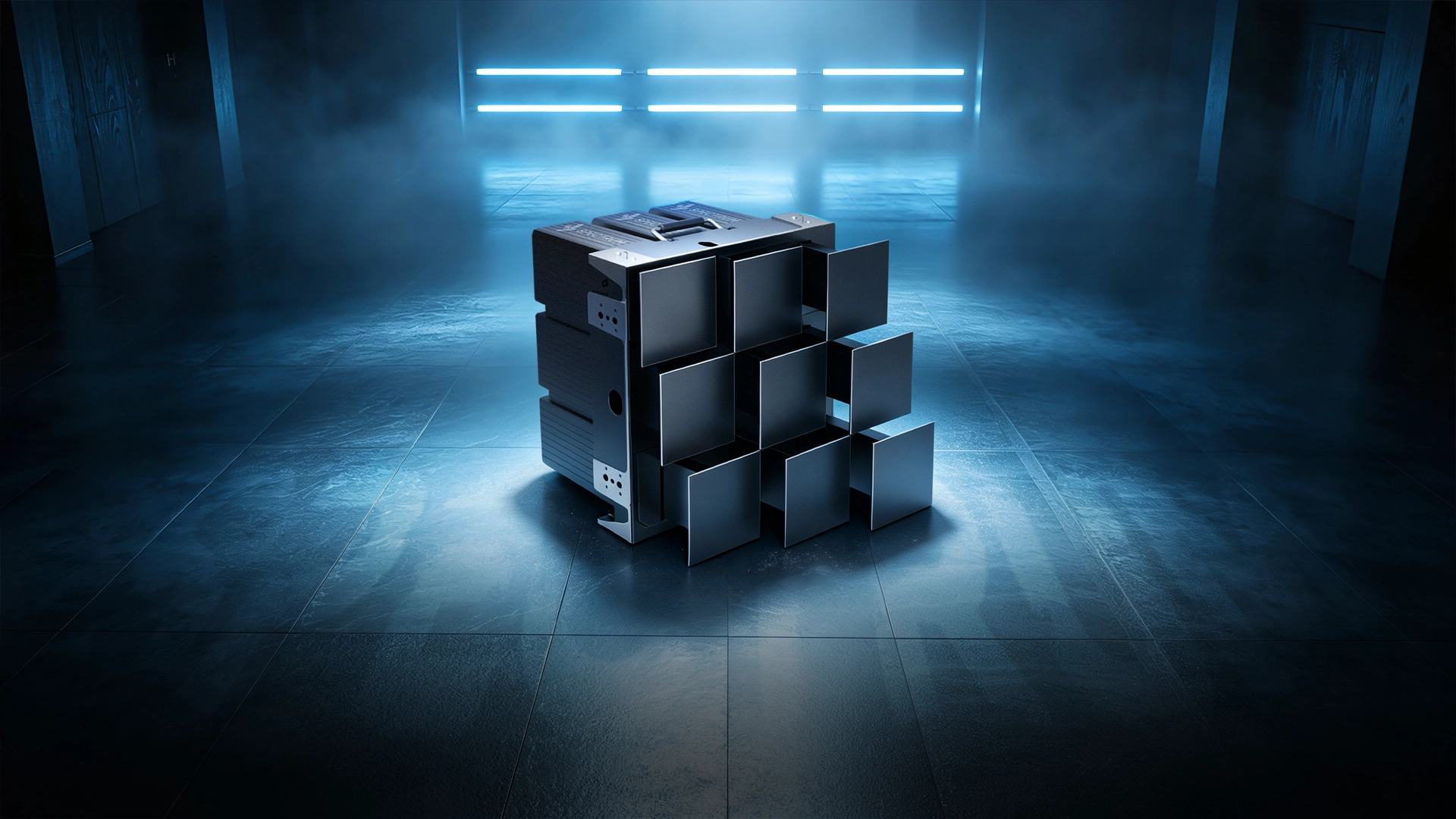
Even with both front and rear maintenance access, the cabinet depth remains at 350mm—only 20mm deeper than the 330mm SPKI-160, a model designed around a more compact front-maintenance structure.
18kg Lightweight Cabinet
The 500 × 500mm die-cast aluminum cabinet weighs 18kg, helping reduce the difficulty of transportation, handling, and installation.
Precision Quick-Release Structure
Dedicated access structures are designed on both sides of the cabinet.
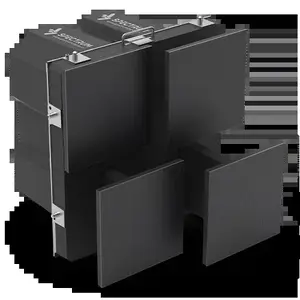
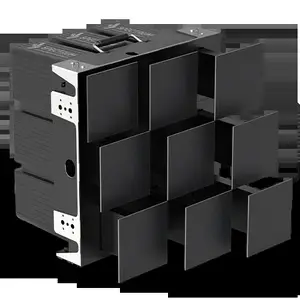
From the front, individual modules can be removed independently without affecting adjacent modules. From the rear, technicians can open the back cover and directly access components such as motors, power supplies, and control systems.
This means that during the early planning stage, you do not necessarily have to change the model simply because rear maintenance space is uncertain.
Even if pipes, structural elements, or other building services later obstruct the planned rear service corridor, the SPKI-166 can still be serviced from the front.
4. Practical Scenarios: Maintenance Strategies for Different Installations
The SPKI-166 supports multiple installation methods, including wall mounting, stacking, downward-facing suspension, and upward-facing installation. Maintenance strategies can therefore be adapted to the actual site conditions.
| Installation Method | Site Conditions | Recommended Maintenance | Engineering Logic |
|---|---|---|---|
| Wall-Mounted | Installed close to a wall with no rear access | Front Maintenance | Modules can be removed from the front without affecting the wall finish or requiring a rear corridor. |
| High-Level Suspended Installation | Suspended above a shopping mall atrium or public area | Rear Maintenance | A service area can be reserved above or behind the system, reducing the need to handle tools and components directly over public areas. |
| Stacked Installation | Floor-mounted kinetic LED array | Rear Maintenance as Primary, Front Maintenance as Backup | A main rear service corridor can handle routine work, while front access remains available where rear access is obstructed. |
An Advanced Maintenance Strategy
In a large kinetic LED installation, certain motion units may be partially obstructed by the supporting steel structure, making them difficult to reach from behind.
In this situation, engineers can remove an adjacent module from the front and use the resulting internal access space to service the obstructed unit.
This flexibility—having more than one maintenance route—is one of the key engineering advantages of the SPKI-166 for system integrators working with complex installation environments.
5. How Much Can the Right Maintenance Method Save?
Some projects select a single-maintenance design to reduce the initial purchase cost, only to discover several years later that the first major service operation costs far more than expected.
If a High-Mounted Project Uses Front Maintenance Only
An aerial work platform may be required for every major maintenance operation, potentially adding substantial service costs. In a shopping mall, scaffolding may even need to be installed after business hours to minimize disruption.
If a Wall-Mounted Project Uses Rear Maintenance Only
A dedicated rear service corridor must be created.
That can force the entire screen structure forward, causing what was intended to be a slim, integrated installation to protrude from the wall and compromise the original spatial design.
For this reason, the SPKI-166’s dual-access maintenance design is more than a technical specification—it provides flexibility throughout the project lifecycle.
Designers gain more freedom to create compact wall-integrated installations, while maintenance teams retain additional access options for complex or high-level projects.
▶Video · YouTubeFrom Installation to Motion — onsite installation and commissioningWatch on YouTube →
6. Frequently Asked Questions (FAQ)
Q1: Since the SPKI-166 supports both front and rear maintenance, is its 350mm cabinet much thicker than a single-access model?
A: No. The SPKI-160 has a cabinet depth of 330mm, while the dual-maintenance SPKI-166 has a depth of 350mm. The additional 20mm provides significantly greater flexibility for project installation and long-term maintenance.
Q2: Are front maintenance and rear maintenance equally convenient?
A: Both are designed for efficient servicing. From the front, the precision quick-release module design allows technicians to remove individual modules using dedicated tools. From the rear, the cabinet provides access to components such as motors and power modules for inspection and replacement.
Q3: How much space should be reserved behind the screen for rear maintenance?
A: A rear service corridor of approximately 600–800mm is recommended. The corridor should provide enough room not only for technicians to stand and move, but also for tool operation and temporary placement of replacement parts.
Q4: Does front maintenance require special tools? How is front maintenance performed several meters above the ground?
A: Front maintenance typically uses vacuum suction tools or dedicated unlocking tools. If the screen is installed several meters above the floor, a lifting platform or mobile scaffold is normally required for front access. If a suitable rear service corridor is available, rear maintenance may be the safer and more efficient option for high-mounted installations.
Q5: Does a dual-maintenance structure reduce cabinet strength?
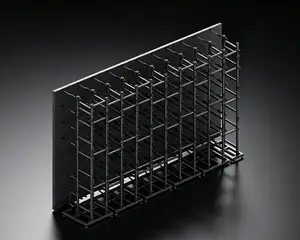
A: No. The cabinet uses high-strength die-cast aluminum, and the internal frame is designed with structural load requirements in mind. The main structural frame maintains the rigidity required for large-scale kinetic LED arrays whether the system is accessed from the front or rear.
7. Conclusion
Front maintenance primarily solves the problem of space, while rear maintenance primarily addresses service access and operational efficiency.
By supporting both, the SPKI-166 gives project teams greater flexibility instead of forcing them into an either-or decision during the design stage.
Key Takeaways:
- No More Either-Or Compromise: Projects do not have to sacrifice a compact wall-integrated design simply to create a rear service corridor, while complex installations retain additional maintenance options.
- 350mm Cabinet Depth + 18kg Lightweight Design: Dual-sided maintenance does not make the SPKI-166 unnecessarily bulky, helping it remain adaptable to different installation environments.
- Scenario-Based Maintenance: Front maintenance is well suited to wall-mounted installations, rear maintenance is often preferable for high-level installations with service access, and complex stacked systems can combine both.
- Lower Lifecycle Maintenance Costs: Greater flexibility during planning can reduce unnecessary structural compromises and simplify long-term servicing.
For more product details or a customized project solution, contact the Spectrum Display team through the Spectrum Display official website.