Table of Contents
What Is a Kinetic Screen
Working Principles and Core Components
SPKI Indoor Series: How to Choose Among Three Models
SPKO Outdoor Series: All-Weather Dynamic Sculptures
Six Core Advantages of Kinetic Screens
Six Application Scenarios
Frequently Asked Questions (FAQ)
Summary and Action Recommendations
I. What Is a Kinetic Screen
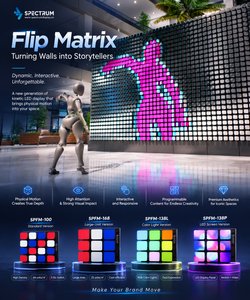
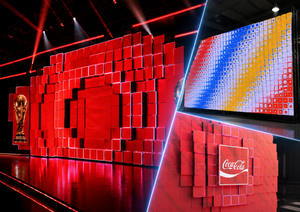
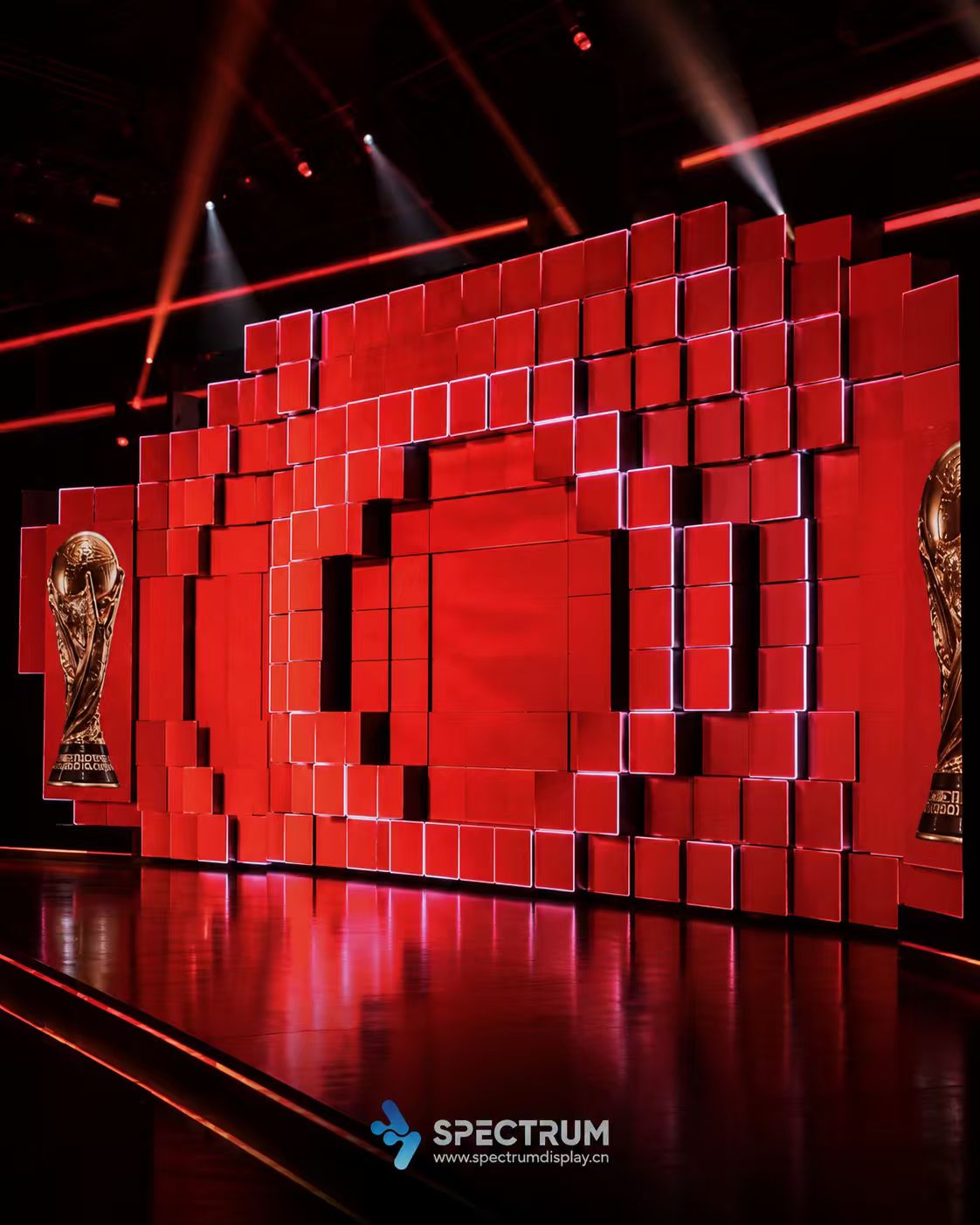
A Kinetic Screen is the perfect fusion of digital art and precision mechanics. Built upon ultra-high-definition LED display technology, it equips each display module with an independent Z-axis motion coordinate, allowing the screen to physically extend and retract in sync with video content.
Unlike traditional LED displays that rely on visual effects to create the illusion of "glasses-free 3D," a Kinetic Screen achieves true stereoscopic vision through physical front-and-back motion. This "physical 3D" effect transforms the screen from a mere content playback device into an active participant in spatial expression.
Core definition: Kinetic Screen = HD LED Display + Precision Mechanical Transmission + Intelligent Control System — a complete "hardware + software + content" ecosystem.
II. Working Principles and Core Components
Core Components
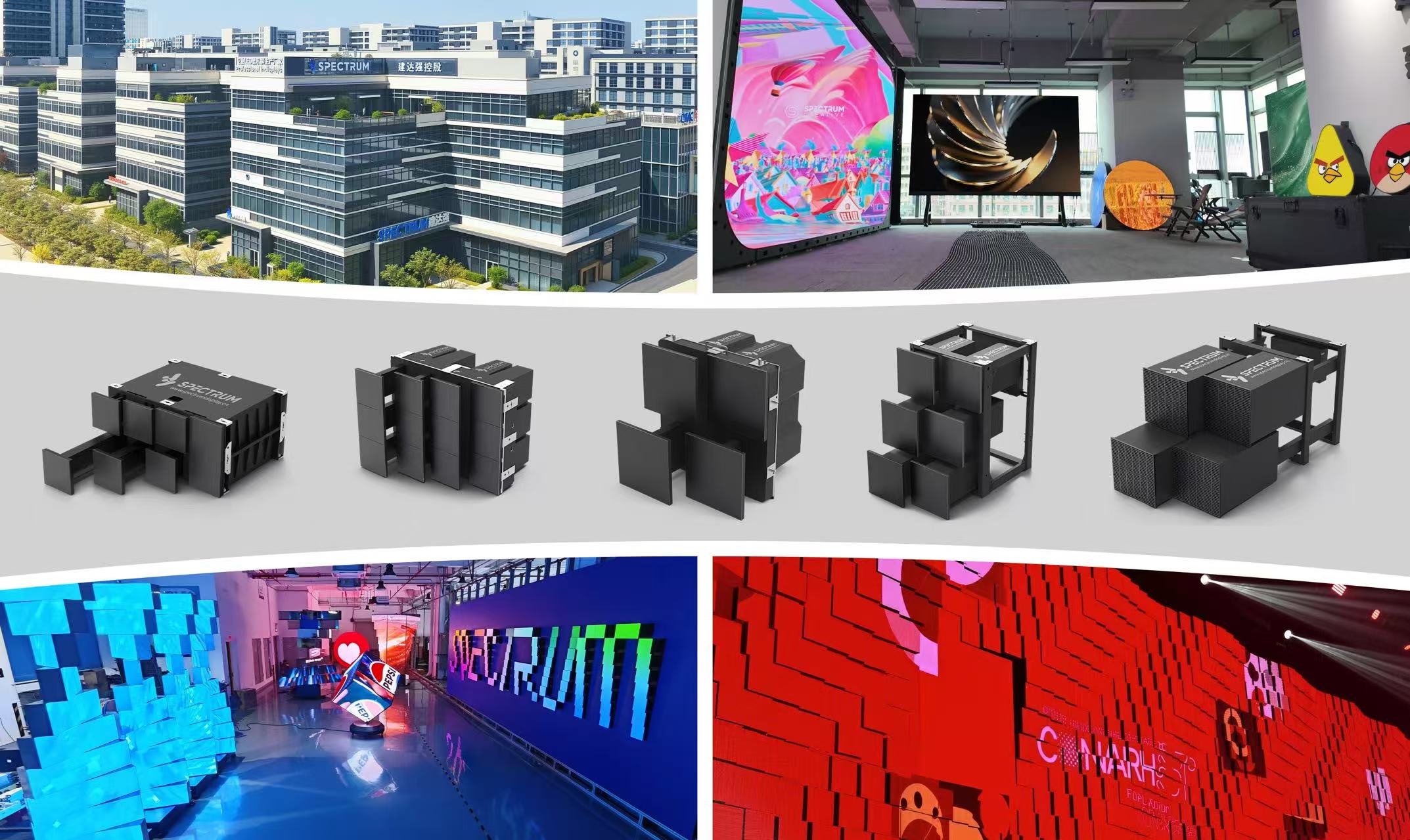
A Kinetic Screen consists of four interconnected systems working in harmony:
① Modular LED Display System
Adopts 500×500mm 4-in-1 independent die-cast aluminum cabinets, each containing 4 independently moving units. Precision machining with industrial-grade linear rails keeps module gaps within 1.5mm.
② Precision Mechanical Transmission System
Each motion unit is equipped with an independent servo motor and guide rail. FOC algorithm with 100% closed-loop control ensures precise Z-axis displacement. Indoor models achieve full-stroke motion in under 0.5 seconds.
③ Intelligent Control System
Built on automotive-grade CAN bus communication protocol, offering exceptional anti-interference and error-correction capabilities. A single system supports up to 65,536 motion units online simultaneously. Compatible with DMX512/ArtNet/sACN international standards.
④ Content Creation Ecosystem
Comprehensive toolchain including MotionMatrix4 (AE plugin), Mshow4 (3D PPT), TD2Matrix (TouchDesigner plugin), and UE2Matrix (UE5 plugin) for zero-code content creation.
III. SPKI Indoor Series: How to Choose Among Three Models
Spectrum Display's indoor Kinetic Screen lineup includes three models — SPKI-128, SPKI-160, and SPKI-250 — covering everything from luxury show windows to large-scale product launches.
SPKI-128 — High-Precision Micro-Gap, Best for Close-Range Viewing
Features the most精密 structural design, compressing physical gaps to just 0.5mm — achieving a "zero-gap" visual experience at normal viewing distances. Ideal for science museums, luxury brand stores, and museums where audiences view the screen up close.
SPKI-160 — 330mm Ultra-Thin, the Only Solution for Space-Constrained Scenarios
With a 330mm ultra-thin chassis and full front-maintenance support, the finished surface depth is only 350mm — allowing flush wall mounting like a standard display. Perfect for high-end shopping mall windows, corporate showrooms, and column wraps where space is at a premium.
SPKI-250 — Rental-Ready Workhorse for Large-Scale Projects
Designed specifically for rental applications with aviation plugs and lightweight cabinets. P1.945 and P2.604 models are kept in stock with over 100㎡ ready for immediate deployment. Built for large-scale product launches, museum main screens, and exhibition rentals.
IV. SPKO Outdoor Series: All-Weather Dynamic Sculptures
For harsh outdoor environments, Spectrum Display offers SPKO-320 and SPKO-500 — engineered with ultra-high brightness and industrial-grade protection.
Specification | SPKO-320 | SPKO-500 |
|---|---|---|
Environment | Outdoor | Outdoor |
Chassis Depth | 650mm | 1430mm |
Finished Surface Depth | 750mm | 1650mm |
Maintenance | Rear | Rear |
Max Stroke | 320mm | 600mm |
Peak Brightness | ≥5000nits | ≥5000nits |
Ingress Protection | IP65 | IP65 |
Key Strength | All-weather high-brightness advertising | Mega-stroke landmark creator |
SPKO-320 — All-Weather High-Brightness Advertising Tool
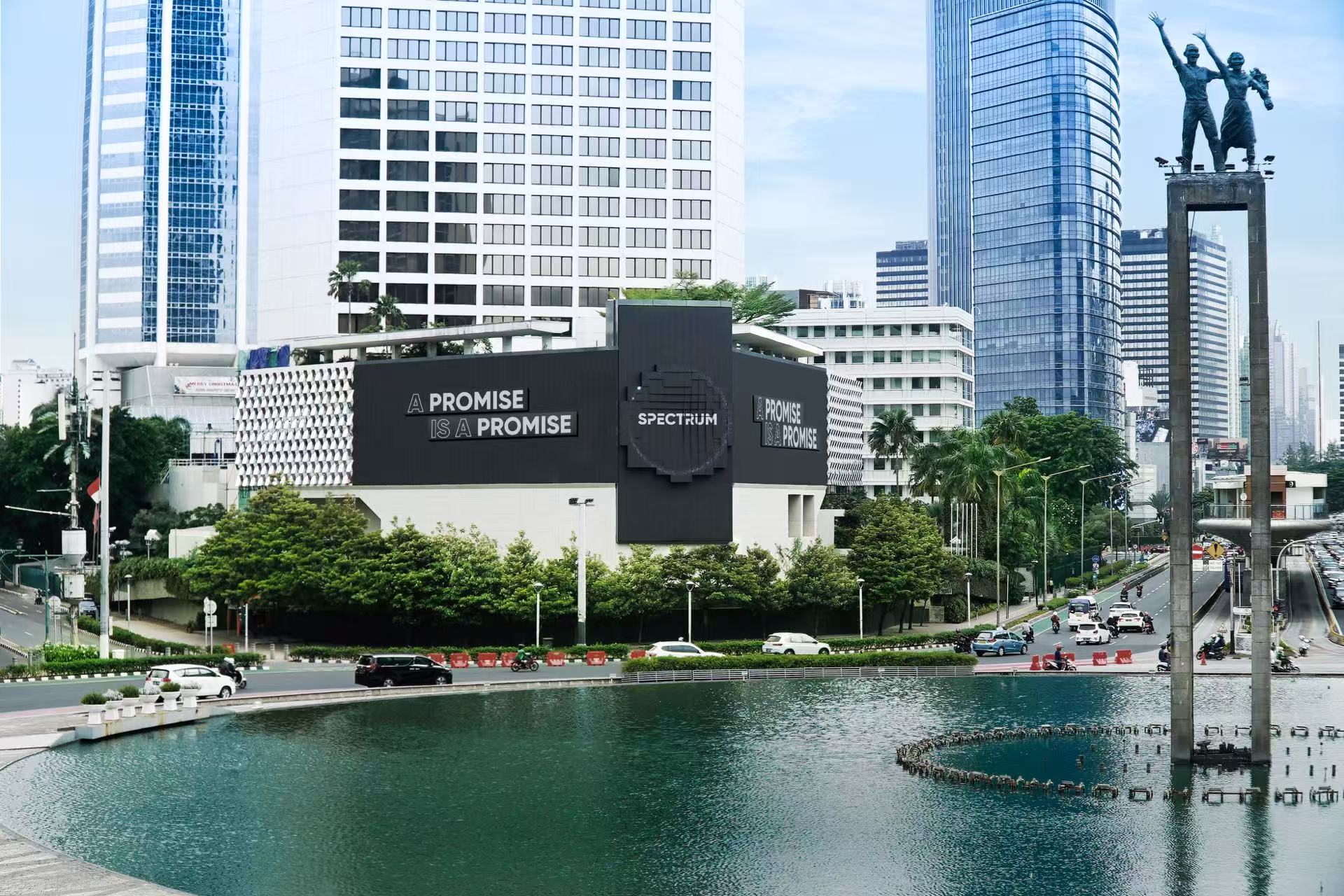
Delivers ≥5000nits peak brightness with IP65 all-weather protection. Patented "LED Chip Relocation" technology achieves 0mm visual seams. Ideal for outdoor media billboards in prime commercial districts, building facade lighting, and cultural tourism nightscapes.
SPKO-500 — City-Level Landmark "Giant"
Features a 600mm ultra-long stroke. Bosch automotive-grade CAN bus ensures thousands of modules remain synchronized within milliseconds even in extreme weather. Designed for premium commercial display projects such as city-level 3D dynamic landmarks and architectural facade art installations.
V. Six Core Advantages of Kinetic Screens
① Physical 3D — True Stereoscopic Vision
Unlike traditional screens that rely on visual effects, Kinetic Screens achieve real depth and undulation through Z-axis physical motion, delivering impact far beyond flat displays.
② Visual Seamless Technology
Patented "LED Chip Relocation" shifts edge LEDs outward to eliminate black seams from physical gaps. Both SPKI-128 and SPKO-320 achieve 0mm visual seams for silk-smooth imagery.
③ Rapid Response & Ultra-Quiet Servo Drive
Self-developed bus-type servo system with FOC algorithm and 100% closed-loop control. Indoor models achieve full-stroke motion in <0.5s. Quiet, energy-efficient, and never loses positional accuracy.
④ Industrial-Grade Anti-Pinch Safety
Indoor models instantly power down when resistance exceeds 3kg; outdoor models at 6kg. After a brief pause, the system gently resets — eliminating pinch hazards.
⑤ Automotive-Grade CAN Bus Stability
Bosch-sourced automotive-grade CAN bus protocol delivers exceptional noise immunity. A single system supports up to 65,536 motion units online simultaneously, ensuring 24/7 reliability for landmark projects.
⑥ Complete Software Ecosystem
Full toolchain support from content creation (AE plugin, Mshow4) to interactive development (TD2Matrix, UE2Matrix) and central control — enabling zero-barrier content creation.
VI. Six Application Scenarios
Scenario | Recommended Model | Core Value |
|---|---|---|
Exhibition Rental | SPKI-250 | Quick setup/teardown, aviation case transport, 50% labor savings |
Brand Showrooms/Science Museums | SPKI-128 | High-precision micro-gap, close-range ultimate image quality |
Retail Windows/Stores | SPKI-160 | 330mm ultra-thin, flush wall mounting |
Outdoor Advertising Media | SPKO-320 | ≥5000nits brightness, IP65 protection |
City Landmarks/Building Facades | SPKO-500 | 600mm super stroke, viral-ready visual impact |
Stage Performances | SPKI-250 | Integrated audio-visual-mechanical synchronization |
VII. Frequently Asked Questions (FAQ)
Q1: What's the difference between a Kinetic Screen and a traditional LED display?
A: Traditional LED displays are static — they rely on visual effects to simulate 3D. Kinetic Screens equip each module with independent Z-axis motion, allowing the screen surface to physically extend and retract with content for true physical 3D stereoscopic vision. The visual impact far exceeds flat displays.
Q2: Do the gaps between modules affect the visual experience?
A: No. Spectrum Display's patented "LED Chip Relocation" shifts edge LEDs outward to eliminate black seams. Both SPKI-128 and SPKO-320 achieve 0mm visual seams, delivering silk-smooth imagery without fragmentation at normal viewing distances.
Q3: How do I choose between SPKI-128, SPKI-160, and SPKI-250?
A: For extremely limited spaces (show windows, corridors) choose SPKI-160 (330mm ultra-thin, front maintenance). For close-range, high-image-quality requirements (museums, luxury stores) choose SPKI-128 (0.5mm micro-gap, front maintenance). For large-scale launches and rental events choose SPKI-250 (rear maintenance, aviation plug quick-install).
Q4: Are outdoor Kinetic Screens waterproof and dustproof?
A: Yes. SPKO series features IP65 all-weather protection with sealed伸缩 mechanisms and drive compartments, combined with semi-enclosed self-cooling systems to ensure stable operation in heavy rain, high heat, and sandstorms.
Q5: Is maintenance difficult?
A: Indoor SPKI-128/160 support front maintenance — no rear access required. SPKI-250 and SPKO outdoor series support rear maintenance, allowing engineers to independently service motors and module assemblies from behind the screen, reducing maintenance costs by over 50%.
Q6: Can Kinetic Screens integrate with existing lighting control systems?
A: Yes. The entire SPKI/SPKO series is compatible with DMX512/ArtNet/sACN international standards. Lighting technicians can directly control the screen's physical motion using professional console faders (e.g., grandMA), enabling synchronized audio-visual-mechanical integration.
VIII. Summary and Action Recommendations
Key Takeaways:
Kinetic Screens are intelligent display matrices combining HD LED display with precision mechanical transmission, achieving true 3D stereoscopic vision through Z-axis physical motion
Indoor Series: SPKI-128 (0.5mm micro-gap, close-range high quality), SPKI-160 (330mm ultra-thin, space-constrained priority), SPKI-250 (rental-ready, large-scale projects)
Outdoor Series: SPKO-320 (≥5000nits, IP65, all-weather high-brightness), SPKO-500 (600mm super stroke, city landmarks)
Core Technologies: LED Chip Relocation (0mm visual seam), automotive-grade CAN Bus (65,536-unit capacity), 3kg anti-pinch, full-stroke <0.5s response
Complete Ecosystem: Hardware + Software + Content, with AE/Mshow4/TD/UE5 full-toolchain support
Next Steps:
Identify your use case: indoor or outdoor? Exhibition rental, brand showroom, or outdoor advertising?
Assess spatial conditions: wall depth, service access, viewing distance
For selection guidance or custom solutions, contact Spectrum Display via www.spectrumdisplay.cn