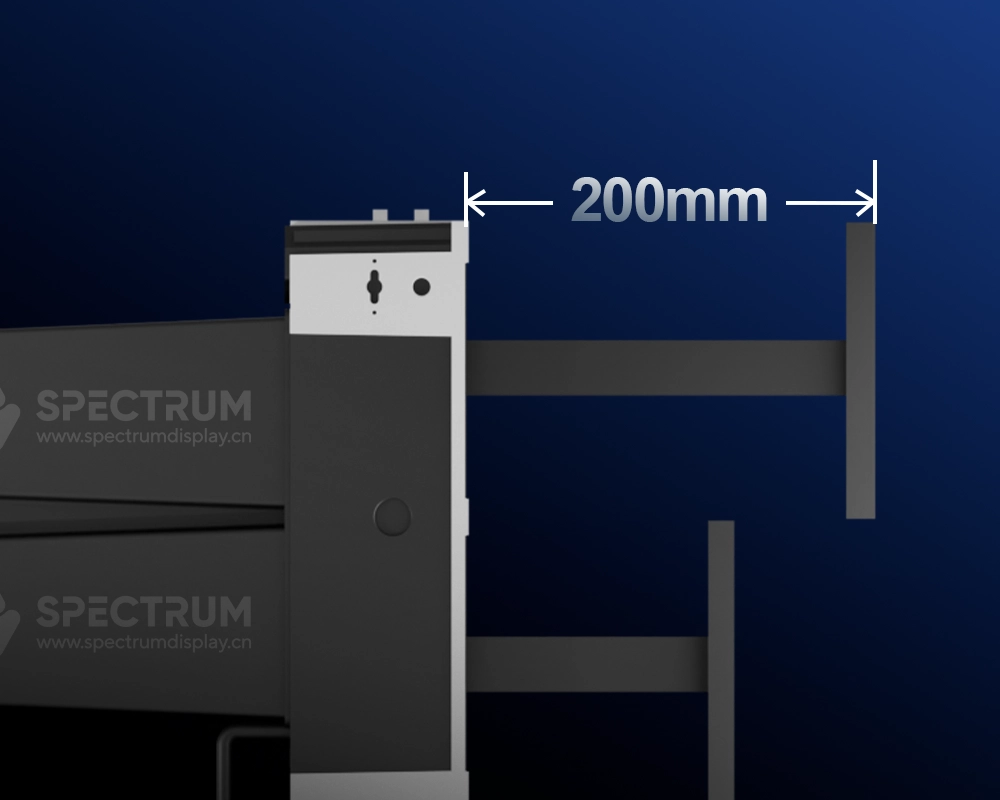
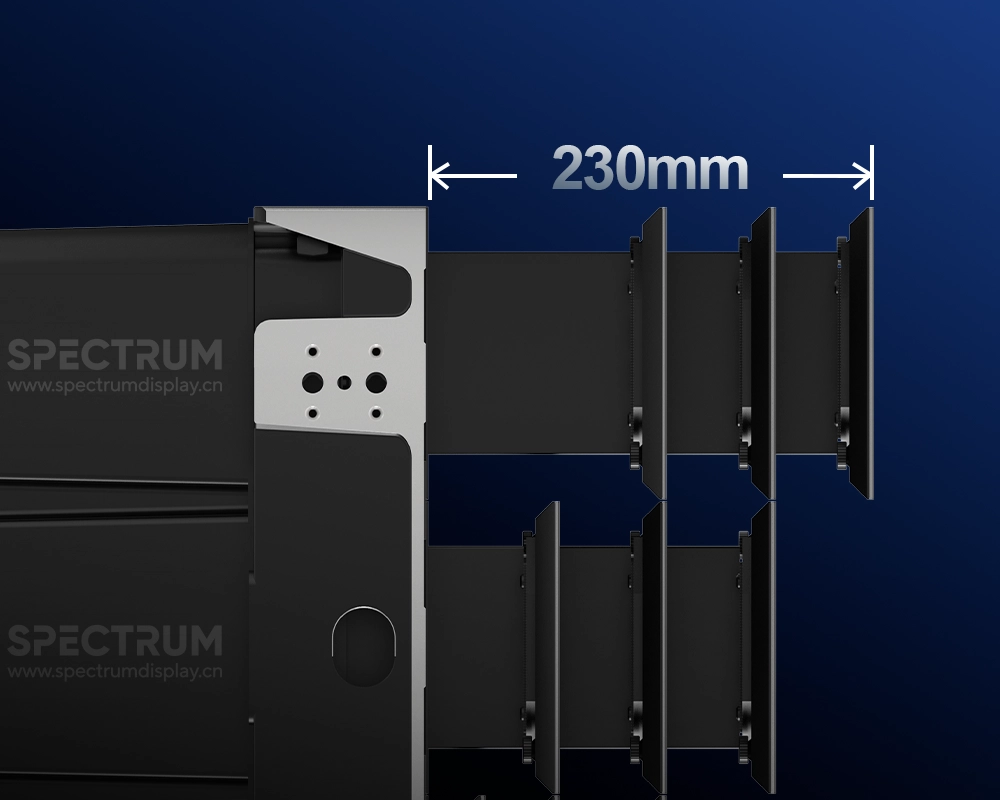
Only 30mm Apart? Why Does 230mm Create So Much More Physical Depth Than 200mm?
One-Sentence Definition: Stroke refers to the maximum physical distance that an LED module on a kinetic LED screen can extend forward from its reference plane. In a 3D kinetic LED screen, the difference between a 230mm stroke and a 200mm stroke is more than just an additional 30mm of travel—it can mark the transition from subtle surface motion to a much more pronounced, physically sculpted relief effect.
Contents
- The 30mm Misconception: A Small Difference on the Spec Sheet, a Major Difference in Visual Impact
- What Is “Physical Depth” in a Kinetic LED Screen?
- Why Can 30mm Transform the Relief Effect? — Three Visual Factors
- Beyond the Numbers: What a 230mm Stroke Really Means for Content Design
- How Does the SPKI-166 Handle 230mm of Large-Scale Physical Motion?
- Frequently Asked Questions (FAQ)
- Conclusion
1. The 30mm Misconception: A Small Difference on the Spec Sheet, a Major Difference in Visual Impact
When purchasing a 3D kinetic LED screen, many buyers begin by comparing specifications.
When they see that a conventional model offers a 200mm stroke while the SPKI-166 provides 230mm, a common reaction is:
“It’s only a 3cm difference. Can people really see it? Is it worth paying more for another 30mm?”
If this were a conventional flat-panel display, a 30mm dimensional difference might indeed be negligible.
But this is a kinetic LED screen.
In a mechanical LED system, an additional 30mm of physical Z-axis travel can determine whether the display produces only subtle surface movement or creates the impression that the content is physically emerging from the screen.
That extra 30mm can become an important dividing line between conventional kinetic motion and a much more pronounced physical 3D effect.
2. What Is “Physical Depth” in a Kinetic LED Screen?
To understand why stroke matters, we first need to distinguish between two concepts: visual glasses-free 3D and physical-depth 3D.
Visual glasses-free 3D relies on perspective, distortion, and specially designed video content to create the illusion of depth on a flat display. The screen itself remains physically flat.
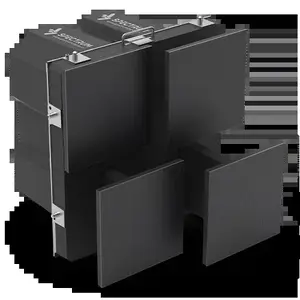
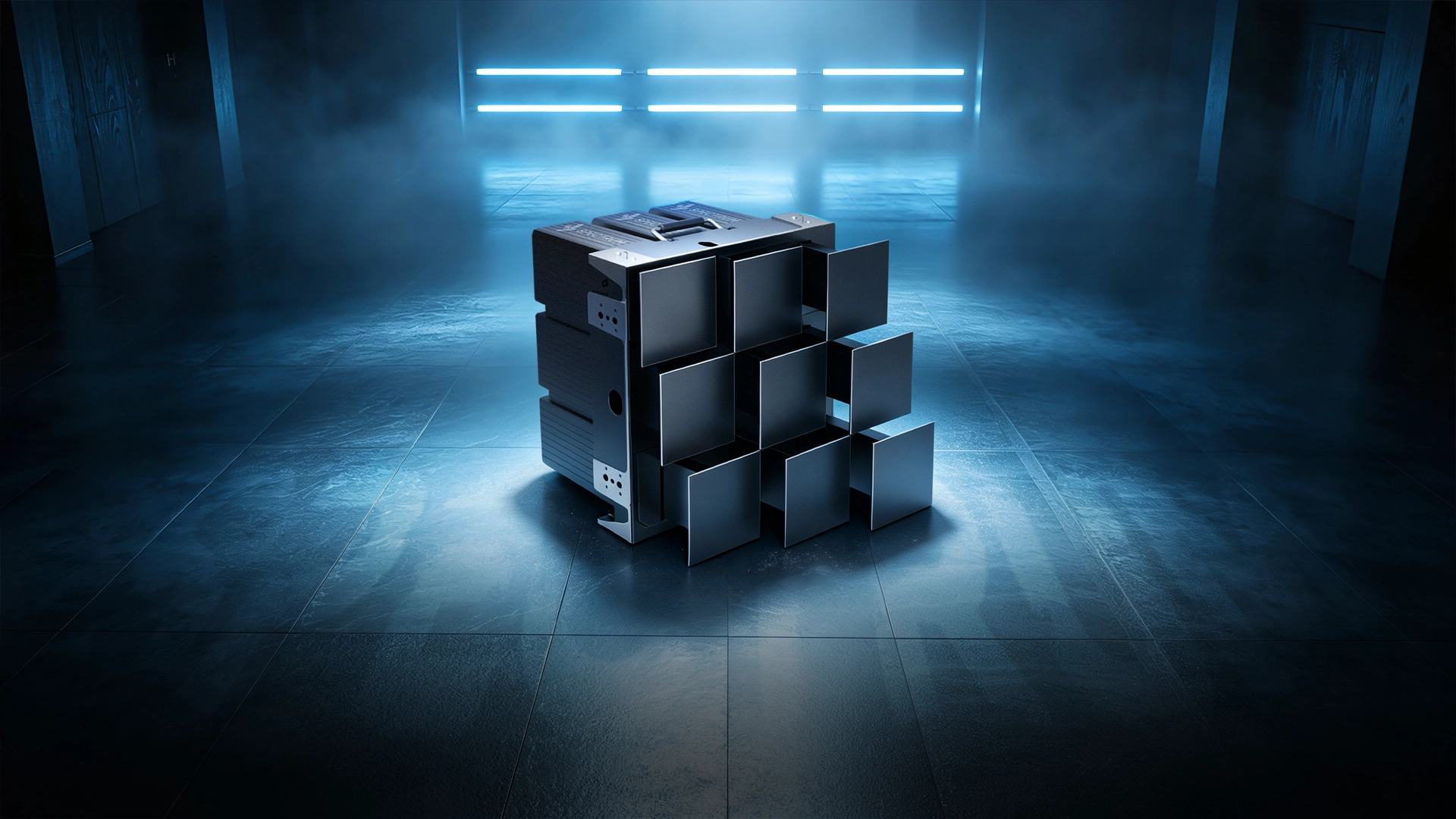
Physical-depth 3D, by contrast, is created when individual LED modules physically extend and retract along the Z-axis through mechanical movement.
On the SPKI-166, the 230mm stroke represents the maximum physical travel of each moving LED module.
The longer the stroke, the farther individual modules can project from the base display plane. This creates greater physical height differences across the screen surface and allows real shadows between modules to become more pronounced.
The result is not merely an illusion of depth—the display surface itself becomes three-dimensional.
3. Why Can 30mm Transform the Relief Effect? — Three Visual Factors
Increasing the stroke from 200mm to 230mm can produce a significant change in how physical depth is perceived.
Factor 1: Physical Depth Becomes Much More Visible from Side Angles
Some of the most impressive views of a kinetic LED screen are not from directly in front of it, but from the side.
Viewed obliquely, a 200mm-stroke display can resemble layers of gently rising terrain. With the SPKI-166’s 230mm stroke, the modules can project farther outward, creating a more dramatic sculptural profile.
The greater the extension, the more visible the physical array becomes from the side. The mechanical geometry, layered depth, and structural character of the display become part of the visual experience itself.
For commercial spaces where visitors walk past the display rather than viewing it only from the front, this difference becomes particularly important.
Factor 2: Deeper Physical Shadows
When individual modules extend forward, real height differences appear between adjacent modules.
A 230mm height difference provides 15% more travel than a 200mm stroke.
When displaying high-contrast content such as explosions, flames, glowing crystals, or other high-impact visual effects, the additional physical depth can create deeper shadows between moving elements.
The content no longer appears simply to be “placed” on a wall.
It begins to feel physically sculpted out of the wall.
Factor 3: More Room for Explosive Motion
For effects such as rising surfaces, text pushing outward, or a diamond physically projecting from the display, the modules need enough Z-axis travel to move from their lowest position to their highest point.
A 200mm stroke provides a substantial motion range.
A 230mm stroke provides an even larger physical motion envelope, allowing individual elements to travel farther and making sudden outward movements feel more dramatic.
The greater travel range gives kinetic content more room to build visual tension before reaching its maximum physical depth.
4. Beyond the Numbers: What a 230mm Stroke Really Means for Content Design
A longer stroke is not simply a hardware upgrade. It also gives content designers more freedom when creating physical motion.
Steeper Physical Gradients
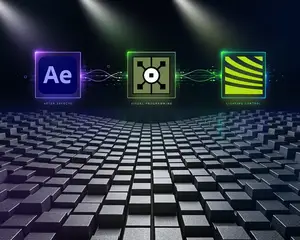
When grayscale maps in After Effects are used to control physical displacement, a 230mm stroke gives designers a wider Z-axis range for translating grayscale values into real-world movement.
This makes it possible to create steeper physical gradients and more dramatic forms, such as rolling ocean motion, rising terrain, collapsing surfaces, and other sculptural effects.
A Stronger “Breaking Out of the Screen” Effect
Imagine a sphere moving toward the viewer.
On a conventional display, the sphere can only appear to move forward through perspective and animation.
On a kinetic LED screen, the modules themselves can physically extend outward.
With 230mm of travel, the SPKI-166 can push the corresponding physical surface farther away from the base plane, reinforcing the impression that the object is breaking through the screen rather than merely being displayed on it.
More Layers of Dynamic Depth
Designers can use the entire 0–230mm Z-axis range to create multiple physical depth layers.
The foreground can extend dramatically outward, the middle ground can occupy an intermediate position, and the background can remain retracted.
This transforms depth from a purely visual effect into another dimension of spatial storytelling.
5. How Does the SPKI-166 Handle 230mm of Large-Scale Physical Motion?
A common engineering concern is straightforward:
“Does a longer stroke place greater demands on the mechanical structure? Will it move more slowly or become less reliable?”
The engineering approach behind the SPKI-166 is designed around three requirements: greater depth, high speed, and stable motion.
Independent Motion Mechanisms
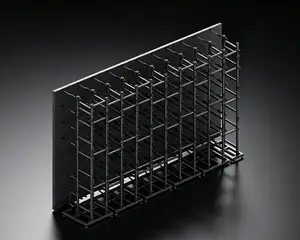
Each 165.6 × 165.6mm LED module is driven by an independent high-precision motion mechanism.
This allows each module to extend and retract independently while maintaining controlled linear movement throughout the 230mm travel range.
650mm/s Maximum Speed and 0.4-Second Full-Stroke Motion
With its optimized motion system, the SPKI-166 reaches a maximum extension speed of 650mm/s and can complete a full-stroke movement in approximately 0.4 seconds.
This means the additional physical depth is not limited to slow, gradual movement. The screen can also respond to fast-paced content, including rapid transitions and strong electronic music beats.
Industrial CAN Bus Control
As the number of motion units increases, communication stability and synchronization become increasingly important.
The SPKI-166 uses an industrial CAN Bus control architecture to coordinate large numbers of independently moving modules, enabling precise positioning and synchronized physical movement across the display surface.
▶Video · YouTubeSPKI-160: 3D Kinetic LED Screen for Luxury Events & Storefront WindowsWatch on YouTube →
6. Frequently Asked Questions (FAQ)
Q1: Does a 230mm-stroke kinetic LED screen consume much more power than a 200mm model?
Not necessarily. Power consumption also depends heavily on motor efficiency, mechanical load, and the overall drive architecture.
The SPKI-166 combines a lightweight die-cast aluminum cabinet with an efficient motion system, with overall power consumption rated at 920W/m².
Q2: Does the additional 30mm of stroke require more installation space?
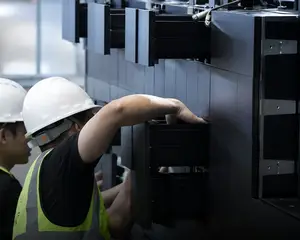
The project needs to account for the screen’s forward physical movement.
A 230mm stroke means that, at maximum extension, the moving modules can project up to 230mm forward from their reference position.
The SPKI-166 itself maintains a cabinet depth of approximately 350mm, helping balance a larger motion range with practical installation requirements.
Q3: Will every type of video content benefit from the 230mm stroke?
No.
If the screen only displays flat 2D text or static imagery without physical displacement, the additional stroke will not be fully utilized.
The difference becomes most visible when content is specifically designed for kinetic movement—for example, grayscale-driven displacement content in which darker and lighter values are mapped to different Z-axis positions through an After Effects workflow.
Q4: Will the module wobble if someone presses it when it is fully extended?
The SPKI-166 uses independent motion mechanisms built around high-precision industrial linear guidance to maintain structural rigidity during movement.
The system also incorporates 3kg anti-pinch protection. When abnormal resistance above the specified threshold is detected, the motor protection system responds to stop the motion, providing an additional layer of operational safety.
7. Conclusion
On a technical drawing, the difference between 200mm and 230mm is only 3 centimeters.
In a kinetic LED installation, however, those 30mm can create a noticeable difference in physical depth—from subtle surface movement to a much more pronounced sculptural relief effect.
The key points are straightforward. First, stroke directly affects physical 3D depth: greater travel allows modules to project farther from the display plane. Second, 230mm creates three major visual advantages: stronger side-angle depth, deeper physical shadows, and a larger range for dramatic movement. Third, the additional Z-axis range gives content designers more creative freedom, especially when designing effects that physically emerge from the screen. Finally, the SPKI-166 combines its 230mm stroke with 650mm/s maximum speed and approximately 0.4-second full-stroke movement, balancing physical depth with fast response.
For more information about the SPKI-166 or a project-specific kinetic LED solution, contact the Spectrum Display team through the Spectrum Display official website.