What Is the SPKI-166? A Complete Guide to the 230mm-Stroke 3D kinetic screen
In One Sentence:
The SPKI-166 is an indoor 3D kinetic screen developed by Spectrum Display. Featuring an extended 230mm physical motion stroke, an ultra-fast 0.4-second full-stroke response, and P1.53/P1.888 high-resolution LED display options, it transforms a conventional flat LED screen into a dynamic visual matrix with real physical depth.
Contents
- What Is the SPKI-166? — Product Positioning and Key Breakthroughs
- How Does It Move? — Mechanical Principles Explained
- Complete Technical Specifications
- Software & Content Ecosystem — Turning Creative Ideas into Physical Motion
- Installation & Maintenance — Why Does It Support Both Front and Rear Maintenance?
- Where Can the SPKI-166 Be Used? — Six Key Applications
- Frequently Asked Questions
- Conclusion
1. What Is the SPKI-166? — Product Positioning and Key Breakthroughs
Conventional flat LED displays can only simulate three-dimensional depth through visual effects. The SPKI-166, by contrast, is a kinetic screen that creates real physical depth through mechanical motion.
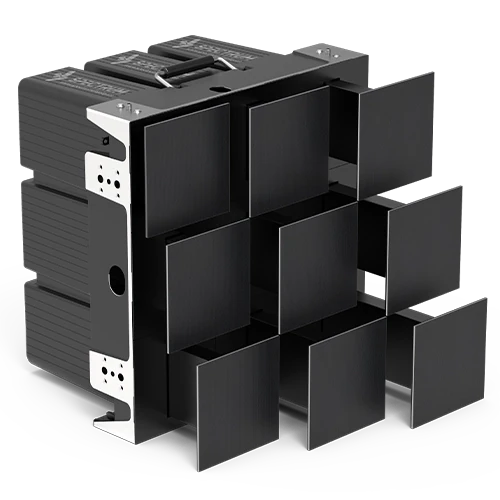
Simply put, the display consists of hundreds or even thousands of independently controlled LED modules arranged in a matrix. Behind each module is a precision motion mechanism. During playback, the modules do more than display video: they physically extend forward and retract backward in synchronization with the visual content.
This creates a dynamic 3D surface with real, measurable depth.
The SPKI-166 delivers three major breakthroughs:
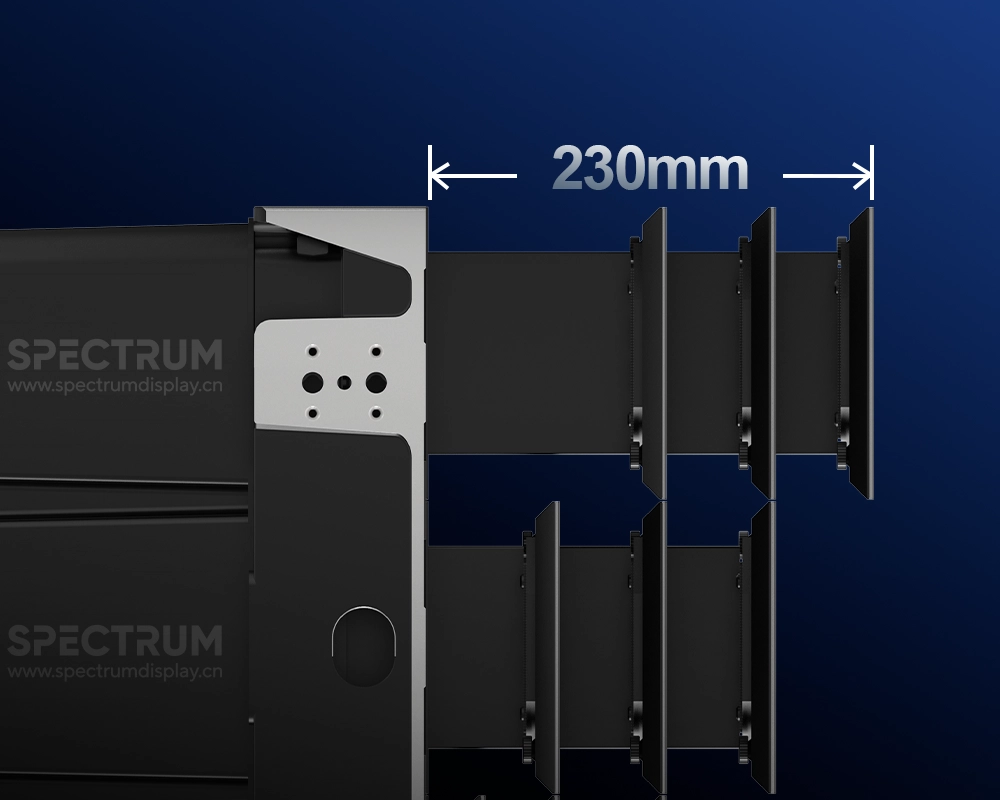
1. 230mm Extended Motion Stroke
With a maximum physical stroke of 230mm, the SPKI-166 goes beyond the conventional 200mm motion range commonly found in kinetic displays, creating more dramatic depth and a stronger 3D relief effect.
2. 0.4-Second Full-Stroke Response
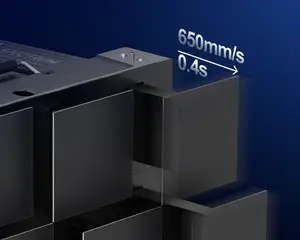
The module can move from fully retracted to fully extended in just 0.4 seconds, enabling precise synchronization with fast-paced music, motion graphics, and dynamic video content.
3. 18kg Lightweight Cabinet
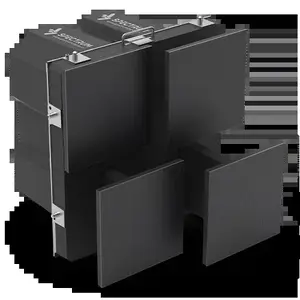
Each 500 × 500mm die-cast aluminum cabinet weighs only 18kg while maintaining structural rigidity. This simplifies installation and significantly reduces structural load requirements for suspended installations.
2. How Does It Move? — Mechanical Principles Explained
The motion of the SPKI-166 is not a visual illusion. It is created through precision electromechanical engineering.
Motion Units and Mechanical Transmission
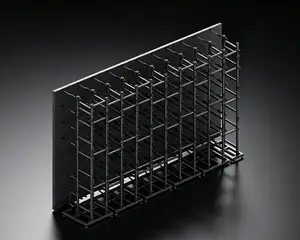
The system uses a modular die-cast aluminum architecture.
Each 165.6 × 165.6mm LED module is driven by an independent motion mechanism. A single 500 × 500mm quick-install cabinet integrates nine independent motion units in a 3 × 3 arrangement.
High-precision linear motion and near-instant response allow the modules to form continuously changing three-dimensional relief patterns.
Industrial-Grade CAN Bus Control
At the system level, the SPKI-166 uses industrial-grade CAN bus technology.
Compared with conventional serial communication, CAN bus offers strong resistance to interference. This enables hundreds or thousands of motor nodes within a large kinetic matrix to remain synchronized at millisecond-level precision, minimizing positioning errors and preventing missed steps during operation.
3. Complete Technical Specifications
| Parameter | Specification |
|---|---|
| Product Model | SPKI-166-230 (Indoor) |
| Pixel Pitch | P1.53mm / P1.888mm |
| LED Module Size | 165.6 × 165.6mm |
| Kinetic Unit Size | 166.7 × 166.7mm (0.0278m²) |
| Unit Resolution | 108 × 108 (P1.53) / 88 × 88 (P1.888) |
| Maximum Motion Stroke | 230mm |
| Maximum Motion Speed | 650mm/s |
| Fastest Full-Stroke Time | 0.4 seconds |
| Module Gap / Visual Seam | 1mm (0.5–1.5mm) / 0.2mm with LEDs shifted outward by 0.4mm |
| Quick-Install Cabinet Size | 500 × 500mm |
| Cabinet Depth | 350mm |
| Cabinet Weight | 18kg |
| Units per Square Meter | 36 units/m² |
| Equipment Weight | 72kg/m² |
| Brightness | ≥600 cd/m² |
| Maximum Power Consumption | 920W/m² |
| Anti-Pinch Force Threshold | 3kg intelligent power-off protection |
| Maintenance | Front + Rear Maintenance |
| Installation Options | Ceiling-Suspended, Stacked, Wall-Mounted, Upward-Facing |
4. Software & Content Ecosystem — Turning Creative Ideas into Physical Motion
One of the biggest challenges with kinetic screens is not necessarily the hardware.
It is:
How do you create content for the screen after installation?
The SPKI-166 addresses this challenge with a complete creative software ecosystem.
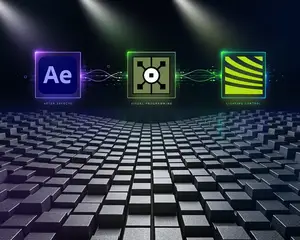
MotionMatrix4 — After Effects Plugin
With the MotionMatrix4 AE plugin, designers can convert grayscale values directly into physical Z-axis motion commands.
Black represents retraction, while white represents extension.
This creates an intuitive WYSIWYG workflow, allowing designers to coordinate visual content and physical motion directly within After Effects.
Mshow — 3D Presentation Platform
Mshow is designed for users without professional programming experience.
Its built-in 1:1 digital canvas allows users to drag and arrange content much like creating a presentation, while simultaneously designing both visual effects and mechanical movement.
TouchDesigner / Unreal Engine 5 Plugins
The system supports integration with TouchDesigner and Unreal Engine 5.
Combined with LiDAR, voice sensors, or other interactive technologies, the SPKI-166 can create highly responsive experiences—for example, physical waves that react to a visitor's movement in real time.
DMX512 Integration
Spectrum Display has also developed a dedicated data converter for DMX512 integration.
Lighting designers can therefore control the extension and retraction of the kinetic screen directly through a professional lighting console.
5. Installation & Maintenance — Why Does It Support Both Front and Rear Maintenance?
Installation conditions in commercial spaces, showrooms, stages, and permanent installations can vary significantly.
The SPKI-166 was engineered with these demanding environments in mind.
350mm Slim Cabinet Depth
With a cabinet depth of only 350mm, the system can be integrated into many wall structures, ceiling cavities, and architectural installations.
Front and Rear Maintenance
This is one of the SPKI-166's key engineering advantages.
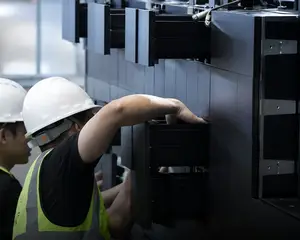
If sufficient service space is available behind the display, technicians can perform maintenance from the rear through a dedicated access area.
If the display is installed directly against a wall or suspended where rear access is impossible, its 100% front-serviceable design allows technicians to remove and service modules directly from the front.
There is no need to dismantle the surrounding wall structure simply to access the screen.
Flexible Installation
The SPKI-166 supports multiple installation configurations, including:
- Floor-standing
- Stacked
- Wall-mounted
- Ceiling-suspended
- Upward-facing
This flexibility makes it adaptable to a wide range of architectural and event environments.
6. Where Can the SPKI-166 Be Used? — Six Key Applications
| Application | Why SPKI-166 Works |
|---|---|
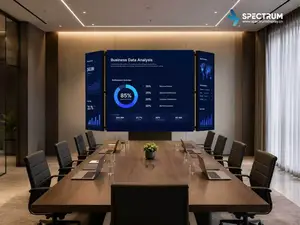
| Premium Corporate Showrooms | P1.53/P1.888 high-resolution visuals combined with 230mm physical depth create an immersive way to present brand stories. |
| Commercial Spaces & Shopping Mall Atriums | Large-scale physical movement captures attention and can turn the installation into a visual landmark and social-media attraction. |
| Product Launch Events | The 0.4-second full-stroke response enables precise synchronization with fast-paced music, countdowns, and dramatic stage moments. |
| Stages & Live Performances | The lightweight 18kg cabinet reduces structural load on stage trusses and suspended systems. |
| Art Installations & Interactive Spaces | TouchDesigner/UE5 integration enables sensor-driven and highly interactive kinetic experiences. |
| Science & Technology Museums | Abstract data, scientific concepts, and digital information can be transformed into intuitive physical movement. |
7. Frequently Asked Questions
Q1: How is the SPKI-166 different from a conventional LED screen?
A conventional LED screen has a flat physical surface and relies on visual effects to simulate depth.
With the SPKI-166, each module can physically extend and retract through a 230mm motion stroke, creating real three-dimensional depth rather than merely a visual illusion.
Q2: What does a “0.4-second full stroke” mean?
It refers to the system's dynamic response speed.
The module can move from its fully retracted position to its fully extended position in just 0.4 seconds.
This enables the kinetic screen to synchronize with fast-paced electronic music, countdown sequences, product launches, and high-energy stage content.
Q3: What if there is no maintenance access behind the screen?
The SPKI-166 supports both front and rear maintenance.
If there is no service corridor behind the display, technicians can remove and service the modules directly from the front without dismantling the surrounding wall structure.
Q4: Should I choose P1.53 or P1.888?
For close viewing distances, such as premium showrooms, flagship stores, and high-end exhibition spaces, P1.53 is recommended for finer image detail.
For longer viewing distances, such as large stages and shopping mall atriums, P1.888 offers a more cost-effective solution while still delivering brightness of ≥600 cd/m².
Q5: Does the mechanical movement generate a lot of noise?
No. The system uses high-quality servo drive components and low-noise transmission mechanisms to provide smooth and quiet operation, making it suitable for environments involving presentations, exhibitions, and live performances.
Q6: How does the anti-pinch safety system work?
The system incorporates an intelligent 3kg anti-pinch force threshold.
If resistance exceeding the preset threshold is detected—for example, due to physical contact—the motor immediately disengages and cuts power. After remaining stationary for several seconds, the mechanism returns smoothly to its normal position, helping minimize the risk of pinch injuries.
8. Conclusion
The SPKI-166 is a 3D kinetic screen that combines high-resolution digital visuals with precision mechanical motion.
Its key advantages include:
1. Product Positioning:
An indoor kinetic screen featuring a 230mm extended motion stroke and 0.4-second full-stroke response.
2. Core Hardware:
P1.53/P1.888 high-resolution display options and a lightweight 500 × 500mm, 18kg cabinet.
3. Software Ecosystem:
MotionMatrix4 for After Effects, Mshow, TouchDesigner/UE5 integration, and DMX512 control enable flexible content creation and motion programming.
4. Engineering Flexibility:
Both front and rear maintenance are supported, together with multiple installation configurations for demanding architectural and event environments.
The result is more than a conventional LED display.
It turns digital content into real physical motion, adding a true Z-axis to visual storytelling.
For more information about the SPKI-166 or to request a customized kinetic LED solution, contact the Spectrum Display team through the official website: