Foldable LED Display vs. Traditional Rental LED Screen: Which Is the Better Solution for Fast-Deployment Events?
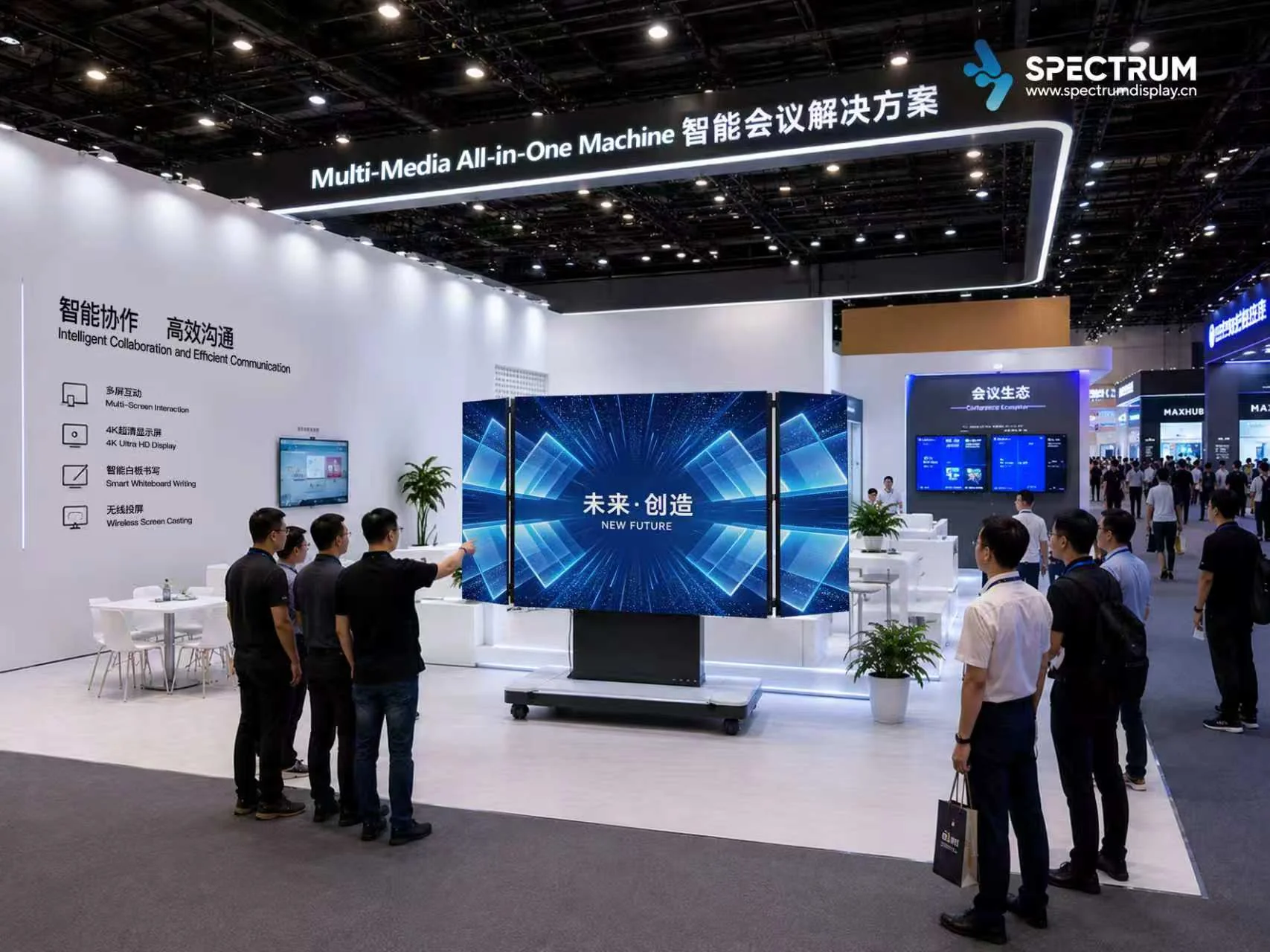
One-sentence definition: A foldable LED display combines an integrated flight-case design with a 180° folding structure to enable “unbox, deploy, and use” operation. It compresses the hours-long setup process of a traditional rental LED screen into just tens of seconds—solving not only the question of “how to install the screen,” but a much bigger challenge: efficiency in the event industry.
1. Three Major Pain Points of Traditional Rental LED Screens: Time, Labor, and Safety
LED rental screens have become standard equipment for exhibitions, product launches, concerts, weddings, and corporate events.
But event planners, AV rental companies, and hotel procurement teams all know one thing:
The real cost of setting up an LED screen goes far beyond the rental price itself.
Pain Point 1: Slow Setup — Hours of Labor Before the Screen Is Ready
Traditional rental LED screens require on-site cabinet assembly, cabling, structural installation, signal configuration, and system testing.
According to industry data, setting up an LED display larger than 135 inches can require 4–6 technicians working for 6–8 hours from unpacking to final operation.
For touring productions or events that need to move between multiple venues on the same day, this setup time directly reduces profitability.
Pain Point 2: Expensive Transportation — Too Many Components, Too Much Handling
Large LED displays consist of numerous components once dismantled. Packing becomes complicated, and repeated transportation increases the risk of damage.
All-in-one displays larger than 110 inches can also be difficult to move through standard elevators and doorways because of their dimensions, significantly increasing logistics costs.
Rental LED screens are repeatedly installed, dismantled, packed, transported, and reassembled. Impacts and collisions during transportation are among the major causes of LED display failure.
Pain Point 3: Safety Risks — Complex Rigging and Work at Height
Traditional large-format LED screens often require a load-bearing truss system to be installed overhead before heavy display cabinets can be assembled and rigged at height.
After that comes alignment, cabling, and system commissioning.
Working at height not only increases installation time—it also introduces significant safety risks.
Ultimately, all three problems come from the same fundamental conflict:
Traditional LED installation methods are not designed around the event industry’s demand for speed and efficiency.
2. How Does a Foldable LED Display Redefine “Fast Deployment”?
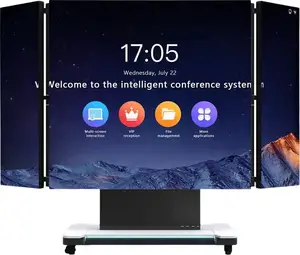
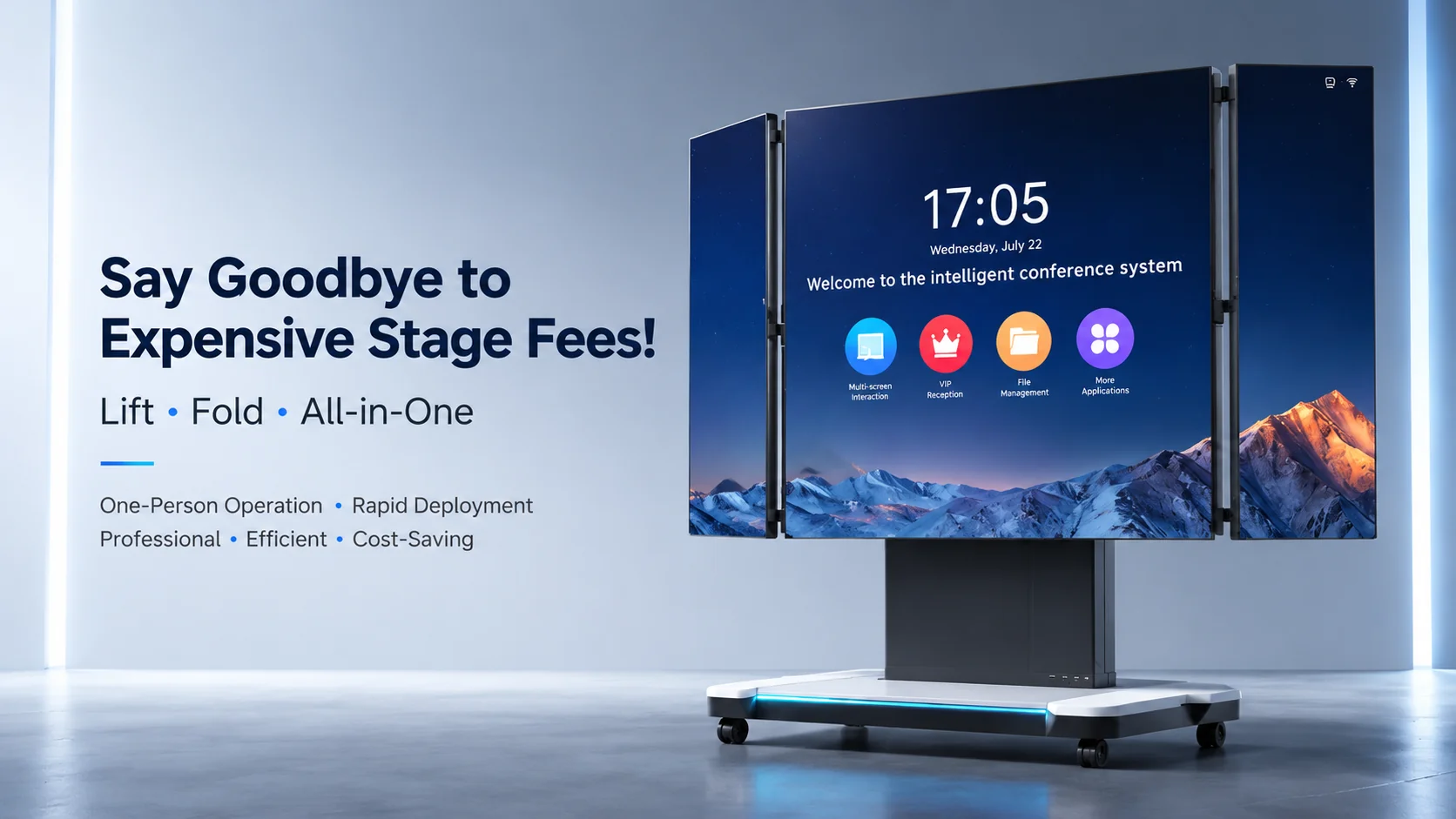
A Foldable LED Display, represented by Spectrum Display’s LED Lift & Fold All-in-One Display, approaches these problems from an entirely different product architecture.
Solution 1: Integrated Flight-Case Design — No More Handling Loose Components
The LED screen, motion system, and control system are deeply integrated into a single mobile flight case.
The base is equipped with lockable swivel casters and supports both forklift handling and manual movement, making it easier to move through standard access routes, elevators, and doorways.
Once the unit reaches the venue, there is no need for complicated cabinet assembly or overhead installation.
Open the case, connect the power, and the system is ready for deployment.
Solution 2: 180° Folding + Deployment in Tens of Seconds
A process that traditionally requires 4–6 technicians and 6–8 hours can now be completed by one operator in tens of seconds.
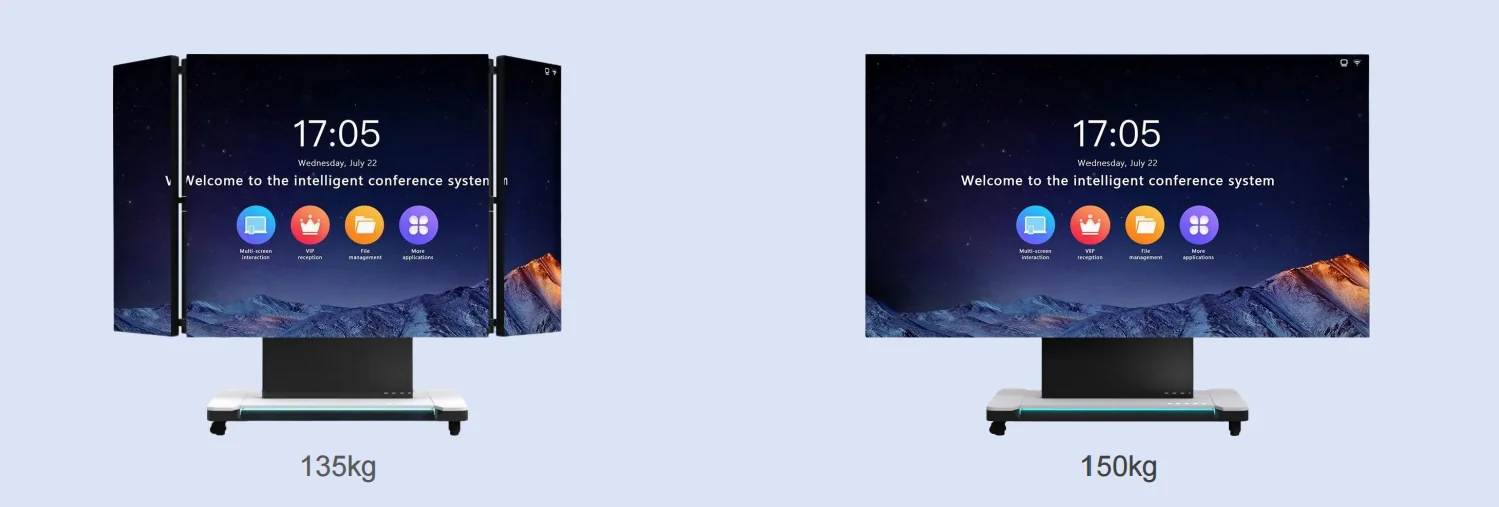
The two side display sections open and close through a servo electric cylinder system and a proprietary rotating hinge mechanism, enabling 180° folding and unfolding.
When fully deployed, the display measures:
3000 × 1687.5 mm
The result is a large-format LED screen that can move from transportation mode to display mode in a fraction of the time required by conventional rental systems.
Solution 3: 0.1 mm Folding Gap — Faster Deployment Without Sacrificing Visual Quality
Fast deployment should not mean compromising image quality.
The folding gap is controlled to within 0.1 mm. Once fully unfolded, the three display sections visually merge into a single continuous LED surface.
Fast deployment, without sacrificing display quality.
Solution 4: Intelligent Lifting + Dual Operating Systems
The system supports 0–900 mm intelligent height adjustment, controlled via remote control or mobile APP.
It also supports both Android and Windows, allowing users to run presentation software, meeting applications, branded content, or promotional videos without requiring an external media player.
This gives the display much greater flexibility across different event environments.
3. Full Comparison: Understanding the Differences at a Glance
| Comparison | Traditional Rental LED Screen | Foldable LED Display / Lift & Fold All-in-One |
|---|---|---|
| Setup Time | 4–6 technicians, 6–8 hours | 1 operator, deployment in tens of seconds |
| Transportation | Multiple loose components; truck/forklift handling | Integrated flight case with swivel casters |
| Labor Requirement | Professional technicians required for assembly | Can be operated by regular event staff |
| Visual Impact | A conventional screen installed in place | Lifting and unfolding become part of the visual experience |
| Storage When Not in Use | Requires dedicated space or repeated disassembly | Fully retracts into the flight case; stored height only 935 mm |
| Safety Risk | Overhead rigging and work at height | Ground-level operation with no overhead installation |
| Deployment Flexibility | Difficult to move once installed | Mobile and flexible across different venues |
| Total Cost | Labor + transportation + storage + wear and tear | One-time purchase with long-term reuse |
In the fast-moving event rental and touring market, “time is money” is not just a slogan—it directly determines whether a project is profitable.
By integrating the power system, folding mechanism, display, and flight case into one mobile system, the foldable LED display brings true plug-and-play deployment to professional event applications.
4. Which Applications Are Best Suited for Foldable LED Displays?
| Application | Core Value |
|---|---|
| Product Launches | The screen rises and unfolds as the product is revealed, adding a strong sense of ceremony |
| Exhibition Rental | Fast setup and dismantling for higher equipment turnover |
| Luxury Hotel Ballrooms | Hidden away when not in use; deployed when needed without compromising the space |
| Corporate VIP Events | Combines a premium technology aesthetic with strong brand presentation |
| Stage & Touring Productions | Faster venue transitions and higher equipment utilization |
| Commercial Pop-Ups | Flexible, plug-and-play deployment for atriums and temporary commercial spaces |
Foldable LED displays are particularly suitable for:
Event production companies, AV equipment rental companies, luxury hotels, brand marketing teams, and system integrators.
For rental companies focused on high asset utilization and premium hotel ballrooms that need flexible event configurations, a foldable LED display can significantly reduce venue occupation time.
A project that once required two days and nights of preparation can now be delivered in as little as two hours.
5. Frequently Asked Questions (FAQ)
Q1: What is the biggest difference between a foldable LED display and a traditional rental LED screen?
A: Traditional rental LED screens require on-site assembly, cabling, alignment, and commissioning, which can take several hours or even days.
A foldable LED display is designed for rapid deployment. It can be opened and deployed in tens of seconds with minimal on-site assembly.
Traditional rental screens also require significant storage space when not in use, while the foldable LED display can retract completely into its flight case—creating a system that is high-impact when in use and compact when stored.
Q2: Is the folding seam visible?
A: The folding gap is controlled to within 0.1 mm. Once the three sections are fully unfolded, they visually form a continuous display surface with a near-seamless appearance.
Q3: Will the display shake in a stage environment with strong vibration?
A: No. The base uses a low-center-of-gravity, high-strength counterweight and support design.
Industrial-grade servo electric cylinders and guide-rail lifting structures help maintain stability even when the display is raised to its maximum height and used in demanding stage environments.
Q4: Can non-technical staff operate the display?
A: Yes. The system supports three control methods: bilingual physical buttons, wireless remote control, and mobile APP control.
Regular event or operations staff can activate preset modes with one command, significantly reducing the technical barrier to operation.
Q5: How is the foldable LED display transported?
A: The complete system is integrated into a flight case equipped with swivel casters. It supports forklift handling as well as manual movement.
In its folded state, the system can pass through standard doorways and elevators without requiring special logistics arrangements.
Q6: Will frequent lifting and folding damage the LED screen?
A: No. The system uses specially customized high-toughness LED modules and precision seamless folding hinges.
After tens of thousands of fatigue-folding tests, the system is designed to maintain display flatness and a “zero visual seam” appearance when fully deployed.
▶Video · YouTubeDesigned for Lightning-Fast Setup at Rental EventsWatch on YouTube →6. Conclusion
A foldable LED display is not simply an “upgraded version” of a traditional rental LED screen.
It represents a fundamentally different product philosophy.
Traditional rental LED screens solve the question:
“Can we install a screen here?”
Foldable LED displays solve a different set of questions:
“Can we install it faster, deploy it more safely, move it more easily, and reuse it more efficiently?”
| Comparison | Traditional Rental LED Screen | Foldable LED Display |
|---|---|---|
| Setup Time | 4–6 people / 6–8 hours | 1 person / tens of seconds |
| Transportation | Multiple loose components | Integrated flight case |
| Labor Requirement | Professional technicians | Regular operating staff |
| Safety Risk | Overhead rigging | Ground-level operation |
| Storage | Occupies significant space | Retracts into a 935 mm-high flight case |
| Total Cost | Labor + transportation + storage + wear and tear | One-time purchase with long-term reuse |
Key Takeaways
- Three major pain points of traditional rental LED screens: slow setup (4–6 people / 6–8 hours), expensive transportation due to multiple loose components, and higher safety risks from overhead rigging.
- Three major breakthroughs of foldable LED displays: integrated flight-case design for plug-and-play deployment, unfolding in tens of seconds for dramatically higher efficiency, and a 0.1 mm folding gap without compromising visual quality.
- Core value: more than 80% less setup time, no overhead installation, compact storage when not in use, and flexible deployment across multiple venues and applications.
- Target users: event production companies, AV rental companies, luxury hotels, brand marketing departments, and system integrators.
Recommendations for Event Planners and AV Rental Companies
- Reassess your equipment utilization rate: how many events can one display support in a year? A foldable LED display can potentially increase equipment turnover significantly.
- Do not evaluate only the initial purchase price. Consider the total cost of ownership, including labor, transportation, storage, and equipment wear.
- If your business involves frequent venue changes—such as touring productions or multi-location events—a foldable LED display can become a highly efficient alternative to conventional rental LED systems.
- For more product details or a customized solution, contact the Shenzhen Spectrum Technology Co., Ltd. (Spectrum Display) team through the Spectrum Display official website.