One-Sentence Definition
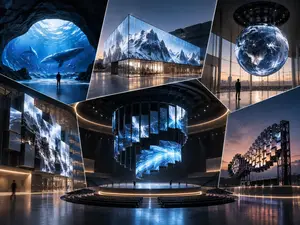
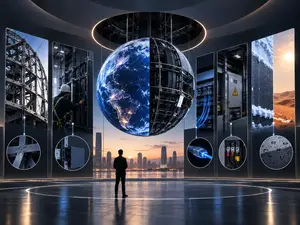
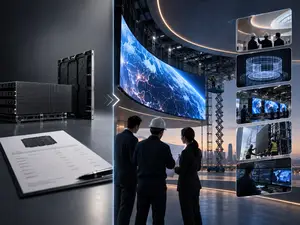
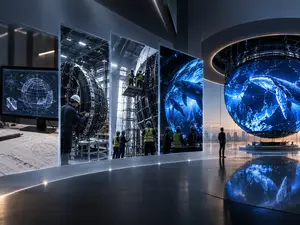
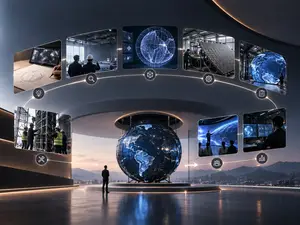
A Kinetic LED system is a spatial visual solution that deeply integrates ultra-high-definition LED display technology with precision mechanical movement.
It transforms the screen from a fixed “content player” into a dynamic “spatial participant” that can move, transform, and respond — upgrading visual communication from simple viewing to immersive experience.
Contents
Two Different Futures of One Screen
The Limitations of Traditional LED: Fixed, Two-Dimensional, and One-Way
The Breakthrough of Kinetic LED: Movement, 3D Depth, and Interaction
From Playing Content to Creating Experiences: A New Display Revolution
Why 2026 Could Become the Breakthrough Year for Kinetic LED
Frequently Asked Questions (FAQ)
Conclusion
1. Two Different Futures of One Screen
Imagine walking into a luxury brand flagship store.
On one wall is a traditional flat LED display showing the latest brand advertisement.
The visuals are beautiful.
The colors are impressive.
But after three seconds, your attention moves away.
Not because the content is poor.
But because you already know:
It is only a video.
On another wall is a Kinetic LED display.
There is no traditional video playback.
Instead, the surface of the screen slowly rises and falls — almost like breathing.
When you approach, the modules subtly move backward.
When you interact with it, the surface responds with physical movement.
Which wall will you remember?
The answer is obvious.
This is not only a difference in technology.
It represents two completely different philosophies of display:
Is a screen designed only to “play content”, or is it designed to “express something”?
2. The Limitations of Traditional LED: Fixed, Two-Dimensional, and One-Way
For many years, LED displays in commercial spaces and entertainment environments have existed mainly as two-dimensional surfaces for carrying visual content.
They are essentially static “backgrounds”.
This fixed nature creates three major limitations.
Limitation 1: Fixed, Therefore Easily Ignored
When something always appears in the same position with the same form, the human brain gradually categorizes it as background.
A static screen creates different reactions over time:
The first viewing:
“Wow.”
The second viewing:
“Familiar.”
The third viewing:
“Ignore.”
Industry discussions around modern commercial spaces have highlighted a clear trend:
Over the past decade, large-format flat LED displays have dominated visual communication.
However, as screens become everywhere, audiences are experiencing visual fatigue.
The traditional one-way communication model — where viewers passively receive information — is becoming less effective.
Limitation 2: Two-Dimensional, Therefore Lacking Depth
The essence of a traditional LED display is a combination of X-axis and Y-axis pixels.
No matter how beautiful the image is, it always exists on a flat surface.
There is:
no physical depth
no volume
no sense of spatial presence
Consumers see the content.
They do not experience the space.
Limitation 3: One-Way, Therefore Unable to Communicate
Traditional displays follow a simple logic:
Brand creates content → Audience watches content
The viewer is a passive receiver.
However, in today’s information-saturated digital environment, audience attention has become the most valuable resource.
One-way communication is losing its impact.
3. The Breakthrough of Kinetic LED: Movement, 3D Depth, and Interaction
The emergence of Kinetic LED fundamentally changes these three limitations.
Breakthrough 1: From “Fixed” to “Dynamic”
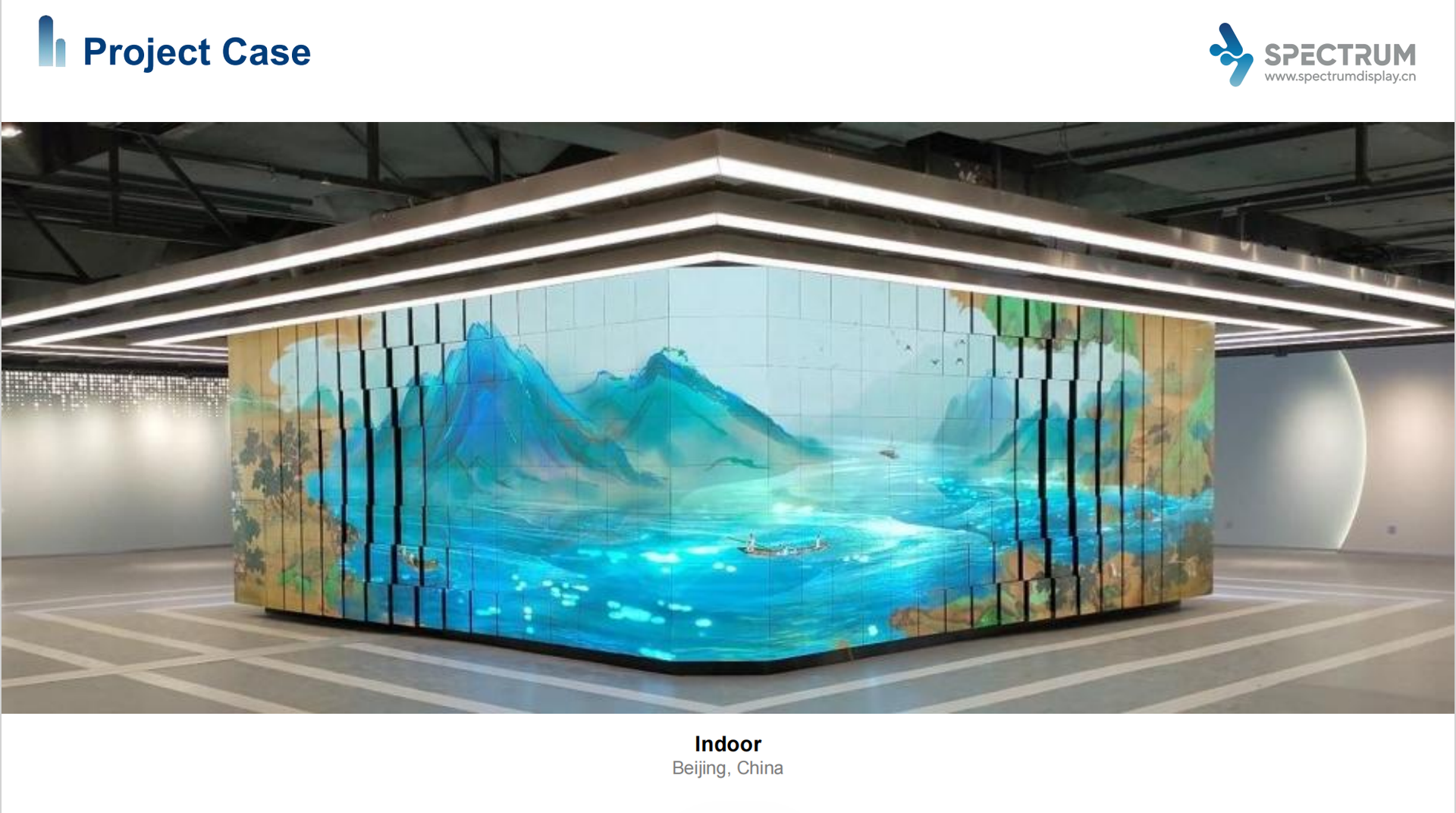
Mechanical LED technology allows pixels to move beyond the traditional X-Y plane and enter the physical Z-axis dimension.
Through precisely controlled mechanical modules, the display surface can physically extend, retract, and transform.
It can respond to:
music rhythm
interactive sensors
real-time audience behavior
creating true physical 3D visual feedback.
This is not simply:
“playing a dynamic video.”
It is:
“the screen itself is moving.”
The difference is similar to watching a movie versus entering a theater performance.
One is observation.
The other is participation.
Breakthrough 2: From “2D” to “3D”
The core of Kinetic LED is the combination of LED display technology and precision mechanical movement systems.
Through intelligent control, display modules can achieve:
extension
retraction
rotation
dynamic transformation
It breaks the traditional assumption that screens must remain flat.
Instead, it creates a true physical 3D display experience.
This integration brings a new level of:
visual depth
artistic expression
spatial immersion
to commercial environments.
As the aesthetics of digital spaces continue evolving, visual media are expected not only to “shine” but also to “breathe”.
By combining virtual imagery with real physical movement, Kinetic LED creates a powerful connection between digital content and physical space.
Breakthrough 3: From “One-Way” to “Interactive”
Traditional LED screens function mainly as backgrounds.
Kinetic LED introduces physical movement through the Z-axis, allowing the display itself to interact with audiences.
This physical dimension changes visitors from observers into participants.
At ISE 2026, visitors experienced this difference directly at Spectrum Display’s Kinetic LED showcase.
When audiences moved their hands, the screen responded.
When visitors approached, modules precisely retracted.
This type of physical real-time response is redefining the boundaries of offline brand experiences.
4. From Playing Content to Creating Experiences: A New Display Revolution
The difference between traditional LED and Kinetic LED is not only a technological difference.
It represents two completely different philosophies of visual communication.
The Logic of Traditional LED: Playing Content
Traditional LED follows this logic:
The screen is a “canvas”
Content is placed onto the canvas
Visitors are viewers of the content
The goal is to deliver information
The screen itself remains unchanged.
The experience depends entirely on what is played on it.
The Logic of Kinetic LED: Creating Experiences
Kinetic LED introduces a completely different approach:
The screen becomes a “spatial variable”
Content becomes the physical transformation of space
Visitors become participants inside the experience
The goal is to create memory
The display is no longer only a surface for information.
It becomes part of the environment itself.
At ISE 2026, an important industry trend became increasingly clear:
LED displays are evolving from functional equipment into aesthetic media and spatial design elements.
SiliconCore’s COO highlighted that dvLED is increasingly being viewed as a dynamic architectural element rather than simply a fixed surface.
Industry observations from ISE 2026 also showed that transparent displays, textured surfaces, and dynamic LED technologies became major discussion points, reflecting a broader movement toward displays that integrate naturally with physical environments.
The future of digital signage is not only about displaying clearer images.
It is about creating more meaningful spatial experiences.
From Watching to Participating
At ISE 2026, Spectrum Display’s Kinetic LED showcase attracted significant attention as a demonstration of physical interactive display technology.
The reason is simple:
When a screen is no longer just an object to watch, but a space that can respond and interact, audiences naturally become participants.
And participants are more likely to remember, share, and engage.
5. Why 2026 Could Become the Breakthrough Year for Kinetic LED
The global LED display industry is entering a major transition period in 2026.
According to TrendForce’s 2026 LED display market outlook and key trends analysis, driven by applications including major sporting events, all-in-one LED displays, and cinema LED screens, the terminal LED display market is expected to continue expanding.
At the same time, technology development is becoming increasingly diversified.
Some manufacturers continue focusing on:
pixel pitch improvements
packaging technologies such as COB and MiP
higher brightness and efficiency
Meanwhile, another group of innovators is exploring a completely new direction:
dynamic display experiences.
ISE 2026 provided a strong signal of this industry shift.
Transparent displays, textured visual surfaces, and dynamic LED technologies became important themes throughout the exhibition.
Major display companies demonstrated new possibilities combining:
physical movement
transparency
architectural integration
interactive experiences
Spectrum Display’s Kinetic LED solutions represented this emerging direction — transforming LED displays from static surfaces into dynamic spatial experiences.
These trends point toward the same conclusion:
The display industry is moving from:
“clearer images” → “richer experiences”
From:
resolution → interaction
From:
flat surfaces → physical environments
From:
static displays → dynamic spaces
This is not simply a product evolution.
It is a fundamental shift in how people understand displays.
6. Frequently Asked Questions (FAQ)
Q1: What is the biggest difference between Kinetic LED and traditional LED displays?
A:
Traditional LED displays are fixed.
Once installed, they remain in one position and one form. Their primary function is playing visual content.
Kinetic LED displays are dynamic.
They can extend, retract, move, and transform, allowing the space itself to become part of the visual expression.
Traditional LED is a “content player”.
Kinetic LED is a “visual storyteller”.
Q2: How does Kinetic LED create a three-dimensional visual experience?
A:
Traditional LED displays create images on the X-axis and Y-axis plane.
Kinetic LED introduces physical movement along the Z-axis, allowing display modules to move forward and backward.
This creates real physical 3D depth.
The difference between physical 3D movement and traditional “naked-eye 3D” visual effects is fundamental:
Physical 3D comes from real mechanical movement.
Visual 3D relies on optical illusion.
Kinetic LED creates actual spatial change.
Q3: What applications are suitable for Kinetic LED?
A:
Kinetic LED is suitable for environments where brands need stronger visual impact and memorable experiences, including:
luxury retail stores
flagship brand spaces
corporate experience centers
museums and science centers
commercial atriums
landmark outdoor installations
Different product configurations can be selected according to viewing distance, installation environment, and content requirements.
Q4: How does Kinetic LED achieve interactive experiences?
A:
Through advanced control systems and interactive technologies, Kinetic LED can connect physical movement with digital content.
With integration capabilities for platforms such as TouchDesigner and Unreal Engine, designers can create interactive experiences using:
radar sensors
depth cameras
facial recognition
voice interaction systems
The screen can respond not only to content, but also to people.
Q5: Is Kinetic LED difficult to maintain?
A:
Spectrum Display provides different maintenance solutions based on installation requirements.
Indoor Kinetic LED models such as SPKI-128 and SPKI-160 support front maintenance, allowing technicians to complete servicing without accessing the rear of the display.
For larger fixed installations such as SPKI-250, rear maintenance architecture provides reliable long-term operation and easier system management.
7. Conclusion
From:
playing content → creating experiences
From:
two-dimensional surfaces → three-dimensional spaces
From:
one-way communication → interactive dialogue
Kinetic LED is redefining what a display can become.
Key Takeaways
1. The limitations of traditional LED
Traditional LED is:
fixed
two-dimensional
one-way
It delivers information, but often struggles to create emotional connection.
2. The breakthrough of Kinetic LED
Kinetic LED introduces:
physical movement
Z-axis depth
interactive responses
The screen itself becomes part of the experience.
3. A new display philosophy
The future of displays is not only about showing content.
It is about creating environments.
The screen is no longer just a “canvas”.
It becomes a spatial variable.
4. 2026 marks an important turning point
The LED industry is moving toward dynamic, immersive, and experience-driven applications.
The next generation of displays will not only be brighter or sharper.
They will be more expressive.
5. The future belongs to displays that can communicate
When a screen learns how to move, transform, and respond, it is no longer a background.
It becomes part of the story.
Recommendations for Project Owners
Before selecting a display solution:
Reconsider what visitors will remember after leaving the space.
Think beyond fixed displays and explore adaptable spatial experiences.
Integrate Kinetic LED systems during the early design stage rather than adding them afterward.
Evaluate suppliers based not only on product specifications, but also engineering capability and project experience.
For more information about Kinetic LED solutions and customized visual systems, contact Spectrum Display through: