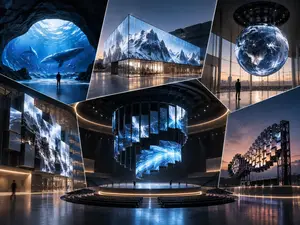
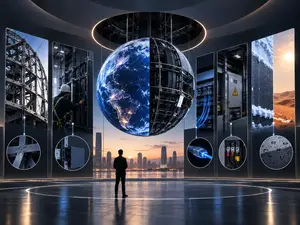
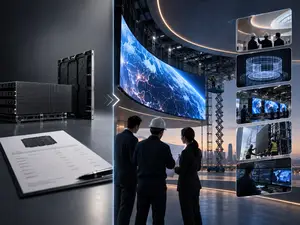
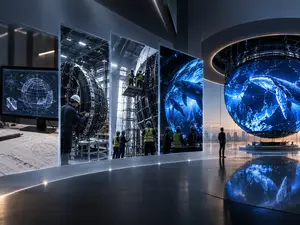
One-Sentence Definition
A Kinetic LED system is not simply a display device. It is a spatial visual engineering system that integrates LED display technology, precision mechanical structures, intelligent motion control, and architectural design.
It solves more than just the question of “how to display content.”
It answers a deeper question:
How can a space express itself when needed, and disappear when it is not?
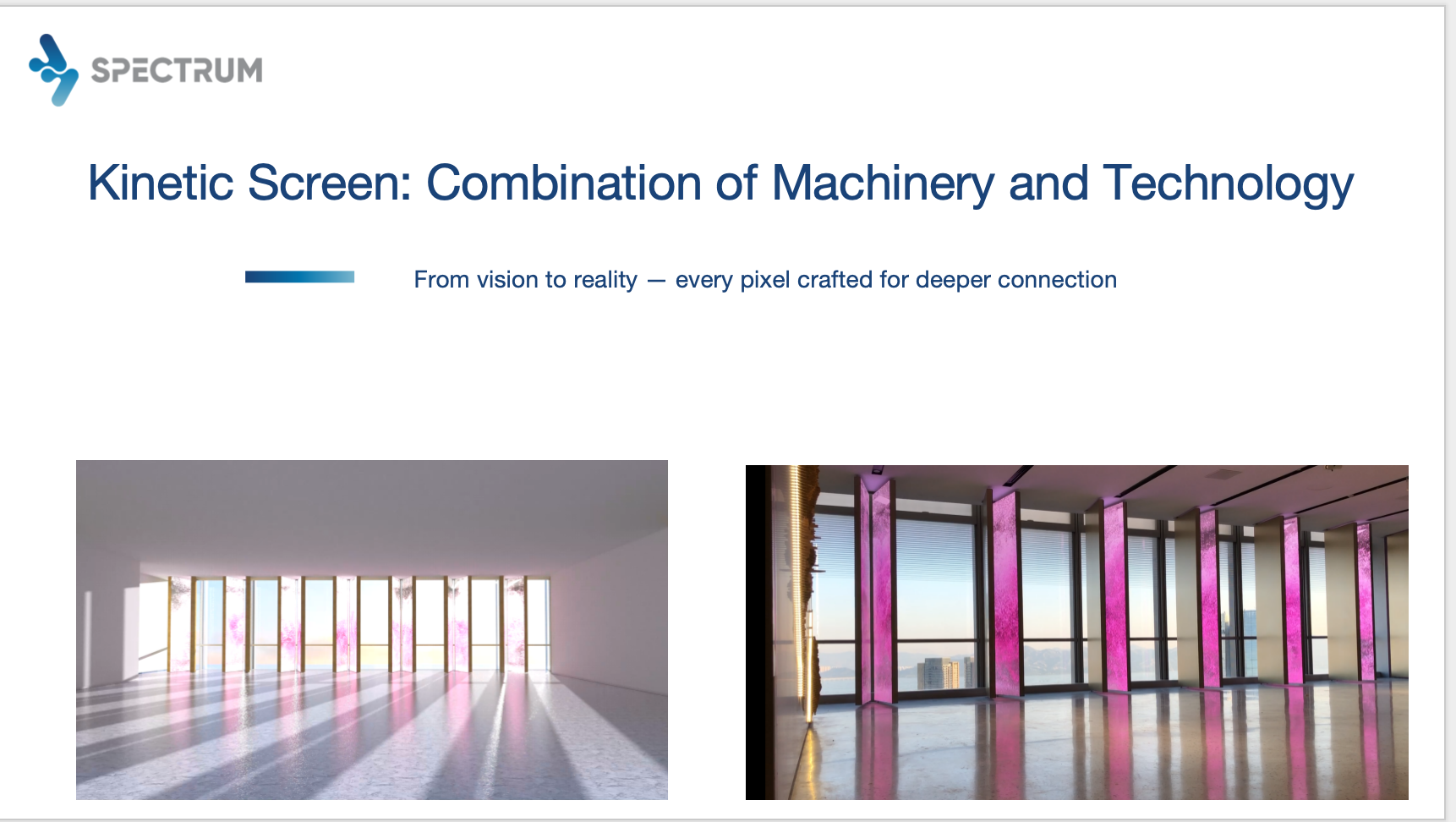
A Spatial Challenge: When Architecture Needs a Large Display Without Losing Its Identity
In modern commercial spaces, brand experience centers, and high-end exhibition environments, designers often face a seemingly contradictory challenge:
The space needs powerful visual expression.
But at the same time, the space must remain:
Complete
Elegant
Open and transparent
Traditional LED displays can provide high-resolution visual content.
However, they usually mean:
Fixed installation
Permanent occupation of space
Changes to the original architectural relationship
For premium spaces, a larger screen does not always mean a better experience.
The real question is:
How can a screen become the visual centerpiece when needed, while returning to the architecture when not in use?
An Engineering Challenge: Making the Screen Appear — and Disappear
The biggest challenge of this project was not simply creating a larger LED screen.
It was creating a new spatial logic.
When the experience begins:
The screen unfolds.
The space becomes a visual focal point.
When the experience ends:
The screen retracts.
The architecture returns to its original state.
This means a Kinetic LED system must achieve three critical requirements:
1. Integrating with Architectural Structures
The project site had strict limitations due to the existing glass frame dimensions.
When the screen was closed, it needed to maintain harmony with the original space:
Without blocking outdoor views
Without disrupting architectural proportions
Without creating additional visual burden
Therefore, the system could not simply be installed.
It needed to be redesigned according to the architectural conditions.
2. Achieving Fast and Stable Motion
A Kinetic LED system is not a conventional motorized device.
It needs to accurately perform:
Opening
Closing
Positioning
Stopping
Every movement must be precisely controlled.
This project adopted a customized opening and closing mechanism, achieving approximately a 5-second spatial transformation, allowing the display to quickly transition:
From an architectural element → into a visual display system
3. Ensuring Safe Operation
The biggest challenge of mechanical movement is not only making the system move.
It is making the system understand:
When should it stop?
Therefore, the system integrates:
Infrared light curtain sensing
Motion resistance feedback
Emergency stop mechanisms
When people or obstacles enter the safety area, the system can immediately stop movement to protect both users and equipment.
A Customized Solution: Where Mechanical Engineering Meets Architecture
Facing this non-standard spatial requirement, SpectrumDisplay adopted a system-level engineering approach.
Instead of selecting an existing product first,
the process started from the needs of the space.
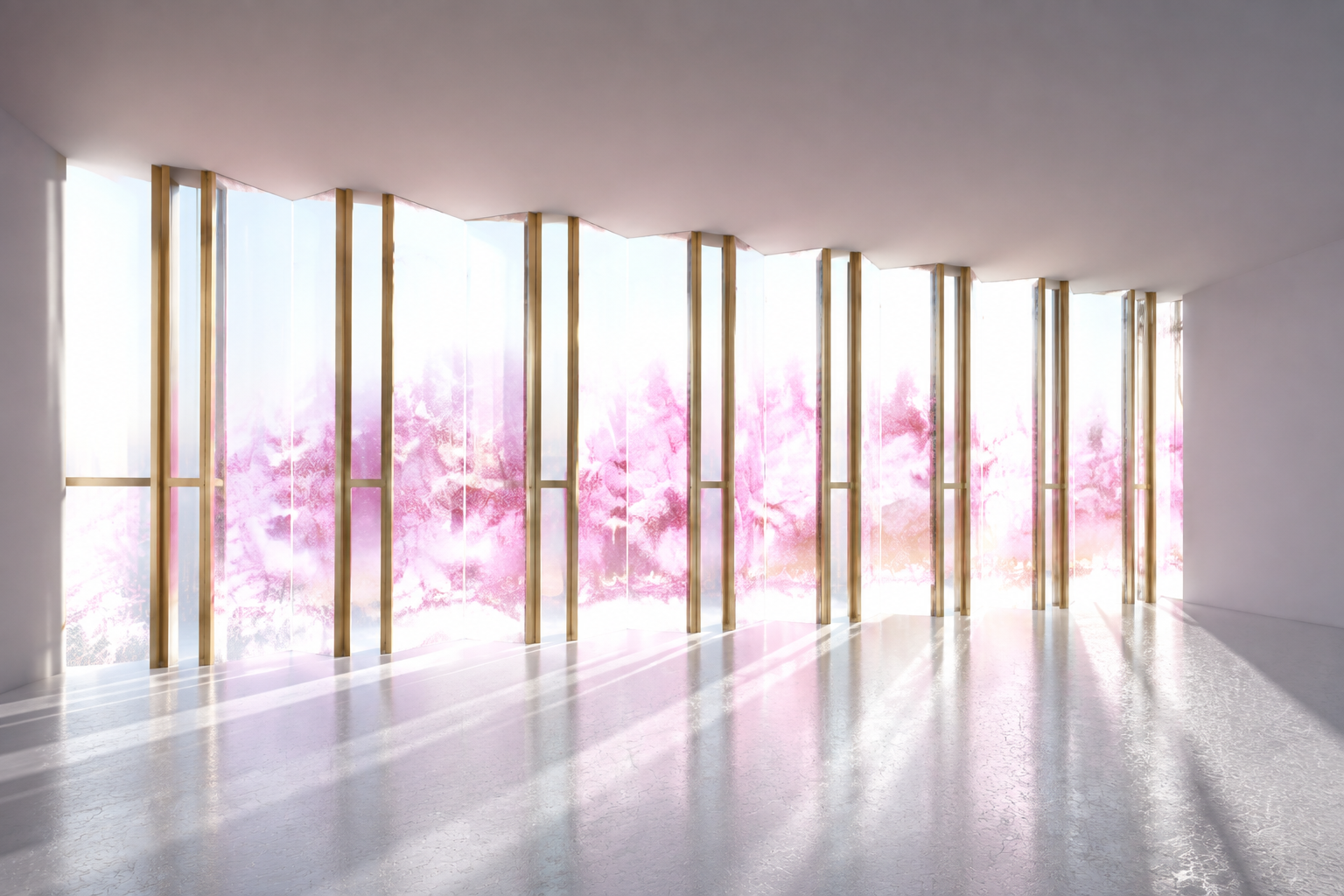
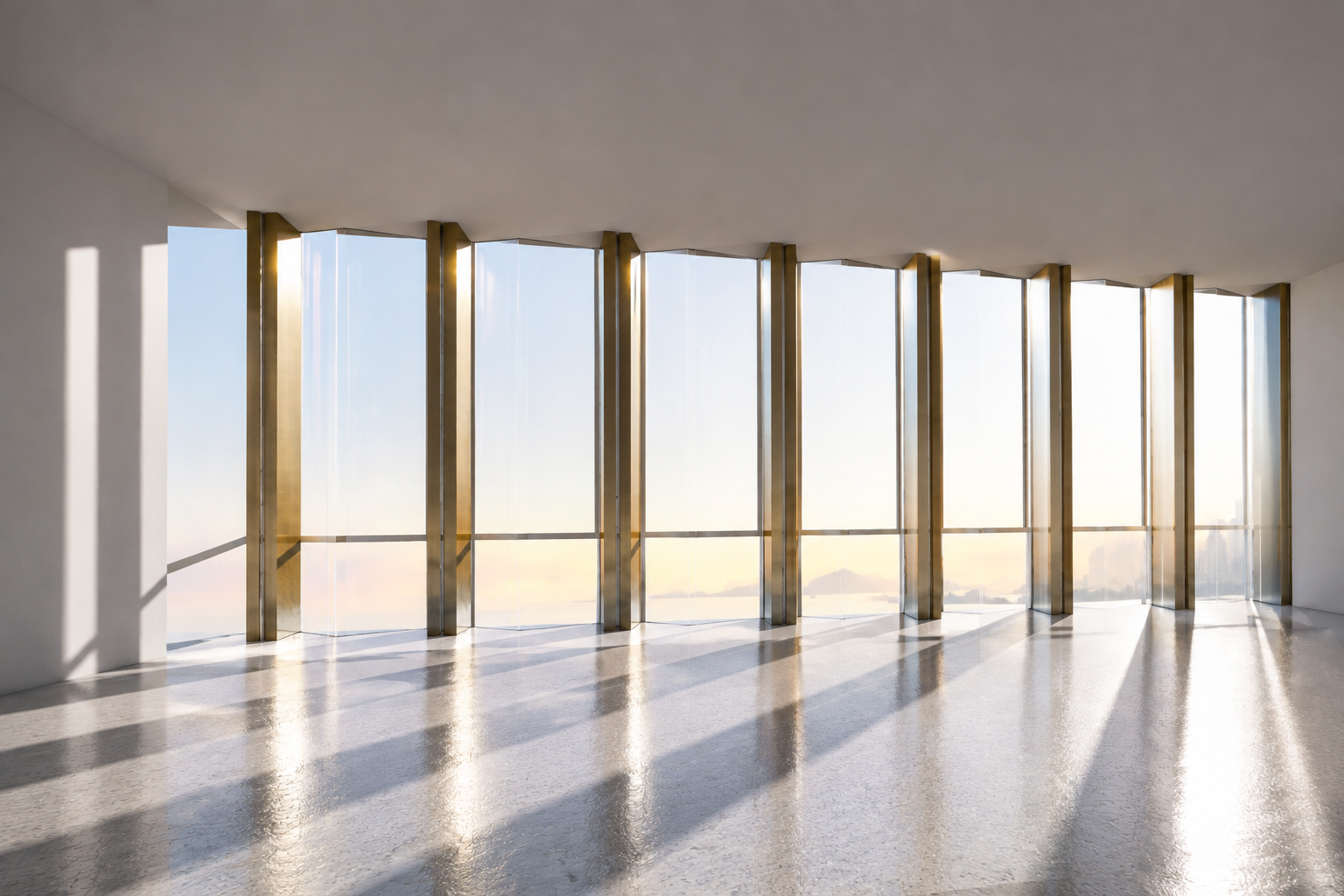
Mechanical Structure Design: Making the Screen Adapt to Architecture
The traditional approach:
Architecture provides the location, and the display is installed inside it.
The customized Kinetic LED approach:
The display system is redesigned according to architectural limitations.
Through customized mechanical structures, SpectrumDisplay created a display system that matched the existing glass frame dimensions.
When closed:
It becomes part of the architecture.
When opened:
It becomes the visual centerpiece.
LED System Integration: Making Every Pixel Serve the Space
To meet the special structural requirements, the project adopted customized LED modules.
Every module dimension, arrangement method, and connection design was developed around the final spatial effect.
The result:
Large-format visual display
High-definition image performance
A display system perfectly synchronized with mechanical movement
The final system achieved a total resolution of 6750 × 1560 pixels, delivering high-quality visual performance for the space.
Intelligent Motion Control: Letting Digital Content Drive Physical Space
The true value of Kinetic LED is not simply movement.
It is making movement become part of content expression.
When visual content changes:
The mechanical structure responds simultaneously.
The screen is no longer only playing images.
It becomes part of the spatial story.
From a Screen to a Complete Spatial Experience System
Ultimately, this project did not simply add another LED display.
It changed the relationship between space and people.
Before:
The screen belonged to the space.
Now:
The screen participates in the space.
It becomes:
A Part of Architecture
When closed, it blends into the environment.
When activated, it transforms the atmosphere.
A Part of Brand Experience
Brand communication is no longer only about playing content.
It becomes a complete spatial experience.
A Part of Spatial Memory
Visitors do not only remember the visuals.
They remember:
“That space that could transform.”
Why Does Future Architecture Need Kinetic LED?
The competition among future commercial spaces is no longer only about:
Who has the biggest screen.
It is about:
Who can create the strongest experience.
Traditional LED solves:
“Making people see.”
Kinetic LED solves:
“Making people remember.”
When a screen can:
Appear,
Disappear,
Transform,
Respond,
it is no longer just a display device.
It becomes a new language of architectural expression.
FAQ
Q1: Why can’t this project use a traditional LED display?
Traditional LED displays are suitable for fixed display applications, but they cannot meet requirements such as hidden installation, rapid transformation, and architectural integration.
Kinetic LED uses mechanical movement systems to allow the display to change according to spatial requirements.
Q2: What is the biggest engineering challenge of Kinetic LED?
The biggest challenge is not the display itself.
It is the coordination between:
Mechanical structures
Motion control systems
Safety systems
Architectural environments
Q3: What spaces are suitable for Kinetic LED?
Kinetic LED solutions are suitable for:
High-end commercial spaces
Brand flagship stores
Corporate experience centers
Museums
Product launch stages
Immersive experience environments
Q4: What is the difference between customized Kinetic LED and standard LED?
Standard LED solutions address general display requirements.
Customized Kinetic LED solutions address:
Unique spatial conditions
Special structural requirements
Advanced experience-driven applications
Conclusion: Not Just Manufacturing a Screen — Creating Spatial Experiences
Every Kinetic LED project does not begin with:
“I need a screen.”
It begins with:
“What does this space need to become?”
SpectrumDisplay combines:
Mechanical structure design
Intelligent motion control
LED system integration
Customized engineering capabilities
to help architecture overcome traditional limitations.
The final result:
A screen becomes part of architecture.
Technology becomes part of the spatial experience.