Standard LED Walls Play Videos. Kinetic LED Screens Make Spaces Respond
One-sentence definition:
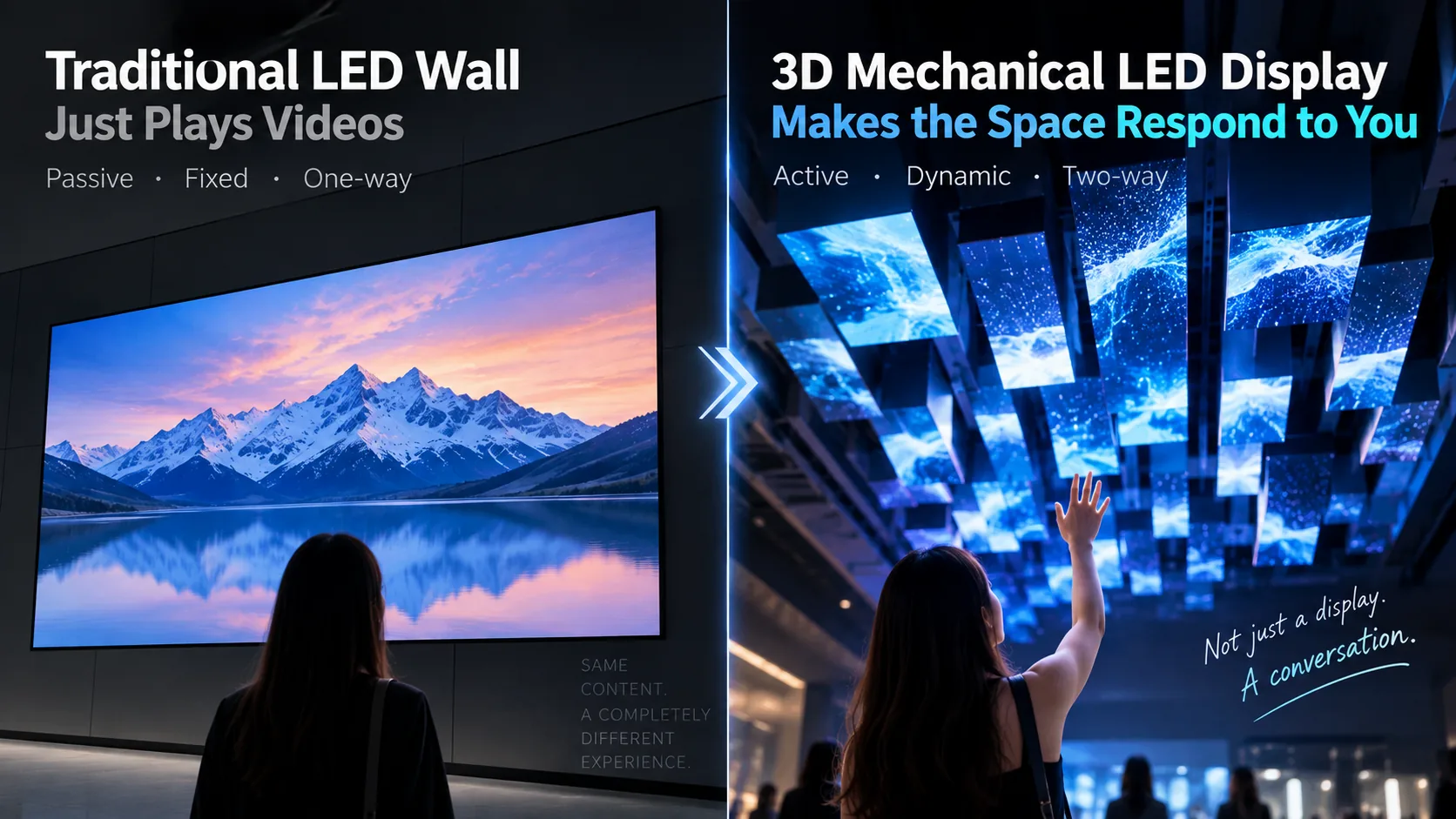
A standard LED wall simply plays video. It is passive, fixed, and one-directional. A 3D Kinetic LED Screen allows the space to respond to people. It is active, dynamic, and interactive. The real difference is not what the screen displays, but how the space communicates with its audience.
Contents
- Two Possible Futures for One Screen
- Standard LED Walls: Passive Playback, Passive Viewing
- Kinetic LED Screens: Active Response, Active Participation
- From Watching to Playing: Three Real Project Cases
- Why “Response” Is More Valuable Than “Playback”
- Conclusion: When Space Learns to Respond, Brands Become Memorable
1. Two Possible Futures for One Screen
One LED wall can have two completely different futures.
The first future: it becomes a bigger television.
It plays promotional videos, looping advertisements, and brand films. The content may be beautifully produced and visually impressive. But when visitors pass by, they often look at it for less than three seconds before moving on.
It is seen, but not remembered.
The second future: it becomes a responsive space.
It may not even be “playing” a conventional video. But the wall is moving, rising and falling slowly and evenly, almost like it is breathing. When a visitor walks closer, one area of the wall seems to ripple outward. When the visitor waves, the direction of the movement changes. People around them stop, raise their phones, and begin recording.
The two walls may use similar LED technology and occupy the same physical size.
But one is a player.
The other is a participant.
The difference is simple: a standard LED wall only plays video, while a 3D Kinetic LED Screen allows the space to respond to people.
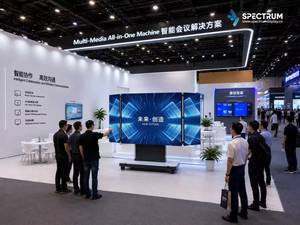
At ISE 2026, the booth of Spectrum Display attracted strong attention. German professional media outlet netscreens described the 3D kinetic LED display as a combination of dynamic content and physically moving display elements, creating an extraordinary appearance that attracts attention and sparks conversation.
2. Standard LED Walls: Passive Playback, Passive Viewing
The logic of a standard LED wall is playback.
The brand delivers content.
The audience receives it passively.
Over the past decade, large flat LED walls have carried most of the visual communication in commercial spaces, exhibitions, and brand environments. But one issue is becoming increasingly clear:
When screens are everywhere, audiences become visually tired.
The traditional one-way model of passive visual communication is losing impact.
The limitations of standard LED walls come from three forms of “fixedness.”
Fixed, so it is easy to ignore.
When something always appears in the same form, in the same place, the human brain quickly categorizes it as background. A fixed screen may feel impressive the first time, familiar the second time, and invisible the third time.
Fixed, so it is hard to build a connection.
A conventional screen works by playback. The brand speaks, and the audience watches. But today’s audiences do not just want to be told something. They want to be invited into an experience. When they enter a space, they expect the space to respond to them, even if only through a subtle movement.
Fixed, so it is hard to create shareable moments.
A fixed screen is hard to remember because it rarely creates a unique moment. A responsive space, however, turns every interaction into something that can be filmed, shared, and talked about.
According to industry research, China’s market for innovative LED displays, including interactive and naked-eye 3D LED screens, is expected to grow by 28.7% in 2026, far exceeding the growth rate of conventional LED displays.
When brands start voting with their budgets, the direction becomes clear:
Being able to play content is no longer enough. The market now needs displays that can respond.
3. Kinetic LED Screens: Active Response, Active Participation
The logic of a 3D Kinetic LED Screen is completely different.
It is not just about playback.
It is about response.
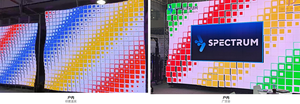
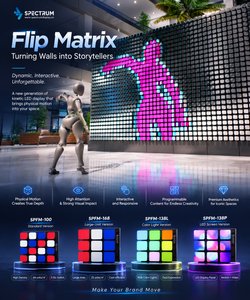
Based on an ultra-high-definition LED display, each display module is given an independent physical Z-axis position. The screen is no longer a fixed flat surface. It becomes a spatial participant that can rise, retract, transform, and breathe.
At ISE 2026, Spectrum Display’s 3D Kinetic LED Screen created real-time interaction with visitors.
When a visitor approached, the wall moved back.
When a visitor waved, the screen reproduced the outline of the body movement with precision.
This kind of physical real-time feedback instantly turns the audience from observers into participants.
The “response” of a 3D Kinetic LED Screen happens on three levels.
It responds to human presence.
By integrating radar sensors and depth cameras, the screen can detect a person’s position and movement. Visitors do not need to press a button or scan a QR code. Simply standing in front of the screen can trigger a response.
It responds to human movement.
When a visitor waves, the screen moves with them. The scale, speed, and direction of the movement can be translated into physical motion in real time. This cause-and-effect relationship creates the feeling of a direct conversation between the person and the screen.
It responds to the rhythm of content.
The movement of the screen can be deeply connected with the content being played. When a visual rhythm moves across the screen, the LED modules can extend and retract accordingly. Content and screen are no longer in a simple relationship of “play” and “be played.” They work together as one system.
At ISE 2026, visitors at Spectrum Display’s booth were able to control the extension range and movement speed of the screen through a mobile app, with speeds reaching up to 800mm/s.
When visitors become operators rather than viewers, they no longer remember “what that wall played.”
They remember:
that wall responded to me.
4. From Watching to Playing: Three Real Project Cases
Case 1: ISE 2026 — From Watching an Advertisement to Playing with One
At ISE 2026, Spectrum Display’s booth became one of the most eye-catching spots on the show floor and stood out as the only exhibitor presenting this type of 3D kinetic LED screen.
Professional media outlet Pixel Inspiration described Spectrum’s kinetic screen matrix panels as physically extending and retracting according to touch or content commands, creating depth and focus without mechanical system noise. For retail and corporate environments, it is a compelling way to guide attention and create memorable moments.
Visitors at the booth were no longer just passing by.
They stopped, moved closer, waved, recorded, and shared.
The human-screen interaction experience generated strong social media interest. From watching an advertisement to playing with one, the role of the audience changed completely.
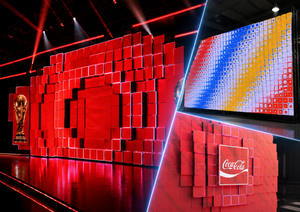
Case 2: Coca-Cola World Cup Launch — Physical Response to Brand Elements
At the Coca-Cola World Cup launch event, the brand made a bold decision: instead of presenting a traditional video-led backdrop, the screen became part of the performance.
Brand elements physically moved with the rhythm of the music. When the area around the logo extended and retracted, the screen was no longer just a background. It became part of the storytelling.
The audience was not watching “a video about Coca-Cola.”
They were watching Coca-Cola move through space.
The most memorable moment of the event was not only a product reveal or a celebrity appearance.
It was the breathing Coca-Cola wall.
When the screen begins to respond to brand content, it is no longer a player.
It becomes a narrator.
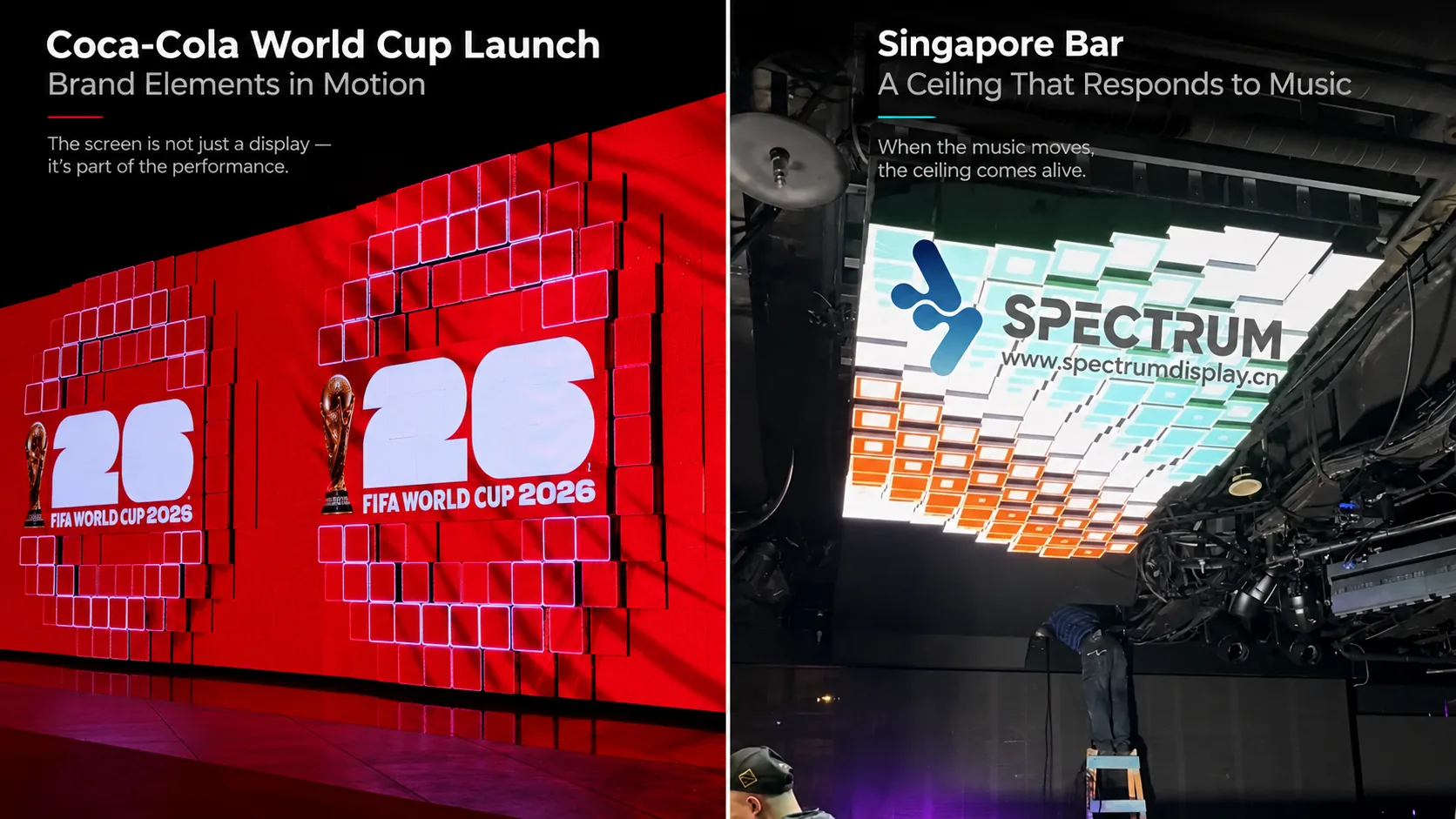
Case 3: Singapore Bar — A Ceiling That Responds to Music
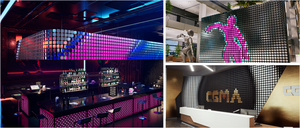
In a high-end bar in Singapore, Spectrum Display installed an SPKI-160 3D Kinetic LED Screen on the ceiling.
Through seamless integration with the DMX512 protocol, the movement rhythm, extension range, and frequency of the screen could be synchronized with live music, lighting, and even performer movement.
When the music began, the ceiling moved with it.
Fast beats created quick motion.
Slower rhythms created a breathing effect.
Many guests left the bar with a photo or video of the ceiling, because it was the first thing they encountered that night that seemed to respond to music.
5. Why “Response” Is More Valuable Than “Playback”
The shift from playback to response is not just a technical upgrade.
It is a redefinition of the relationship between brands and audiences.
Response creates memory.
People remember what they participate in more deeply than what they simply watch. When visitors interact with a screen, the experience becomes personal. This is why the human-screen interaction at ISE 2026 generated such strong attention: participants wanted to share their own “conversation” with the wall.
Response creates shareability.
Human-screen interaction is natural social currency. When visitors become participants, they are more likely to film, post, and share the moment. For brands, this is something passive playback alone cannot achieve.
Response creates connection.
A standard LED wall keeps an invisible distance between the brand and the audience: “you play, I watch.” A 3D Kinetic LED Screen breaks that distance. It creates a two-way relationship between the person and the screen.
This relationship helps the brand move from being seen to being remembered.
According to industry data, the market for innovative LED displays is expected to grow by 28.7% in 2026, significantly faster than conventional LED display products.
The direction is clear:
The future of display is not only about playback. It is about response.
6. Conclusion: When Space Learns to Respond, Brands Become Memorable
A standard LED wall only plays video.
It is passive, fixed, and one-directional.
A 3D Kinetic LED Screen allows the space to respond to people.
It is active, dynamic, and two-way.
Key Takeaways
- The limitation of standard LED walls:
They are fixed, passive, and one-directional. Audiences can only watch, which makes it difficult to create memory and social sharing. - The breakthrough of Kinetic LED Screens:
Through physical Z-axis movement and real-time interaction, the screen evolves from a content player into a spatial participant. - Three levels of response:
The screen can respond to human presence through sensing, respond to human movement through interaction, and respond to content rhythm through synchronized motion. - Three real project cases:
ISE 2026 showed how audiences move from watching an advertisement to playing with one.
The Coca-Cola World Cup launch showed how brand elements can become physical motion.
The Singapore bar project showed how a ceiling can respond to music. - Core value:
Response creates memory, shareability, and emotional connection. It helps brands move from being seen to being remembered.
Recommendations for Brands and Space Operators
Reconsider your space.
When customers enter, is the space merely playing content, or is it responding to them?
If the answer is playback, the space may soon be forgotten.
If the answer is response, the space has a chance to become memorable.
For more product information or a customized project proposal, contact the Spectrum Display team through: