One-sentence definition: Large-scale outdoor telescopic kinetic screenproject planning is a comprehensive engineering methodology covering structural load assessment, environmental protection, control systems, and long-term maintenance for deploying physically extensible LED display systems on building facades or public spaces.
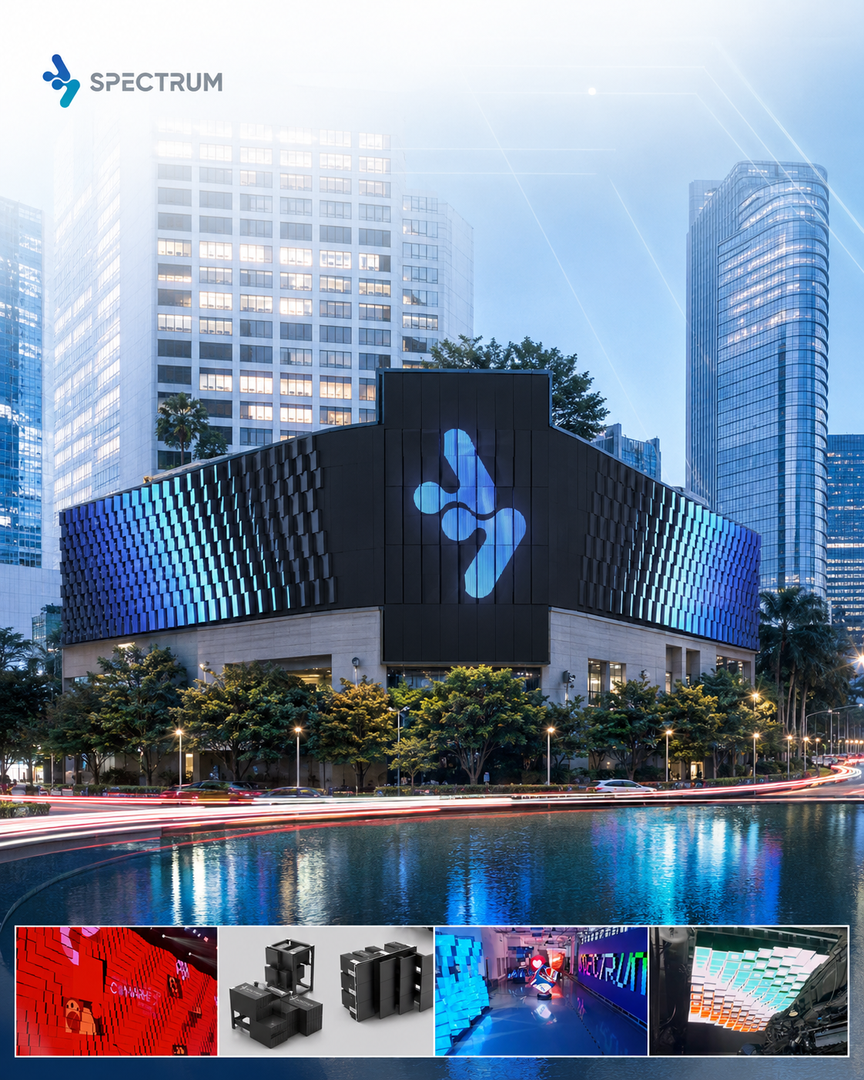
Table of Contents
What makes outdoor kinetic screendifferent from indoor?
Step 1: Structural and load-bearing assessment
Step 2: Environmental protection and climate adaptation
Step 3: Control systems and signal redundancy
Step 4: Maintenance access and long-term planning
JDStrong Technology SPKO series outdoor product lineup
FAQ
1. What Makes Outdoor kinetic screenDifferent from Indoor?
Many clients ask: "Isn't this just an indoor kinetic screen installed outdoors?"
The answer is: fundamentally different.
Indoor kinetic screens (SPKI series) primarily address "visual impact" and "ease of installation." Outdoor kinetic screen(SPKO series) faces entirely different challenges:
Indoor vs Outdoor – Core Differences
Dimension | Indoor (SPKI Series) | Outdoor (SPKO Series) |
|---|---|---|
Environmental challenges | Controlled temperature/humidity | High heat, humidity, rain, typhoons, strong UV |
Structural requirements | Lightweight design | Heavy-duty steel, wind resistance ≥Level 12 |
Protection rating | Basic dust protection | IP65 waterproof & dustproof |
Maintenance access | Front-access | Rear-access maintenance channel |
Brightness | 800-1500 nits | ≥5,000-10,000 nits |
According to JDStrong Technology project data, 80% of the effort in a successful outdoor kinetic screenproject goes into the "engineering side"—structure, protection, control, and maintenance—not the "display side."
2. Step 1: Structural and Load-Bearing Assessment
This is where most projects encounter problems.
An outdoor telescopic kinetic screenis not a "screen you hang on a wall." It is a heavy-duty kinetic system that includes mechanical transmission structures, LED modules, control cabinets, and power distribution systems.
Taking the JDStrong SPKO-500 as an example:
The SPKO-500 features a heavy-duty all-steel cabinet with a thickness of 1430mm, with core support structures using high-strength steel and heavy-duty linear guide rails. This is not "attached" to the building—it is "integrated" into the building structure.
Three things to confirm during the planning phase:
1. Existing building structural capacity
Wall type (concrete, steel frame, glass curtain wall?)
Maximum allowable load weight
Wind load calculations (wind pressure varies significantly by height and region)
2. Installation method selection
Recessed installation: Flush with the building facade—visually cleanest, but requires the most structural modification
Surface-mounted installation: Relatively simpler, but requires consideration of protrusion space and permits
The JDStrong SPKO-320 compresses the overall cabinet thickness—including mechanical transmission structure, LED modules, and independent rear maintenance access—to a remarkable 650mm, enabling facade mounting without major structural changes.
3. Permits and compliance
Large outdoor kinetic screenprojects involve planning permits, building safety approvals, and outdoor advertising permits. It is recommended to engage with local authorities early in the project to clarify the approval pathway and timeline.
3. Step 2: Environmental Protection and Climate Adaptation
The outdoor environment is the "ultimate test" for telescopic kinetic LED.
Case Study: Mandarin Oriental Jakarta
JDStrong Technology's SPKO-500 deployment at the Mandarin Oriental Jakarta is a benchmark example of outdoor engineering capability:
Project scale: 27×9m overall facade, with an 8×16m core dynamic mechanical matrix area
Visual specification: ≥5,000 nits brightness
Climate challenges: Jakarta's year-round high temperatures, high humidity (80%+), annual rainfall exceeding 2000mm, intense UV, salt-laden sea breezes, and sudden rainstorms
JDStrong's three-layer protection system:
Layer 1: Climate defense – semi-enclosed self-cooling design
The SPKO series uses industrial-grade die-casting with semi-enclosed self-cooling thermal systems built into each telescoping unit, with comprehensive waterproofing and anti-corrosion treatment at the base layer. Whether in torrential rain or scorching sun, the core drive compartment maintains stable operation.
Layer 2: Wind resistance – heavy-duty all-steel armor
The SPKO-500 features a 1430mm heavy-duty all-steel cabinet. Core support structures use high-strength steel and heavy-duty linear guide rails, meeting wind and rain safety codes for coastal and ultra-high-rise buildings. Wind resistance ≥Level 12.
Layer 3: Anti-pinch safety – the baseline for public safety
In pedestrian-dense public streets, equipment safety is paramount. The SPKO-320 integrates a high-sensitivity resistance sensing system—when external resistance exceeding 6kg is encountered during telescoping (e.g., pedestrian contact or obstruction), the motor instantly triggers fail-safe protection, cutting power and stopping motion.
4. Step 3: Control Systems and Signal Redundancy
What do outdoor large-scale kinetic LEDs fear most? Not typhoons—"black screen" and "chaotic motion."
When hundreds or thousands of motion units operate simultaneously, any communication latency or signal loss results in screen tearing and motion disorder.
JDStrong's solutions:
1. Automotive-grade CAN bus communication
The SPKO series completely abandons traditional serial communication in favor of automotive-grade CAN bus protocol. It offers exceptional anti-interference and error-retransmission capabilities, supporting millisecond-level synchronization of up to 65,536 motion units per system.
2. Primary-backup signal dual redundancy
Each control window is equipped with both a primary and backup receiving card. In the event of primary signal cable failure, the backup system takes over instantaneously, ensuring the landmark screen never goes dark.
3. Independent floor-by-floor power distribution
Intelligent layered power distribution with independent 55kW distribution boxes per floor, managed via multi-function cards for smart switching and power control—significantly reducing voltage drop losses.
According to JDStrong project delivery data, outdoor projects with dual-redundancy systems experience approximately 90% less unplanned downtime within the first year of operation compared to single-system projects.
5. Step 4: Maintenance Access and Long-Term Planning
The maintenance cost of high-altitude outdoor projects is largely determined during the planning phase.
When equipment is mounted on a building facade, traditional crane or aerial work platform maintenance is extremely costly and severely disrupts normal business operations.
Two critical decisions:
Decision 1: Front-access or rear-access maintenance?
Front-access: Repairs performed from the front of the screen—no rear channel required. Suitable for lower installations or locations without rear access.
Rear-access: Repairs performed from behind the screen—requires ≥60cm of maintenance space. High-altitude outdoor projects must choose rear-access.
JDStrong's SPKO series supports independent rear maintenance access, allowing technicians to perform inspections from inside the building without external lifting equipment.
Decision 2: Spare parts strategy
Outdoor kinetic screeninvolves both mechanical and electronic consumables. It is recommended to establish a spare parts inventory at project delivery:
Consumable electronics: power supplies, receiving cards, LED modules
Mechanical spares: servo motors, guide rail slides
According to JDStrong after-sales data, clients with established spare parts inventory achieve Mean Time To Repair (MTTR) of under 4 hours, while those without average 3-7 days.
6. JDStrong Technology SPKO Series Outdoor Product Lineup
JDStrong Technology's SPKO series is specifically designed for harsh outdoor environments, covering projects of varying scales:
Model | Application Scenarios | Key Features |
|---|---|---|
SPKO-320 | Commercial streets, pedestrian zones, shopping mall facades | Ultra-thin 650mm cabinet |
SPKO-500 | City landmarks, ultra-high-rise buildings, large-scale cultural tourism projects | 600mm ultra-long stroke |
SPKO-500 Key Specifications:
Pixel Pitch: P10.4
Maximum Forward Stroke: 600mm
Maximum Running Speed: 800mm/s
Protection Rating: IP65
Brightness: ≥10,000 cd/m²
7. FAQ
Q1: Can outdoor telescopic kinetic screenwithstand typhoons?
Yes. JDStrong's SPKO series features heavy-duty all-steel cabinets and high-strength steel guide rails, with wind resistance ≥Level 12, meeting safety codes for coastal and ultra-high-rise buildings.
Q2: What is the lifespan of outdoor telescopic kinetic LED?
Under normal maintenance conditions, the mechanical structure is designed for 10+ years, while LED module lifespan is approximately 5-8 years (depending on usage frequency and environment). Proactively avoiding issues like high-brightness static holds at the content design stage can extend LED lifespan.
Q3: What is the routine maintenance frequency for outdoor telescopic kinetic LED?
Recommended schedule: weekly surface dust cleaning, monthly structural fastener and sealant inspection-, and quarterly mechanical transmission system lubrication and calibration. Modular design supports single-cabinet replacement with repair time ≤2 hours.
Q4: How to choose between SPKO-320 and SPKO-500?
Depends on project scale and viewing distance. For close-range scenarios (5-10m viewing) like commercial streets and pedestrian zones, the SPKO-320 is recommended. For long-range scenarios (tens to hundreds of meters) like city landmarks, ultra-high-rise buildings, and large cultural tourism projects, the SPKO-500 is recommended.