From Extreme Heat and Curtain Walls to Signal Systems: How Complex Environments Affect Mechanical LED Projects
One-sentence definition:
Mechanical LED projects are never just about “display performance.” Extreme heat can cause motors to fail, thermal expansion in curtain-wall structures can distort alignment, and long-distance signal transmission can lead to lag or image tearing. In a complex mechanical LED project, as much as 80% of the engineering effort may go into environmental adaptation rather than the display itself.
Contents
- An Overlooked Reality: The Environment Is the First Barrier for Mechanical LED
- Heat and Thermal Management: What Happens When Outdoor Temperatures Exceed 50°C?
- Curtain Walls and Structural Movement: Buildings “Breathe,” and the Display Must Move with Them
- Signal Systems: A Few Hundred Meters of Delay Can Decide Whether the Image Stays Synchronized
- When the Environment Becomes the Barrier: Why Complex Projects Need an Engineering Partner, Not Just a Supplier
- Conclusion: Environmental Adaptation Determines Whether a Project Simply Works or Keeps Working
1. An Overlooked Reality: The Environment Is the First Barrier for Mechanical LED
When clients first evaluate a mechanical LED project, they usually focus on pixel pitch, brightness, and screen size.
These parameters matter, of course.
But they mainly answer one question:
How good will the display look?
What really determines whether a project can survive over the long term is environmental adaptation.
In industry practice, a successful outdoor mechanical LED project can require as much as 80% of its engineering effort to be spent on thermal management, protection, signal stability, and environmental adaptation rather than on display performance itself.
The logic behind this is straightforward.
A mechanical LED system is an electromechanical system. It contains motors, linear guides, transmission components, control electronics, and LED modules.
Every component has an operating limit.
Once environmental conditions exceed those limits, the system begins to fail:
motors overheat,
linear guides corrode and jam,
signal delays create synchronization problems,
and structural deformation increases module gaps.
The environment is not just a background condition.
It is one of the core engineering variables that determine whether the project succeeds or fails.
2. Heat and Thermal Management: What Happens When Outdoor Temperatures Exceed 50°C?
Heat dissipation is one of the first critical challenges for a mechanical LED system operating in extreme environments.
For outdoor projects, temperature conditions can be far more demanding than many project owners expect.
In the Middle East, outdoor temperatures can regularly exceed 50°C.
In Southeast Asia, temperatures may be lower, but humidity levels above 80% can significantly reduce cooling efficiency and leave critical components operating under sustained thermal stress.
Thermal Runaway Is More Than Just “Getting Hot”
When the ambient temperature remains extremely high, the junction temperature of LEDs and other electronic components can approach their critical thresholds.
Excessive heat can trigger a chain of irreversible degradation:
- material deformation
- solder-joint failure
- circuit interruption
- accelerated component aging
- brightness loss
- reduced color uniformity
One of the more hidden risks is accelerated aging.
Heat is a major driver of lumen depreciation. Prolonged high temperatures accelerate phosphor degradation, silicone yellowing, and internal chip deterioration, causing brightness and color consistency to decline more quickly.
From Heat Dissipation to Thermal Balance
Simply adding more fans is not a complete thermal solution.
A professional system should create a complete thermal path from the design stage.
Spectrum Display’s engineering approach to extreme environments is not simply to “remove heat,” but to maintain thermal balance.
That means combining die-cast aluminum structures with airflow and thermal-path design so that heat can be conducted and discharged efficiently while keeping critical components inside a stable operating window.
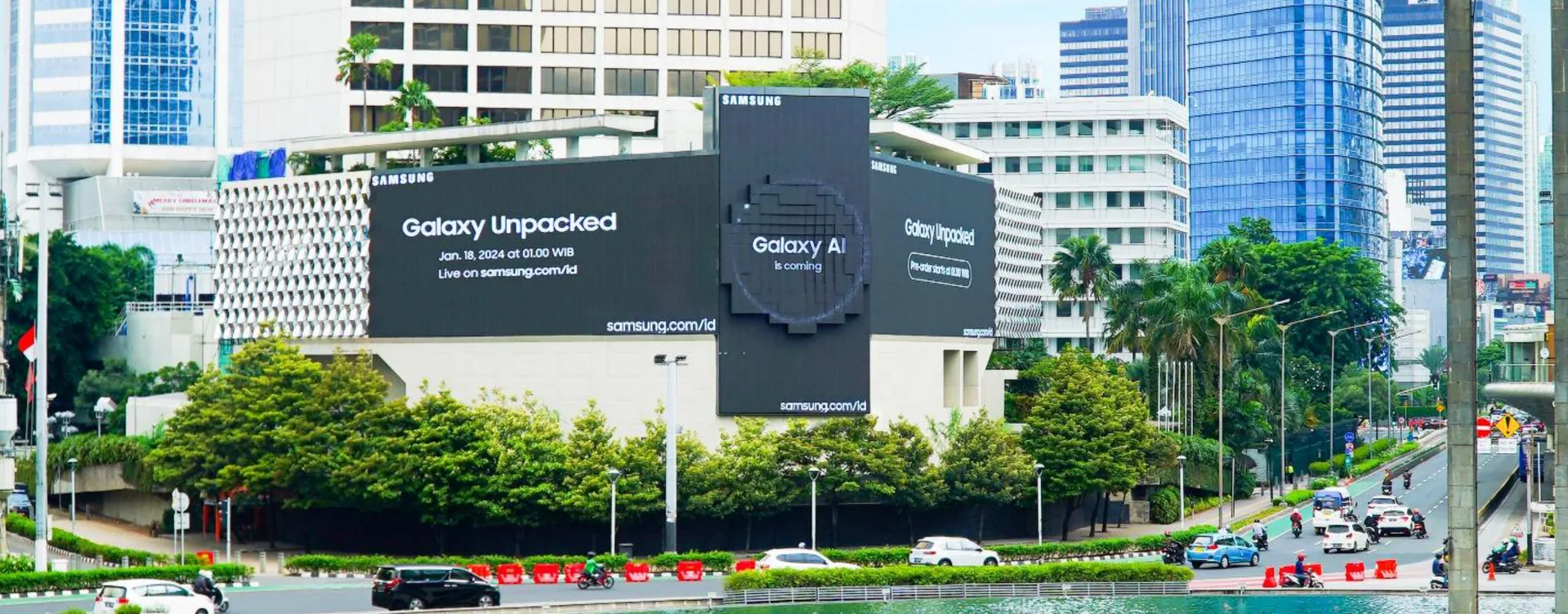
This approach was applied in the Mandarin Oriental Jakarta project.
The site faces year-round heat, humidity above 80%, annual rainfall exceeding 2,000mm, strong UV exposure, salt-laden air, and sudden heavy rain.
Spectrum Display’s SPKO-500 outdoor kinetic LED system used industrial-grade die-cast construction, a semi-enclosed self-cooling design inside the motion units, and dedicated waterproofing and anti-corrosion protection.
The goal was not merely to make the system “heat resistant.”
It was to keep the system thermally controlled.
That is what supports long-term reliability.
▶Video · YouTubeOutdoor Kinetic Screen in Motion — built for sun, rain and salt airWatch on YouTube →
3. Curtain Walls and Structural Movement: Buildings “Breathe,” and the Display Must Move with Them
When a mechanical LED wall is installed on a building facade, one issue is often underestimated:
the building itself is moving.
Thermal Expansion: Invisible Structural Movement
Thermal expansion is a basic physical phenomenon.
Materials expand when heated and contract when cooled.
Building facades experience this cycle continuously.
In summer, facade materials expand.
In winter, they contract.
Large buildings are therefore designed with expansion joints to allow for natural movement.
If a large LED display is installed across these structures, it will be affected by the same forces.
If the screen structure does not accommodate this movement correctly, the result may include:
- module misalignment
- increased gaps
- stress on mounting systems
- damaged pixels or cabinets
- structural safety risks
Engineering solutions may include slotted connections, flexible components, and carefully controlled tolerances that allow the display structure to move with the building rather than resist it.
Wind Load: Height Changes Everything
For curtain-wall LED projects installed at height, wind load can dominate the support-system design even when the display itself is relatively lightweight.
Wind pressure varies according to:
- installation height
- local terrain
- building geometry
- corner position
- local climate conditions
Open or transparent LED structures may reduce wind pressure, but the transparency percentage itself cannot simply be used as a direct wind-load reduction factor.
Pressure coefficients for mesh or transparent systems should come from engineering calculations or validated testing.
Installation height fundamentally changes how a system responds to wind.
A screen near ground level and a screen dozens of stories above the ground face completely different structural conditions.
The mounting method, module structure, and supporting framework all need to be reconsidered.
Structural Approval: The Invisible Barrier
Glass curtain-wall LED projects require structural, facade, electrical, and approval reviews at an early stage.
Brightness and pixel pitch cannot compensate for an unsuitable mounting system.
A facade-mounted LED system adds:
- weight
- wind load
- cabling
- maintenance requirements
Accurate drawings and local structural codes are therefore essential for engineering review and realistic pricing.
This is particularly important for older buildings, where the original structure may not have been designed to carry additional dynamic loads.
▶Video · YouTubeWhere Creative Vision Meets Engineering Excellence — large-scale facade installationsWatch on YouTube →
4. Signal Systems: A Few Hundred Meters of Delay Can Decide Whether the Image Stays Synchronized
Another invisible risk in a mechanical LED project is the signal system.
Large kinetic LED systems may contain hundreds or thousands of moving units.
These units need to receive both LED display data and mechanical motion-control commands.
When the project spans dozens or even hundreds of meters, transmission distances can quickly reach several hundred meters.
Why Traditional Protocols Can Become Limiting
DMX512 remains a classic stage-lighting protocol.
It is simple, deterministic, and widely supported.
But in a large LED installation, its 512-channel limit can quickly become restrictive.
Once a project expands from a few universes to dozens or hundreds, Ethernet-based protocols such as Art-Net and sACN become much more practical.
They run over standard network infrastructure and make it easier to support:
- multiple universes
- centralized routing
- redundancy
- monitoring
Network Best Practices for Large Projects
In large LED installations, network design directly affects system stability.
Use industrial-grade Cat5e or Cat6 cabling for long-distance transmission, and consider fiber for backbone sections to avoid grounding issues over very long cable runs.
Separate lighting and motion-control traffic onto dedicated VLANs and use managed switches to apply QoS to Art-Net or sACN traffic.
Build in redundancy.
In the Mandarin Oriental Jakarta project, Spectrum Display used dual receiving cards for key control windows. If the primary signal path failed, the backup system could take over to reduce the risk of a blackout.
Use communication protocols with strong anti-interference capability.
Spectrum Display uses CAN-bus architecture for motion control rather than relying solely on traditional serial communication.
Originally developed for automotive safety systems, CAN bus offers strong error handling and interference resistance, making it suitable for synchronizing large volumes of motion-control data.
▶Video · YouTubeHow content is translated into physical motion — the control side of a kinetic systemWatch on YouTube →
5. When the Environment Becomes the Barrier: Why Complex Projects Need an Engineering Partner, Not Just a Supplier
The difficulty of environmental adaptation is exactly why complex mechanical LED projects cannot be handled like ordinary product purchases.
A simple indoor installation may only require the right model, proper installation, and power-on commissioning.
A project involving extreme heat, curtain walls, and long-distance signal transmission requires much more:
- thermal-management design
- structural adaptation
- network architecture
- redundancy planning
- maintenance strategy
This leads to one of Spectrum Display’s key conclusions from extreme-environment projects:
standard commercial design practices are often not enough for extreme environments.
Professional engineering capability means solving these challenges from the beginning rather than adding patches after problems appear.
In the Jakarta project, Spectrum Display did not simply deliver a screen.
It delivered a complete engineering defense system:
- semi-enclosed self-cooling for tropical conditions
- signal redundancy to reduce blackout risk
- distributed power design to reduce voltage drop and simplify maintenance
Each subsystem addressed the same fundamental question:
How do we keep the system stable when the environment is working against it?
For complex mechanical LED projects, the real choice is not just between products.
It is between suppliers and engineering partners.
▶Video · YouTubeFrom Automated Craftsmanship to Stunning Visual Reality — why engineering capability decides the outcomeWatch on YouTube →
6. Conclusion: Environmental Adaptation Determines Whether a Project Simply Works or Keeps Working
Environmental adaptation is not an optional extra in a mechanical LED project.
It is a basic requirement for long-term reliability.
Key Takeaways
- Heat and thermal management
Extreme temperatures can cause thermal stress and accelerated aging. Professional solutions move beyond simple cooling toward thermal balance through structural heat paths, airflow design, and controlled operating temperatures. - Curtain walls and structural movement
Buildings “breathe.” Thermal expansion, wind load, and vibration must all be considered. Facade LED projects require structural, curtain-wall, electrical, and approval reviews at the early design stage. - Signal systems
Large projects often need to move beyond DMX512 alone and use Ethernet-based protocols such as Art-Net and sACN, together with industrial-grade cabling, dedicated VLANs, QoS, and redundancy. - Engineering-partner mindset
Complex environments require integrated engineering capability, not just a product supplier.
Recommendations for Project Owners
Include environmental factors in the project assessment from the beginning:
temperature, humidity, wind load, structural movement, and signal distance all matter.
When evaluating suppliers, ask for proven cases in extreme environments and complete protection strategies rather than only product specifications.
Review the signal architecture carefully.
At a distance of several hundred meters, the difference between a stable network and a poorly designed one can be the difference between smooth synchronization and visible failure.
For more information about environmental adaptation and customized mechanical LED solutions, contact the Spectrum Display team through: