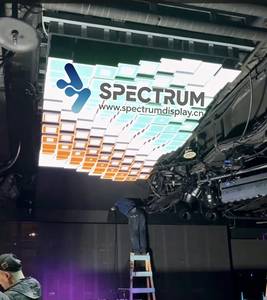
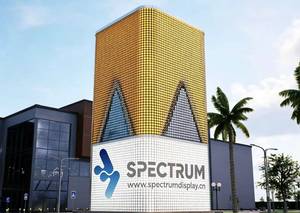
One-Sentence Definition
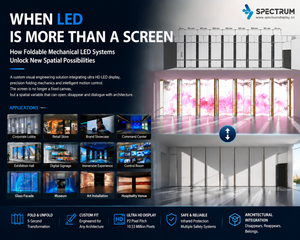
Spectrum Flip Matrix is a dynamic mechanical display solution from the SPFM Series by Shenzhen Jiandaqiang Technology Co., Ltd. (Spectrum Display).
Through the programmable control of numerous independent flipping units, it transforms brand presentation from static visual playback into physical expression — allowing storefronts to become more attractive, showrooms to become more narrative-driven, and spaces to gain a sense of vitality.
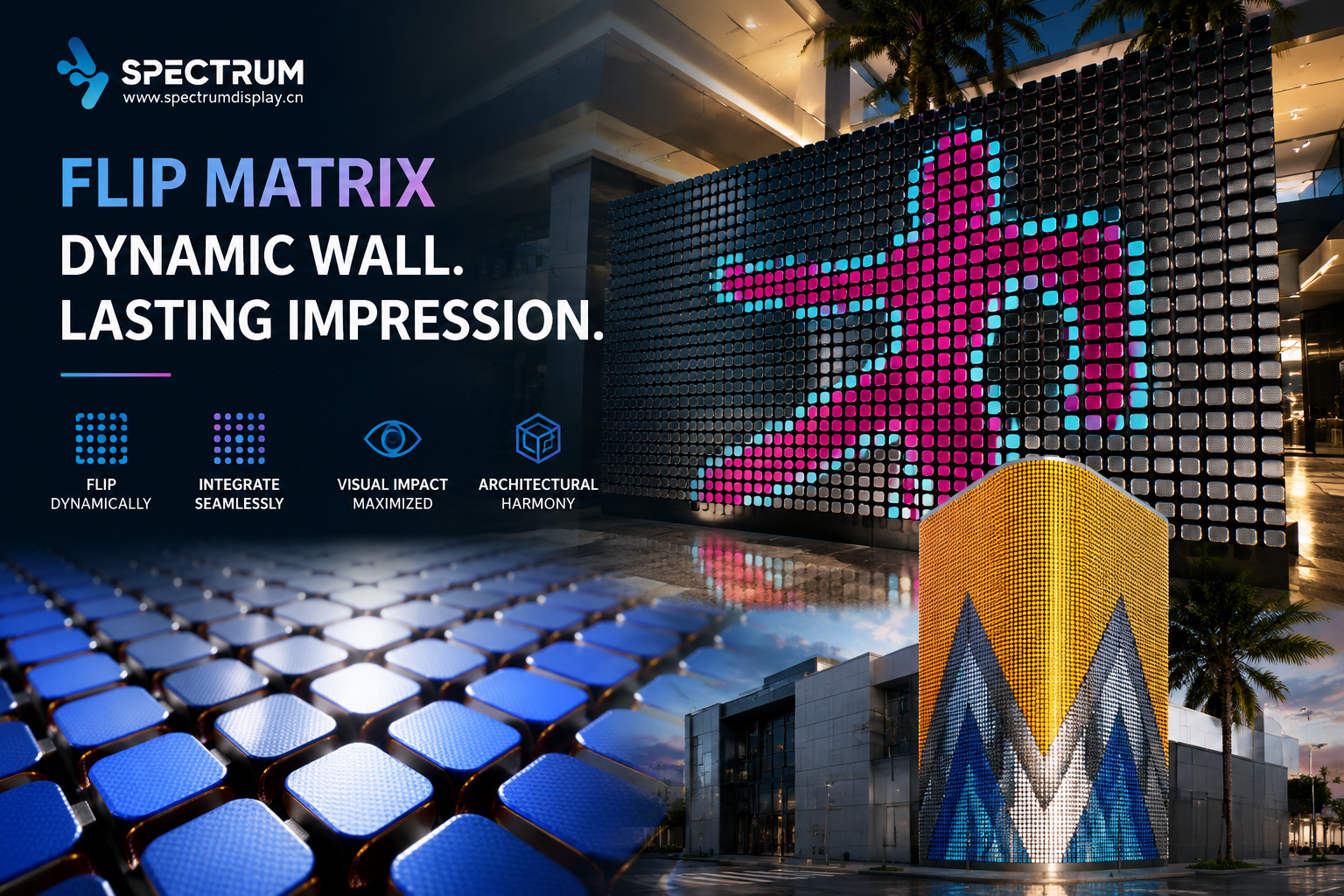
Contents
The Challenge of Brand Display: Why Being Seen Does Not Mean Being Remembered
Luxury Storefronts: Creating a Conversation Within 50 Centimeters
Corporate Showrooms: When a Wall Learns to Tell a Brand Story
Factory Testing: The Final Validation Before Flip Matrix Goes Into Operation
From “Display” to “Expression”: A Shift in Brand Storytelling
FAQ
Conclusion
01 The Challenge of Brand Display: Why Being Seen Does Not Mean Being Remembered
A luxury brand marketing director once calculated the value behind a flagship storefront:
The rental cost of a premium retail location.
The carefully designed lighting system.
The expensive display fixtures.
Every detail represents a significant investment.
Yet when a passerby walks past the window display, the average attention time may be less than three seconds.
Three seconds.
Not even enough time to finish reading a brand slogan.
This is not an isolated problem.
In today’s information-overloaded world:
Being seen is no longer difficult.
The real challenge is:
Being remembered.
Traditional brand display follows a familiar formula:
illuminated logos,
static brand walls,
decorative materials,
digital screens playing promotional content.
This approach can create a premium atmosphere.
But it also creates increasing similarity.
When every store uses similar materials, similar colors, and similar lighting styles, consumers gradually treat these elements as background information.
They see them.
But they do not remember them.
In the social media-driven era, the value of a commercial space is not only determined by what it provides.
It is determined by:
What people remember after leaving.
Memorable spaces create conversations.
Shareable spaces attract attention.
Distinctive spaces build stronger emotional connections.
This is exactly the question Spectrum Flip Matrix aims to answer:
What happens when a wall is no longer just a wall?
02 Luxury Storefronts: Creating a Conversation Within 50 Centimeters
In luxury retail, a storefront is never just a place to display products.
It is the first conversation between a brand and a customer.
It often determines one critical decision:
Should I walk inside?
That is why dynamic mechanical displays are becoming increasingly popular in premium retail environments.
Through physical movement and visual transformation, they create experiences that traditional static displays cannot achieve.
However, luxury storefronts have one extremely demanding requirement:
The customer may stand only a few centimeters away from the display surface.
In this close-view environment, every detail matters:
gaps,
texture,
movement precision,
material quality.
Any imperfection can directly affect the perception of luxury.
This is where SPFM-100 creates value.
As the highest-density model in the Flip Matrix series, SPFM-100 features:
64 units per square meter density
100 × 100mm color block size
allowing detailed dynamic effects to be presented at extremely close viewing distances.
Each flipping unit creates precise visual transitions without exposing unnecessary mechanical details.
With:
0.15s switching speed
maximum rotation speed of 3 Rev/s
every movement is designed to be fast, precise, and controlled.
In luxury environments, this is what precision means.
Imagine a customer standing in front of a luxury storefront.
The wall is originally static.
Then, the surface begins to transform.
The brand identity appears through physical movement.
The visual changes are not just played on a screen.
They physically happen in front of the audience.
They can be seen.
They can be felt.
They can be remembered.
In premium retail stores and immersive commercial spaces, mechanical LED displays are becoming powerful visual attractions because they combine physical interaction with digital creativity.
03 Corporate Showrooms: When a Wall Learns to Tell a Brand Story
Corporate showrooms are another area being transformed by Flip Matrix.
Traditional showroom design often follows this logic:
Visitors follow the guide.
The guide explains.
The screen displays information.
The screen becomes only a content carrier.
The experience depends on what is being shown.
Flip Matrix introduces a different possibility.
Imagine a brand wall composed of hundreds of independent flipping units.
When visitors approach:
The wall begins to transform.
The brand identity appears through movement.
The surface changes layer by layer.
When visitors leave:
The wall gradually returns to another visual state.
Every visit becomes a different experience.
This changes brand storytelling.
The story is no longer only:
“What the guide says.”
or:
“What the video shows.”
Instead:
The space itself becomes part of the story.
A wall that can move, transform, and respond becomes a brand language.
It does not speak.
But it creates memory.
SPFM-138P: Combining Mechanical Movement and Video Expression
For applications requiring both physical movement and video content, SPFM-138P provides a combined solution.
Based on mechanical flipping technology, SPFM-138P integrates an LED display surface (P10), allowing brands to combine:
mechanical movement,
video playback,
visual storytelling.
After the flipping units reach position, the LED surface can display brand videos and digital content.
During movement, mechanical transformation and visual content work together to create a stronger visual impact.
For projects that require both artistic installation and digital storytelling, SPFM-138P provides a balanced solution.
04 Factory Testing: The Final Validation Before Flip Matrix Goes Into Operation
Before Flip Matrix enters:
luxury storefronts,
corporate showrooms,
commercial spaces,
it must first complete strict factory validation.
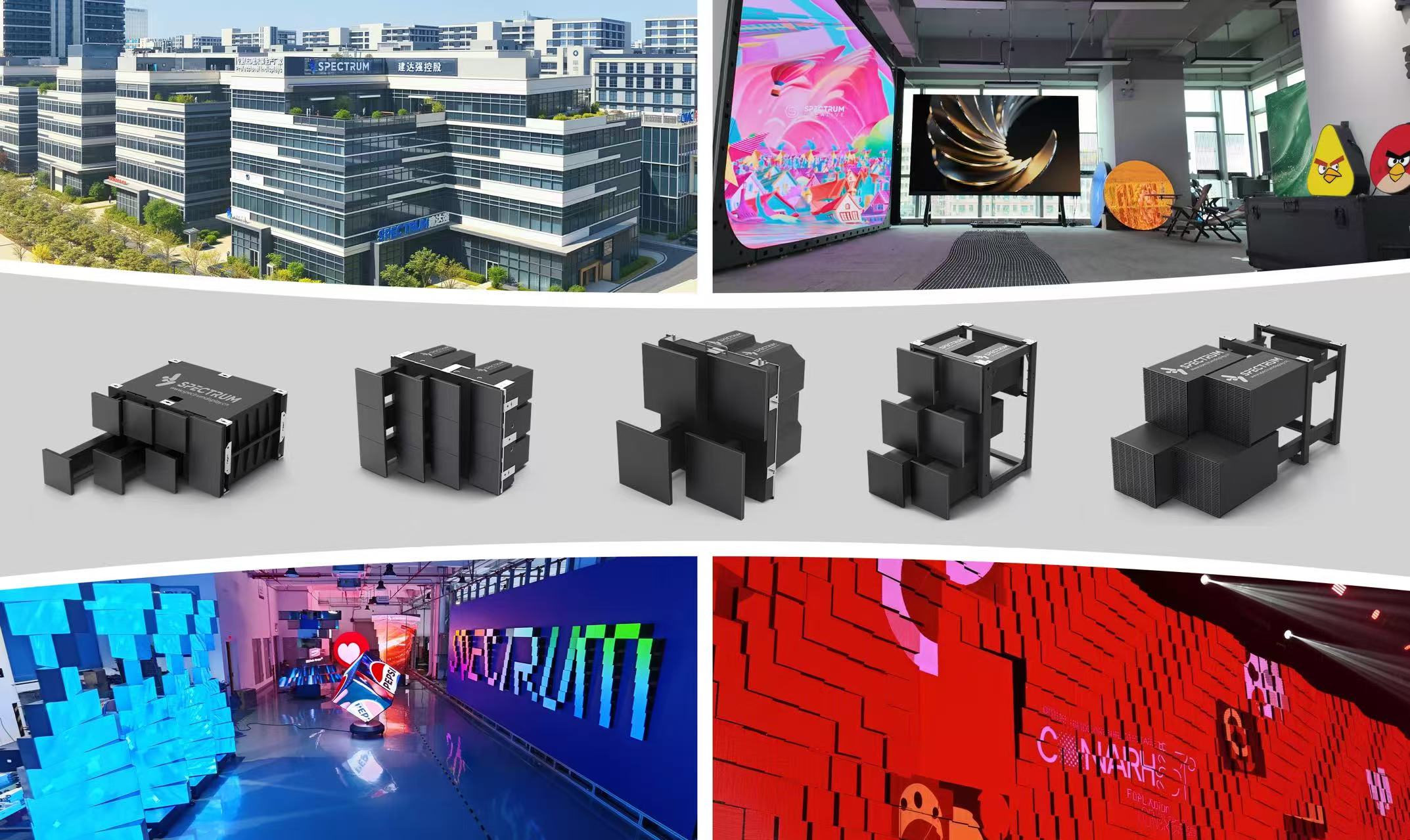
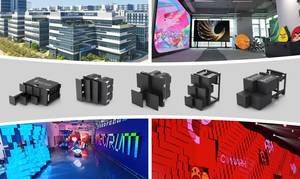
Inside Spectrum Display’s manufacturing facility in Huizhou, engineers conduct real-world testing on Flip Matrix systems.
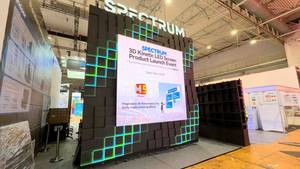
A large testing wall composed of hundreds of independent flipping units operates repeatedly.
Each unit moves independently.
Colors switch between different states.
Dynamic patterns move across the surface.
The entire system is tested for:
movement accuracy,
control stability,
visual consistency.
The factory testing environment is not a showroom.
It is where every SPFM system proves its reliability before delivery.
Each flipping unit goes through repeated operation testing to ensure stable switching performance.
Complete installations are tested with:
DMX512 integration,
Art-Net control,
lighting system compatibility.
Customized surfaces are also tested under different lighting conditions to ensure visual consistency.
The purpose is simple:
Do not discover problems at the customer site.
Solve them before delivery.
The factory testing process is not only about quality control.
It is also a creative validation space.
Design concepts.
Brand requirements.
Complex motion sequences.
All can be tested and optimized before production.
Every Flip Matrix delivery is not just a product.
It is a verified visual solution.
05 From “Display” to “Expression”: A New Era of Brand Storytelling
Flip Matrix represents more than a technology upgrade.
It represents a shift in how brands communicate.
The Display Era
The traditional logic is:
“I have something to show. Look at it.”
The brand communicates.
The audience receives.
The tool is a screen.
The content is a video.
The success depends on:
size,
brightness,
clarity.
The Expression Era
The new logic is:
“I have something to express. Experience it.”
The brand and audience interact.
The tool becomes the space itself.
The content becomes emotion.
The success depends on:
memory,
interaction,
experience.
Spectrum Display specializes in mechanical LED display systems, combining:
mechanical structures,
intelligent control,
visual design,
to provide creative mechanical display solutions for:
brand spaces,
commercial showrooms,
premium retail environments.
The goal is not to compete by making louder displays.
It is to communicate through a new visual language:
the language of mechanical movement.
When a wall learns to rotate, transform, and respond,
it is no longer a background.
It becomes the story itself.
When a screen evolves from a playback device into an expression tool,
brand display moves from:
being seen
to:
being remembered.
06 FAQ
Q1: What is the difference between Flip Matrix and a traditional LED display?
Traditional LED displays create images through illuminated pixels.
Flip Matrix creates physical expression through independent mechanical flipping units.
Traditional LED focuses on content playback.
Flip Matrix creates spatial interaction and emotional connection through movement.
Q2: What brand display scenarios are suitable for Flip Matrix?
Flip Matrix is suitable for:
luxury storefronts (SPFM-100 high-density close viewing)
corporate showrooms (SPFM-138P movement + video display)
flagship brand walls (SPFM-168 large-area coverage)
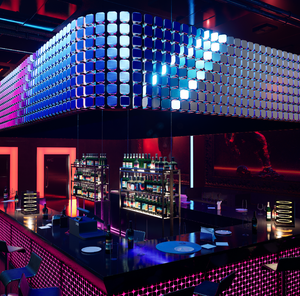
night commercial spaces (SPFM-138L lighting atmosphere)
Q3: Is content creation complicated?
No.
Flip Matrix supports programmable control.
Brands can create movement sequences and integrate with professional tools such as:
MADRIX
TouchDesigner
to synchronize:
lighting,
music,
mechanical movement.
Q4: Can Flip Matrix be customized for different brands?
Yes.
Colors, materials, and surface finishes can be customized according to brand identity.
Options include:
injection molding,
metal finishes,
painting,
electroplating,
UV printing.
Different finishes such as:
glossy,
matte,
mirror,
color-changing surfaces
can be developed for different visual requirements.
Q5: Can Flip Matrix integrate with existing lighting systems?
Yes.
The SPFM Series supports:
DMX512
Art-Net
allowing integration with:
stage lighting consoles,
intelligent lighting systems,
interactive control platforms.
Q6: How do I choose between SPFM-100, SPFM-168, SPFM-138L, and SPFM-138P?
Different models serve different applications:
SPFM-100
For luxury storefronts and close-view environments requiring high-density detail.
SPFM-168
For large-area brand walls and public spaces requiring wide coverage.
SPFM-138L
For lighting-focused environments requiring RGB visual atmosphere.
SPFM-138P
For projects requiring both mechanical movement and video display.
07 Conclusion
From luxury storefronts to corporate showrooms, from factory testing to commercial environments, Flip Matrix is changing how brands create experiences.
Key Takeaways
1. Visibility does not equal memory
Traditional static displays are becoming less effective in creating lasting impressions.
2. Flip Matrix transforms display into expression
Through independent mechanical units, it turns brand presentation from playback into physical experience.
3. Three elements create stronger brand memories:
Physical movement
Captures attention instantly.
Programmable transformation
Makes every visit feel different.
Mechanical craftsmanship
Creates a premium and authentic experience.
Recommended Applications
Luxury flagship stores
Corporate showrooms
Shopping mall atriums
Public art installations
Brand experience spaces
For brands, the future of display is not only about showing content.
It is about creating experiences people remember.
Spectrum Flip Matrix transforms a wall from a passive background into an active storyteller.