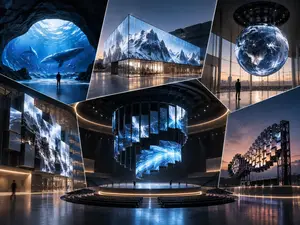
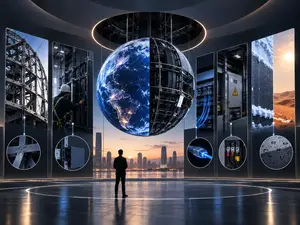
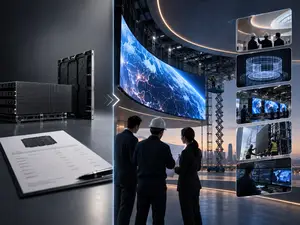
One-Sentence Definition: The future of commercial spaces is not about larger screens, but smarter experiences. By transforming mechanical movement itself into spatial expression, Spectrum Flip Matrix allows walls to evolve from a “background” into a “storyteller.”
How Does Spectrum Flip Matrix Transform Commercial Space Displays?
Contents
When Every Wall Looks Similar, Spaces Lose Their Memory
From Passive Viewing to Physical Spatial Resonance: An Experience Revolution
How Spectrum Flip Matrix Solves Four Core Brand Challenges
Who Is Using “Expressive Walls”?
Why Do Brands Need This Product?
FAQ
Conclusion
1. When Every Wall Looks Similar, Spaces Lose Their Memory
Walk into a high-end shopping mall. Marble floors, warm lighting, carefully arranged products—everything looks refined. But five minutes after leaving the store, can you still remember what the wall looked like?
This is not simply a design problem.
For a long time, the logic of commercial space design has been “fixed”: fixed walls, fixed lighting, fixed screens. Everything is installed, and then it stops changing. Over the past decade, large flat LED screens have carried most of the visual communication functions in commercial and exhibition spaces.
But a new problem is emerging: when screens are everywhere, audiences gradually become visually fatigued.
The traditional one-way communication model of passive visual reception is becoming less effective. Consumers’ brains automatically classify similar-looking walls as background noise. They see them, but they do not remember them.
According to industry observations, immersive brand spaces are shifting from “seeing the brand” to “participating in the brand.” In the past, display devices in brand stores mainly played advertisements or product videos. In next-generation brand spaces, LED display systems are becoming core carriers of spatial design, content operation, user interaction, and brand experience.
Memorability is becoming one of the scarcest resources in commercial spaces.
2. From Passive Viewing to Physical Spatial Resonance: An Experience Revolution
Today’s digital spatial aesthetics require media not only to “shine,” but also to “breathe.”
If traditional static decoration is the “outer layer” of a commercial space, interactive installations with real-time sensing capabilities are becoming the “physical engine” that drives offline traffic.
The emergence of mechanical screens allows pixels to break through the two-dimensional plane of the X and Y axes and gain physical depth along the Z axis.
Spectrum Flip Matrix is a representative product of this trend.
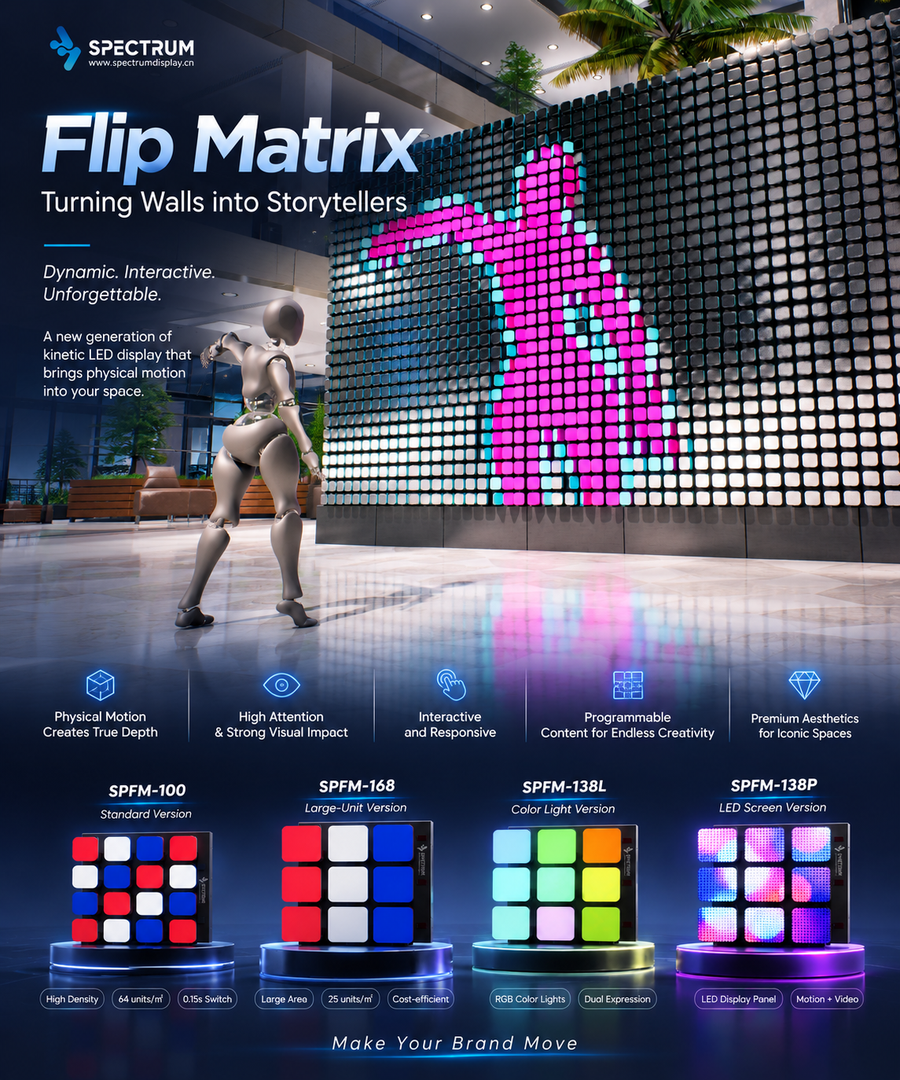
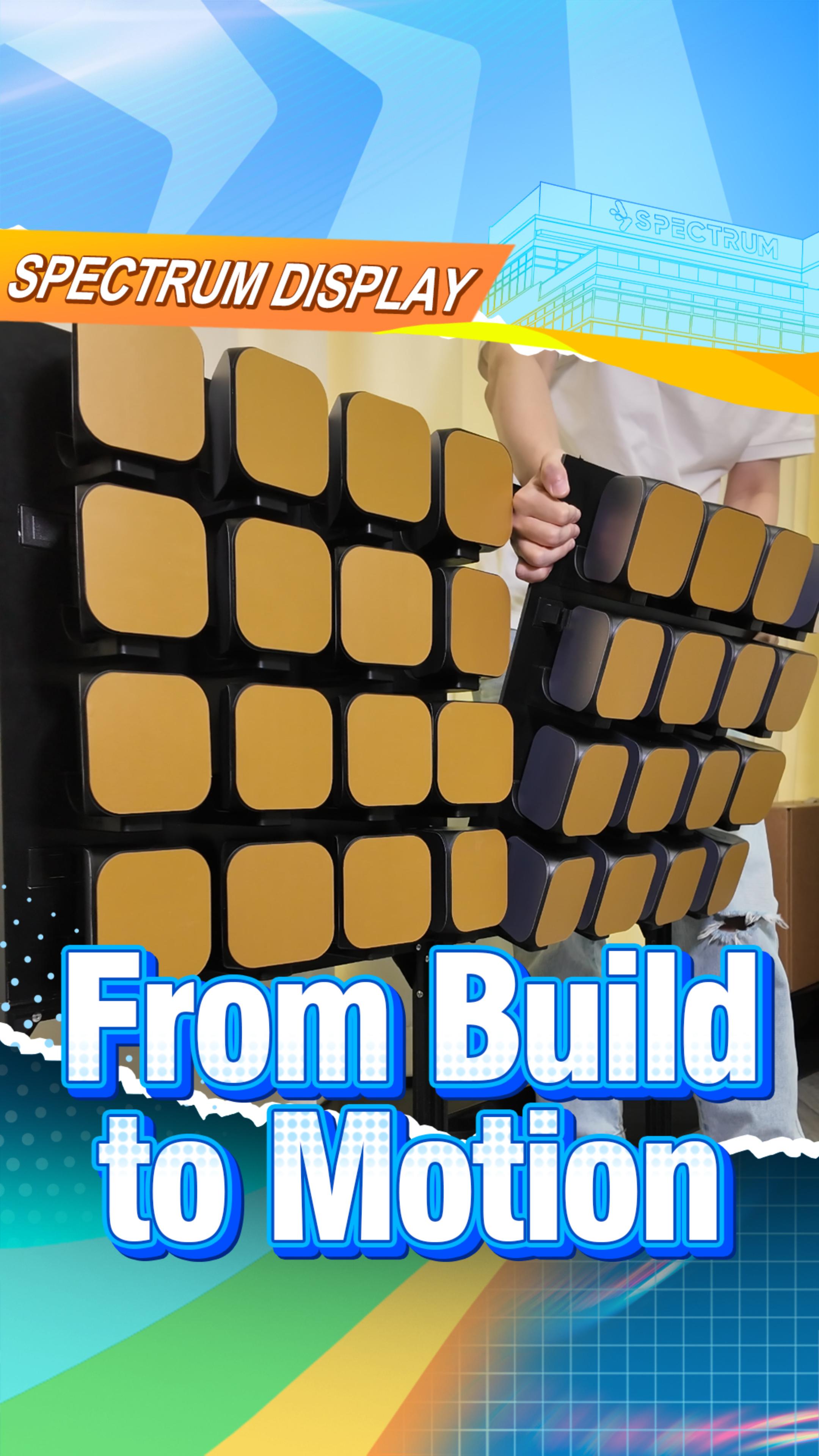
It consists of a large number of independent flipping units arranged in a matrix. Through coordinated mechanical movement, it can create visual effects such as undulating motion, three-sided flipping, color block switching, and lighting variations.
It is not a traditional display screen that simply plays visual content. Instead, it turns mechanical movement itself into part of the spatial expression.
This combination of virtual imagery and real physical displacement creates a strong sense of physical spatial resonance, giving architectural surfaces a sense of vitality and emotional tension.
Audiences do not need to wear any device. They simply walk, stop, and interact naturally. The mechanical surface can immediately respond. This immersive experience transforms the display from something to be watched from a distance into something people can participate in.
3. How Spectrum Flip Matrix Solves Four Core Brand Challenges
Challenge 1: Customers Stay for Too Short a Time
In an overloaded information environment, audience dwell time has become one of the rarest resources. Traditional static displays often struggle to keep people engaged.
The Spectrum Flip Matrix Solution:
Through real physical flipping, the system creates dynamic effects such as undulating movement, modular patterns, and multi-sided transitions. Every movement is visible and perceptible.
According to industry observations, dynamic mechanical installations can effectively encourage longer audience dwell time. At exhibition sites, a “moving wall” often becomes a natural crowd magnet—something that static decoration can hardly achieve.
Challenge 2: The Space Lacks Social Media Appeal
A space that cannot be photographed or shared naturally loses a free traffic entrance. Traditional static displays often lack shareability.
The Spectrum Flip Matrix Solution:
The dynamic effects of Spectrum Flip Matrix are naturally suitable for short videos and photos. Every flip becomes a visual surprise.
When audiences shift from viewers to participants, they are more likely to take photos, record videos, and share the experience. For brands, this becomes a low-cost and high-efficiency form of secondary communication.
Challenge 3: Spatial Content Cannot Be Updated Easily
Once static decoration is completed, its content is fixed. If a brand wants to change seasonal themes, campaign messages, or promotional visuals, it often requires renovation or replacement.
The Spectrum Flip Matrix Solution:
Spectrum Flip Matrix supports programmable control, allowing brands to update visual content according to seasons, festivals, product launches, or marketing campaigns.
The same wall can present completely different expressions at different times.
One wall. Infinite possibilities.
Challenge 4: Severe Homogenization in Commercial Spaces
When every store uses large screens to play promotional videos, and every LED screen loops similar content, consumer attention becomes evenly diluted.
The Spectrum Flip Matrix Solution:
Spectrum Flip Matrix provides a completely different visual language.
It is not simply a brighter light or a larger screen. It is a new form of spatial expression. Its value lies not only in being digital, but also in being physical.
This physicality itself becomes a premium spatial language, giving brand spaces a distinctive visual identity.
4. Who Is Using “Expressive Walls”?
High-End Retail and Luxury Window Displays
In luxury window displays, the distance between customers and the display surface may be only a few dozen centimeters.
SPFM-100 uses a high-density configuration of 64 units per square meter and a 0.15-second switching speed, delivering refined dynamic effects at close viewing distances.
Each flipping color block is clearly visible without feeling rough or overly mechanical.
SPFM-100 is suitable for:
Brand window displays
Premium showroom feature walls
High-end storefront signs
Fine-detail display walls
Flagship Stores and Exhibition Halls
SPFM-168 uses 25 units per square meter, allowing larger areas to be covered with fewer units. It is suitable for large feature walls, mall atriums, airports, pedestrian streets, and public art walls.
In flagship stores and exhibition halls, a large Spectrum Flip Matrix wall creates a physical movement effect that clearly differentiates the space from surrounding static environments.
It is not just playing content.
It makes the wall itself part of the spatial expression.
Nighttime Commercial Spaces and Art Installations
SPFM-138L adds RGB full-color lighting to the mechanical flipping structure.
During the day, the color blocks can present patterns, brand colors, or decorative graphics. At night, RGB lighting can be independently controlled to create dynamic lighting effects.
One system, two expressions:
A wall by day.
A light installation by night.
Product Launches and Interactive Experiences
SPFM-138P integrates an LED display surface with P10 pixel pitch onto the mechanical flipping structure, combining mechanical motion with video content.
After the units flip into position, the LED surface can play brand videos. During the flipping process, mechanical movement and LED content transitions can work together to create a dual visual impact.
This makes SPFM-138P suitable for:
High-end exhibition halls
Product launches
Interactive installations
Video display backdrops
5. Why Do Brands Need This Product?
Because Consumers Are No Longer Satisfied with Being Shown Things
Today’s consumers do not simply want to enter a store and be shown products.
They want to be engaged.
They want the space to respond to them, even if only through a subtle movement.
Because Memory Is More Valuable Than Traffic
In a social-media-driven consumer environment, the value of a space lies not only in what it provides, but also in what people remember.
A wall that flips becomes a natural content hook.
Consumers may not remember the exact video shown on a screen, but they are likely to remember “that moving wall.”
When the display itself becomes the memory point, the brand message naturally attaches itself to that memory.
Because Static Displays Are Becoming Less Effective
When every store plays promotional videos on large LED screens, and every display loops similar visuals, attention is diluted.
Screens become background noise.
Spectrum Flip Matrix provides a different solution.
Not brighter.
Not larger.
But different.
Because the Future of Commercial Spaces Is Expressive
Immersive brand spaces and future smart retail environments are moving from “seeing the brand” to “participating in the brand.”
Next-generation commercial spaces need solutions that can be embedded into the spatial experience itself.
Spectrum Flip Matrix allows walls to evolve from a background into a storyteller.
It does not speak, but it makes people remember.
6. FAQ
Q1: What is the difference between Spectrum Flip Matrix and a traditional LED screen in commercial spaces?
A traditional LED screen plays visual content. Consumers watch the content.
Spectrum Flip Matrix creates physical expression. Consumers experience changes in the space itself.
The former is mainly electronic. The latter is both mechanical and spatial.
Every movement of Spectrum Flip Matrix is visible, physical, and perceptible, making it easier to create a memorable brand experience.
Q2: What types of commercial spaces are suitable for Spectrum Flip Matrix?
Different SPFM models suit different spaces:
SPFM-100 is suitable for boutique window displays and high-end storefronts, with a high density of 64 units per square meter.
SPFM-168 is suitable for large feature walls and mall atriums, using 25 units per square meter for large-area coverage.
SPFM-138L is suitable for nighttime commercial spaces and art installations with RGB lighting.
SPFM-138P is suitable for high-end exhibition halls and product launches with an integrated LED display surface.
Q3: Is it difficult to update content on Spectrum Flip Matrix?
No.
Spectrum Flip Matrix supports programmable control. Brands can update the display according to seasons, festivals, promotional themes, product launches, or campaign messages.
The same wall can present unlimited expressions.
Q4: Can Spectrum Flip Matrix connect with existing lighting systems?
Yes.
The SPFM series supports DMX512 and Art-Net protocols. It can connect with stage lighting consoles, intelligent lighting systems, and interactive control systems to create synchronized lighting and flipping effects.
Q5: Can the surface material of Spectrum Flip Matrix be customized?
Yes.
The surface can be customized with multiple processes, including plastic self-color, metal foil stickers, spray painting, electroplating, and UV printing.
Texture options include glossy, matte, mirror, and color-changing finishes, allowing the system to match different brand visual identities.
7. Conclusion
The future of commercial spaces is not about larger screens, but smarter experiences.
Key Takeaways
The challenge of traditional commercial spaces:
Static displays are becoming less effective. Audiences are visually fatigued, and passive visual communication struggles to create memory points.The answer from Spectrum Flip Matrix:
It upgrades brand display from “playing content” to “expressing space,” and from “watching” to “experiencing.” It allows walls to evolve from a background into a storyteller.Four key application scenarios:
High-end retail with SPFM-100, large brand spaces with SPFM-168, nighttime commercial spaces with SPFM-138L, and product launches or interactive experiences with SPFM-138P.Core value:
It helps extend audience dwell time, create social media sharing opportunities, support programmable content updates, and build differentiated brand recognition.The essential shift:
Brand storytelling is moving from “seeing the brand” to “participating in the brand.” The screen is no longer just a carrier of content. It becomes the language of the space itself.
Recommendations for Brands
Consider dynamic mechanical display systems during the early stage of spatial design, rather than adding them after the space is already completed.
Clarify the goal of the display: is it to deliver information, or to create memory? Spectrum Flip Matrix is especially strong at the latter.
Choose the right model based on the space:
SPFM-100 for boutique windows and close-range premium displays
SPFM-168 for large feature walls
SPFM-138P for video content and product launches
SPFM-138L for nighttime lighting atmosphere
To learn more about product details or request a customized solution, contact SpectrumDisplay through: