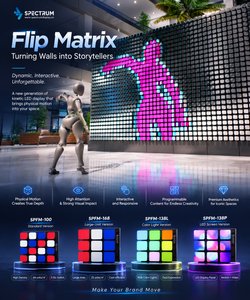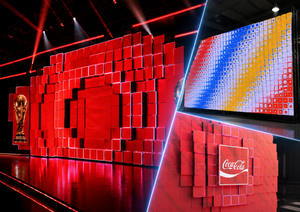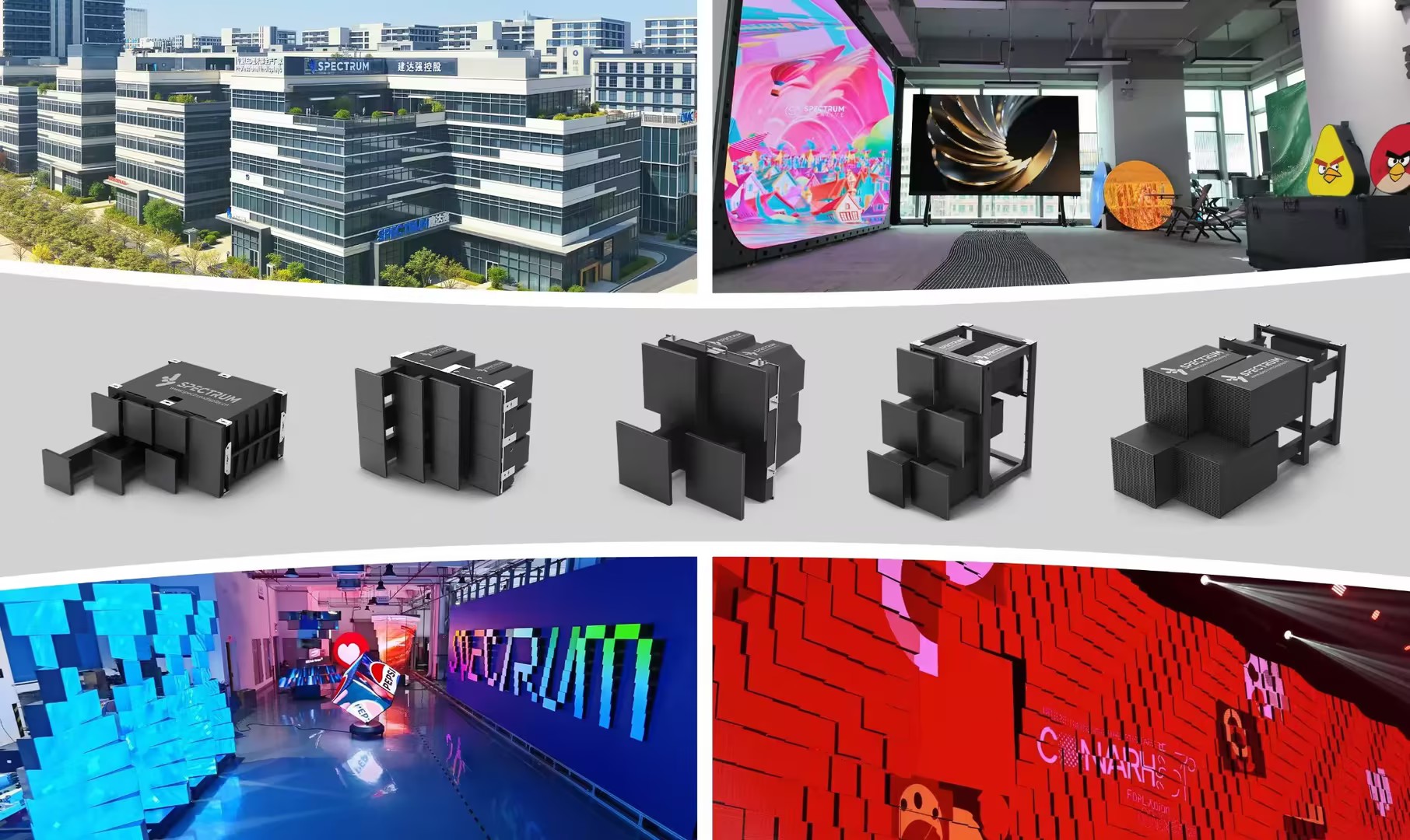
In today's explosion of creative display equipment, kinetic visual technology is reshaping commercial and performance spaces at an unprecedented speed. However, as the market matures, an industry pain point is becoming increasingly prominent: many clients fall into the "cookie-cutter" selection trap when introducing dynamic kinetic display equipment.
Breaking the Selection Maze: Saying Goodbye to the Awkwardness of "Over-Configuration" and "Under-Performance"
In actual project implementations, we often see regrettable chaos: some clients choose models requiring massive rear maintenance space for narrow, high-end shop windows, resulting in "over-configuration" and a huge waste of commercial area. Conversely, to save initial costs, some rental companies choose conventional products with poor precision and lifespan for high-frequency national tours, resulting in "under-performance" dilemmas such as structural loosening and screen tearing, leading to skyrocketing late-stage maintenance costs.
As an industry-leading provider of creative display solutions, SPECTRUM DISPLAY deeply understands that no single product can fit all needs. True professionalism lies in matching precise, high-performance Kinetic Screen solutions to each unique commercial or performance scenario. To this end, we are launching this Kinetic Screen Selection Guide to deeply analyze the differences and advantages of SPECTRUM's five core models.
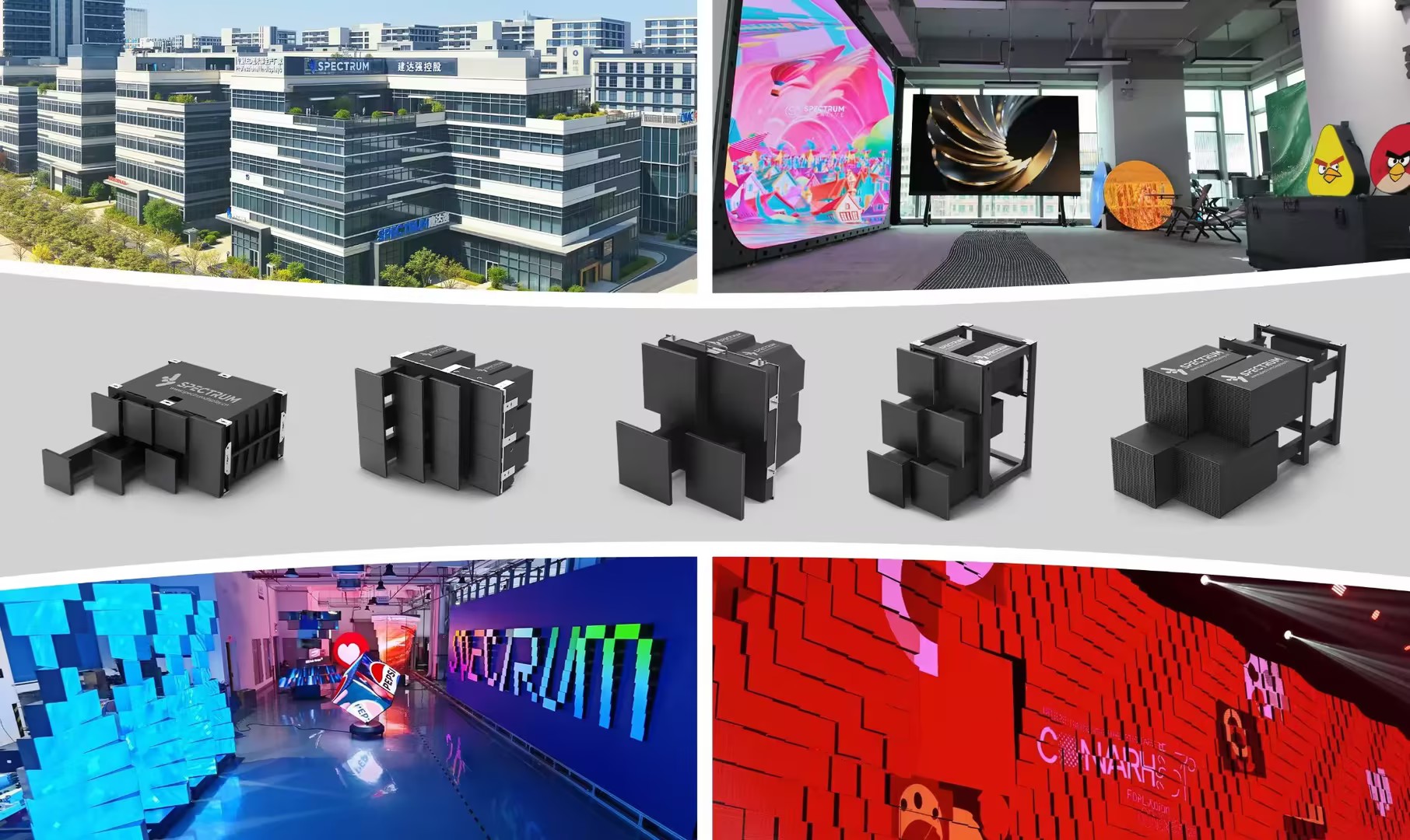
Hardcore Matrix Decoding: The Differentiated Missions of Indoor Precision and Outdoor Landmarks
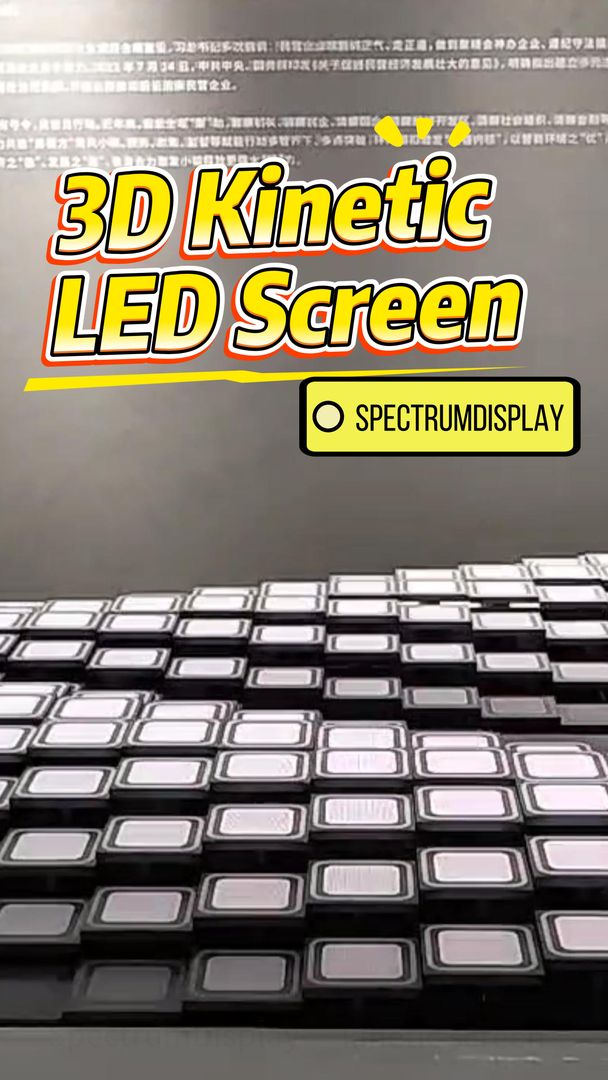
Based on years of technological accumulation and tens of thousands of hours of high-intensity aging tests, SPECTRUM has created two core series: SPKI (Indoor) and SPKO (Outdoor), comprising five main models. They have clear technical dividing lines in pixel pitch, gap control, maintenance methods, and cabinet thickness:
1. Indoor Precision Series (SPKI): Ultimate Delicacy, Flexible Maintenance
SPKI-128 (Ultimate Precision Model): It is the model with the longest lifespan and highest precision in this series, adopting a linear guide rail design. Through 0.25mm LED chip relocation technology, it achieves an astonishing 0mm visual gap. Supporting full front maintenance with an equipment thickness of only 380mm (finished surface 400mm), it is the premier choice for close-viewing scenarios demanding absolute perfection.
SPKI-160 (Balanced Performance Model): It strikes the best balance between cost and visual effect. Utilizing 160x160mm modules combined with a flight case quick-installation solution, it enables rapid setup and dismantling. It also supports front maintenance (flush wall mounting) and is currently a highly popular mainstream model on the market.
SPKI-250 (Large-Scale Engineering Model): Specifically developed for large-area, high-altitude indoor fixed installation projects. Featuring a full rear maintenance design, maintenance personnel can disassemble and repair the entire unit (including the LED module) from the rear maintenance access, completely eliminating the hassle and high cost of renting aerial work platforms on-site.
2. Outdoor Landmark Series (SPKO): Hardcore Protection, Fearless of Challenges
SPKO-320 (Ultra-Thin Upgrade Model): This is a tailor-made solution for upgrading traditional outdoor large screens with "kinetic motion." The equipment thickness is extremely compressed to 650mm, making it suitable for rapid upgrades without altering the original site structure. It is particularly ideal for outdoor walls with closer viewing distances, such as pedestrian streets and subway entrances.
SPKO-500 (Landmark Giant Screen Model): When a kinetic screen project exceeds 100 square meters and the viewing distance is greater than 10 meters, the SPKO-500 is the absolute king. With an equipment thickness of 1430mm and an ultra-long extension stroke of 600mm, it not only delivers extremely shocking visual impacts but also features independent maintenance access. It supports independent live maintenance for a single unit while the equipment is running. It achieves a 0mm visual gap (2.5mm LED chip relocation), ensuring flawless imagery.
Matching Scenarios: Making Every Cent of Your Budget Generate Maximum Visual Premium
Now that the differences between the core series are clear, how do we match them to the right applications? Here are the professional selection recommendations provided by SPECTRUM DISPLAY:
Scenario 1: Stage Performances and Professional Rental Companies — Preferred Choice: SPKI-160
Selection Logic: The rental market has extremely high requirements for equipment "turnaround efficiency" and "durability." The SPKI-160, paired with SPECTRUM's custom flight cases, achieves extremely fast conversion from transport to setup. Its outstanding full front maintenance capability means that even if an accident occurs during rehearsal, the module can be quickly replaced from the front within minutes, ensuring a foolproof performance.
Scenario 2: High-End Luxury Mall Windows / Corporate Tech Showrooms — Preferred Choice: SPKI-128
Selection Logic: Viewing distances in shop windows and showrooms are extremely close, and audiences are highly critical of image delicacy. Relying on the ultimate quietness and smoothness brought by linear guide rails, along with its 0mm visual seamless performance, the SPKI-128 perfectly presents the premium texture of luxury goods or high-tech products. It turns the mechanical opening and closing action itself into an advanced artistic expression.
Scenario 3: Outdoor Building Facade Upgrades in Core Business Districts — Preferred Choice: SPKO-320 / SPKO-500
Selection Logic: Outdoor environments must withstand wind, rain, and extreme temperature differences. If the building's load-bearing capacity and space are limited (such as a pedestrian street corner), the 650mm ultra-thin SPKO-320 can easily complete the upgrade. If the goal is to create a city-level super 3D landmark over 100 square meters, the SPKO-500, with its independent maintenance access and 600mm extension stroke, is the only answer to ensure long-term stability and extremely shocking visual impacts.
Expert Escort: Get Your Exclusive Kinetic Visual Blueprint
An excellent kinetic display project relies 30% on creativity and 70% on equipment selection. Rejecting "cookie-cutter" displays is the only way to make your project stand out amid countless visual noises.
To help you more accurately avoid selection risks and evaluate on-site installation conditions (such as load-bearing, edge wrapping, and heat dissipation design), SPECTRUM DISPLAY has now fully opened a professional selection consultation channel.
Welcome to contact our senior technical consultant team to get a free, complete SPECTRUM Official Kinetic Screen Selection Manual and targeted project drawings. Let us tailor the optimal high-performance kinetic display solution that best fits your commercial value, right from step one.
Appendix: Frequently Asked Questions (FAQ) on Kinetic Screen Selection
Q1: If our original wall has limited load-bearing capacity, can we still install a Kinetic Screen?
A: Yes. For indoor walls with limited load-bearing capacity, we recommend lightweight, front-maintenance-supported models like the SPKI-160 or SPKI-128. We can also use stacked (floor-standing steel structure for load-bearing) or suspended installation methods to distribute wall pressure and avoid damaging the original building structure.
Q2: For shopping mall windows that need frequent theme changes, is the control of this equipment complicated?
A: It is very simple. SPECTRUM's control software integrates rich functions such as program arrangement, mobile central control, and matrix layout. Operators can switch preset kinetic matrix playlists at any time with one click via a mobile APP. Additionally, we provide an exclusive Motion Matrix 4 (After Effects Plug-in). Designers can easily transform flat videos into 3D videos with mechanical undulations without needing any complex underlying programming code.
Q3: Can the outdoor SPKO series still operate normally under extreme weather conditions (such as severe cold or scorching heat)?
A: Yes. The operating temperature range for the SPKO outdoor series is -5°C to 55°C. For extremely cold regions (e.g., -20°C), we will install custom heaters or activate a "warm-up mode" during the solution design phase. For extremely hot regions, we will configure appropriate cooling air conditioners or high-temperature alarm shutdown systems based on calculations to ensure the equipment operates stably around the clock.