How to Choose the Right Kinetic LED Screen: The Ultimate SPKI Series Guide
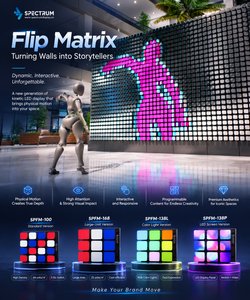
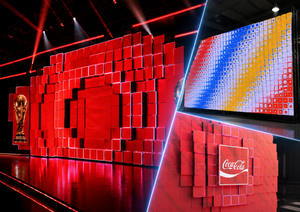
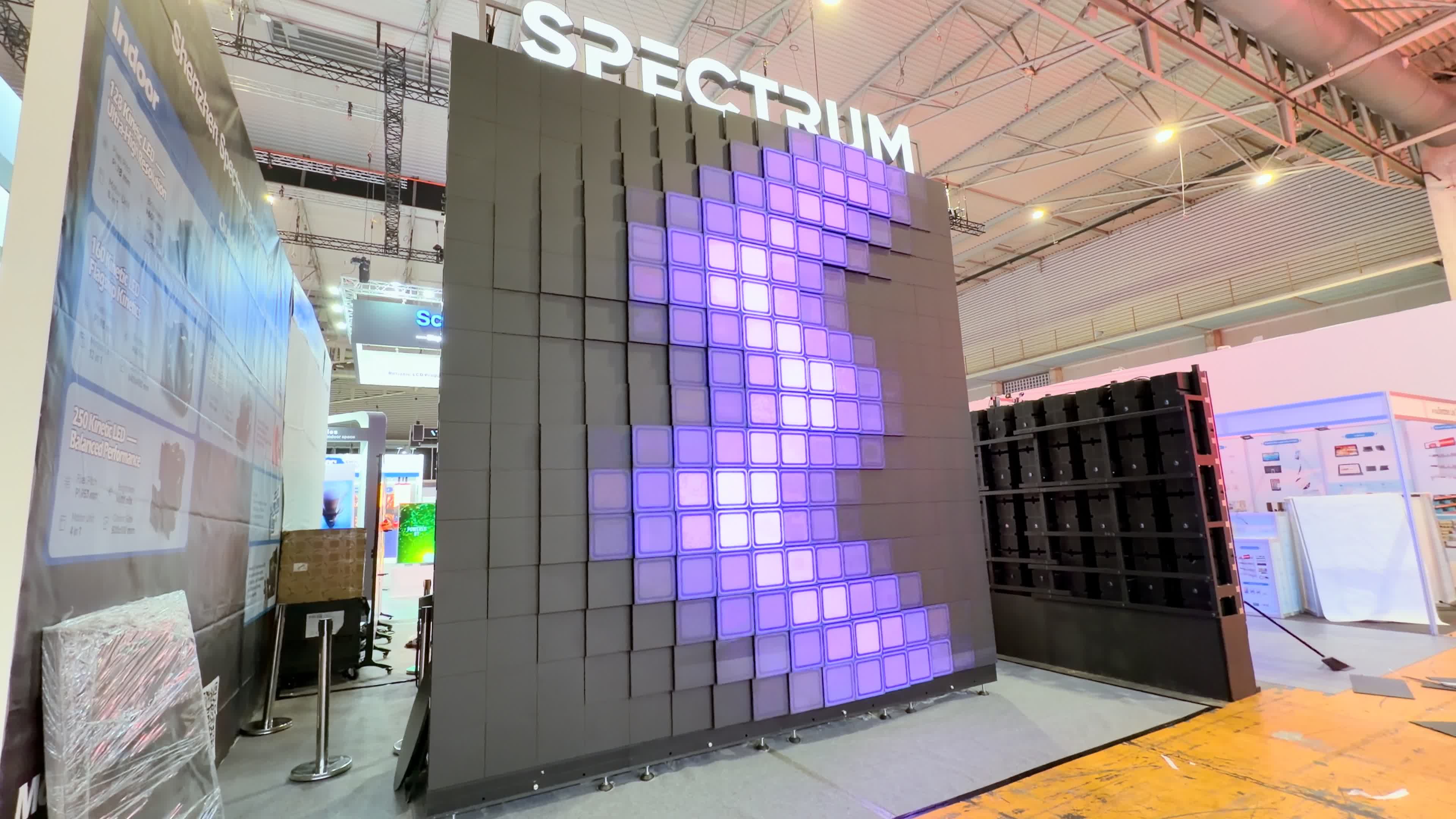
In commercial spaces and high-end exhibitions, the Kinetic LED Screen is becoming the new favorite among designers due to its dimension-breaking physical undulation and stunning visual impact.
However, selling hardware is easy, but successful implementation is hard. The biggest headache for many system integrators and project managers at the beginning of a project is: How much depth needs to be reserved on the wall? If the wrong model is chosen early on, it often leads to the inability to build the steel structure on-site, or even forces the entire project to be completely overhauled.
To ensure your project lands perfectly the first time, Spectrumdisplay has compiled this ultimate indoor selection guide. We will deeply deconstruct our three main indoor models—SPKI-128, SPKI-160, and SPKI-250—from the two most critical engineering dimensions: "spatial depth" and "maintenance method."
Step 1: Look at "Spatial Depth" (Finished Surface Thickness)
Because kinetic screens contain motors, rails, and telescopic modules, their thickness is far greater than conventional LED screens. The amount of space you have directly determines which model you can install.
1. Extremely Limited Space (e.g., aisles, retail windows, pillar wrapping): SPKI-160 is the Top Choice
If your project is in a high-end mall or luxury window where every inch counts, and the wall depth simply doesn't allow for a meter of reserved space, the SPKI-160 is your only correct answer.
It features an extreme 330mm ultra-thin bare chassis and fully supports pure front maintenance. This means it can be installed flush against the wall like a standard screen, with an overall finished thickness of only 350mm (including necessary rear heat dissipation gaps). It uses the smallest footprint to achieve maximum spatial physical tension.
2. Extreme Demand for Image Fidelity and "Seamlessness": Choose SPKI-128
In some high-end retail stores or museums where viewers are up close, traditional mechanical gaps (2-3mm) can ruin the premium feel of the image. In this case, lock in the SPKI-128.
It also utilizes a pure front maintenance architecture, keeping the overall finished thickness at 400mm. Its biggest killer feature is its incredibly precise structural design, which compresses the physical gap to a limit of 0.5mm. This achieves a "zero-gap" premium visual experience at normal viewing distances, completely eliminating the black grid tearing effect on the display.
3. Ample Rear Access and Depth Available: Go for SPKI-250
If you are operating a large science museum, a corporate main exhibition hall, or a massive product launch stage, and there is plenty of space behind the wall, do not hesitate—go straight for the SPKI-250.
"250" represents large-stroke physical depth, capable of unleashing an overwhelming visual impact even from a distance. Because it requires a rear maintenance channel, its overall finished thickness is about 800mm, making it the absolute main force for creating "giant visual spectacles."
Step 2: Look at "Maintenance Method" (Front vs. Rear Maintenance)
Long-term operational and maintenance costs are the key to a project's profitability. In actual construction, should you choose front or rear maintenance?
Pure Front Maintenance for SPKI-128 / 160:
This is Spectrumdisplay's engineering revolution for commercial spaces. When a module fails, technicians simply stand in front of the screen and can single-handedly remove the LED module—no need to go behind the screen at all. This pure front maintenance completely eliminates the cost of building complex catwalks and rear access channels, truly achieving "instant replacement" and reducing repair time from days to minutes.
Rear Cover Assembly Maintenance for SPKI-250:
For a giant SPKI-250 matrix covering hundreds of square meters and containing tens of thousands of motion motors, rear maintenance is the more scientific choice. Technicians can open the rear cover within the spacious back channel (within the 800mm space) and directly extract and replace a single mechanical assembly. This method does not disrupt the overall flatness of the front screen and is much better for circuit inspection and heat dissipation of a massive matrix.
Conclusion: No Perfect Model, Only the Perfect Solution
Whether you choose the 330mm ultra-thin SPKI-160 or the deep-stroke SPKI-250, all of Spectrumdisplay's indoor Kinetic LED Screens come standard with <0.5s full-process physical response speed and a 3kg anti-pinch safety system, ensuring every human-machine interaction is ultra-fast and absolutely safe.
👇 Spectrumdisplay SPKI Indoor Series Specs at a Glance (Save for Reference!)
Core Model | Bare Chassis Thickness | Overall Finished Thickness | Maintenance Method | Core Advantage | Best Application Scenarios |
SPKI-160 | 330mm | 350mm | Pure Front | Ultra-thin, Space-saving | Luxury windows, mall pillars, narrow spaces |
SPKI-128 | 380mm | 400mm | Pure Front | 0.5mm micro-gap, Ultimate picture quality | High-end museums, close-view luxury retail |
SPKI-250 | 330mm | 800mm | Rear Assembly | Extreme visual tension | Massive launch events, science museums, corporate halls |
Bring your spatial blueprints and contact Spectrumdisplay—let us customize the most efficient spatial kinetic solution for you!
[Meet Us in April · Experience National-Level Standards]
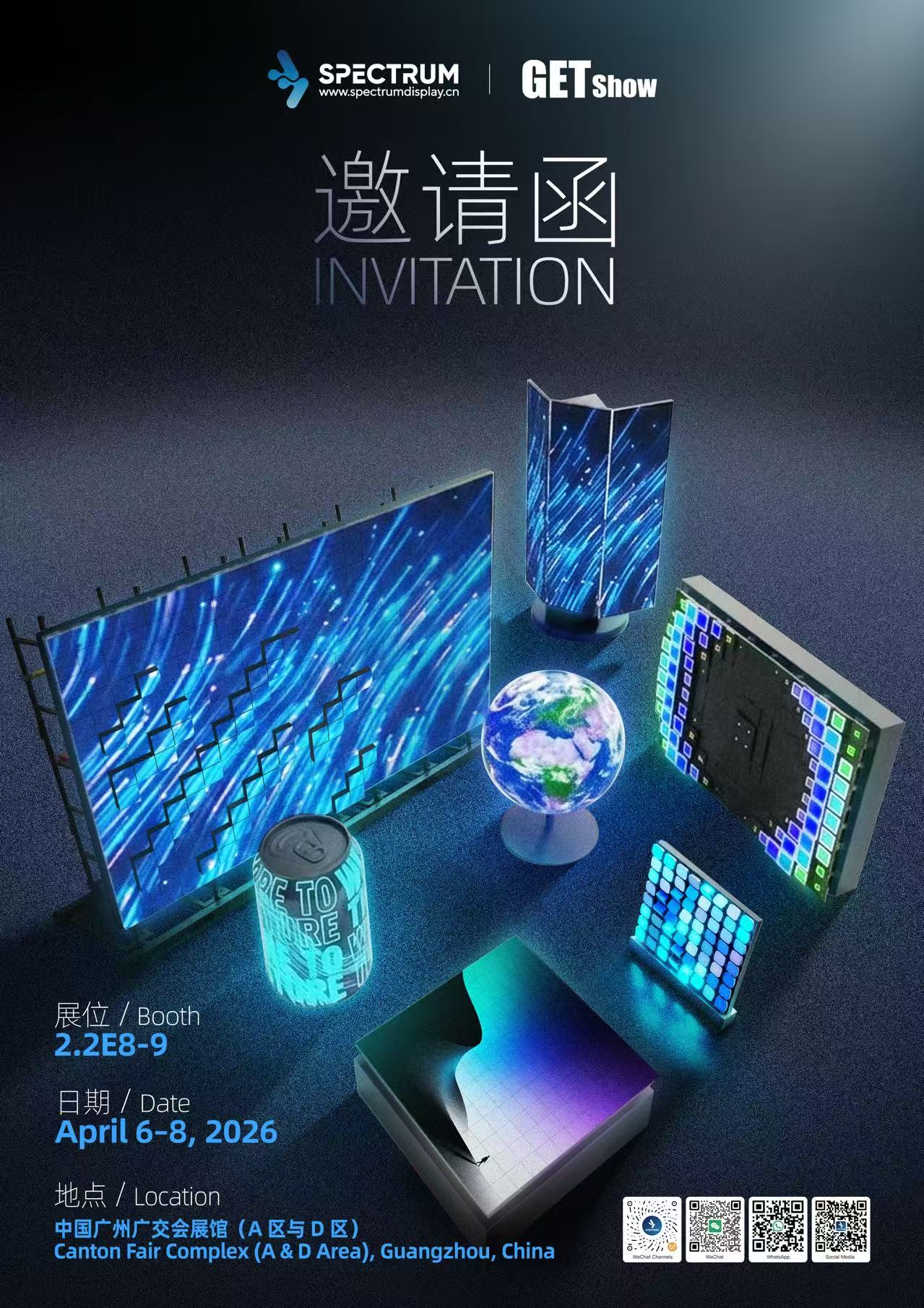
We cordially invite you to experience Spectrumdisplay's integrated spatial visual revolution in person! This April, we will be showcasing at two major industry events in Guangzhou:
📍 GETshow 2026 Booth: 2.2E8-9 (Come experience our <0.5s zero-latency interactive kinetic ecosystem!)
🤝 Strategic Partnership with the Canton Fair Spectrumdisplay is proud to be officially authorized by the China Foreign Trade Centre Group, Ltd. as the "2024-2029 Canton Fair Complex LED Screen Supplier". Adhering to the stringent standards of a national-level exhibition complex, we are committed to providing top-tier digital display and kinetic solutions to global clients.

See you at both Guangzhou trade shows!