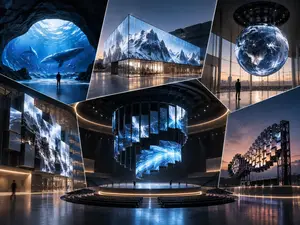
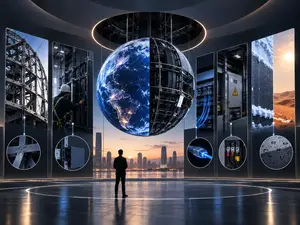
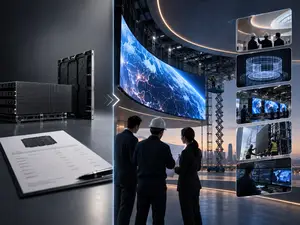
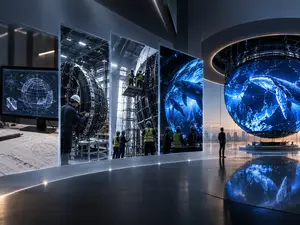
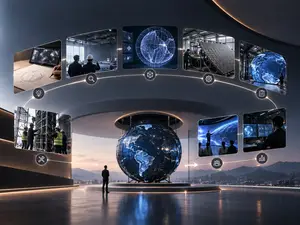
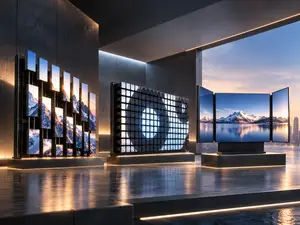
When a client presents a creative vision for a premium space, the first question is usually not:
“How large should the LED screen be?”
The real question is:
Can this idea actually be achieved within the limitations of a real building?
Because every architectural space has its own personality.
Some spaces have:
irregular structures,
limited installation depth,
strict aesthetic requirements,
complex movement requirements,
and demanding safety standards.
For these projects, a standard LED display is often not the answer.
The challenge is not simply displaying content.
The challenge is creating a visual system that can become part of the architecture itself.
This is where a Customized Mechanical LED System creates new possibilities.
Unlike traditional LED displays that remain fixed after installation, customized mechanical LED solutions combine:
LED display technology,
precision mechanical structures,
motion control systems,
and safety engineering
to transform creative ideas into real-world visual experiences.
SpectrumDisplay is not simply an LED display supplier.
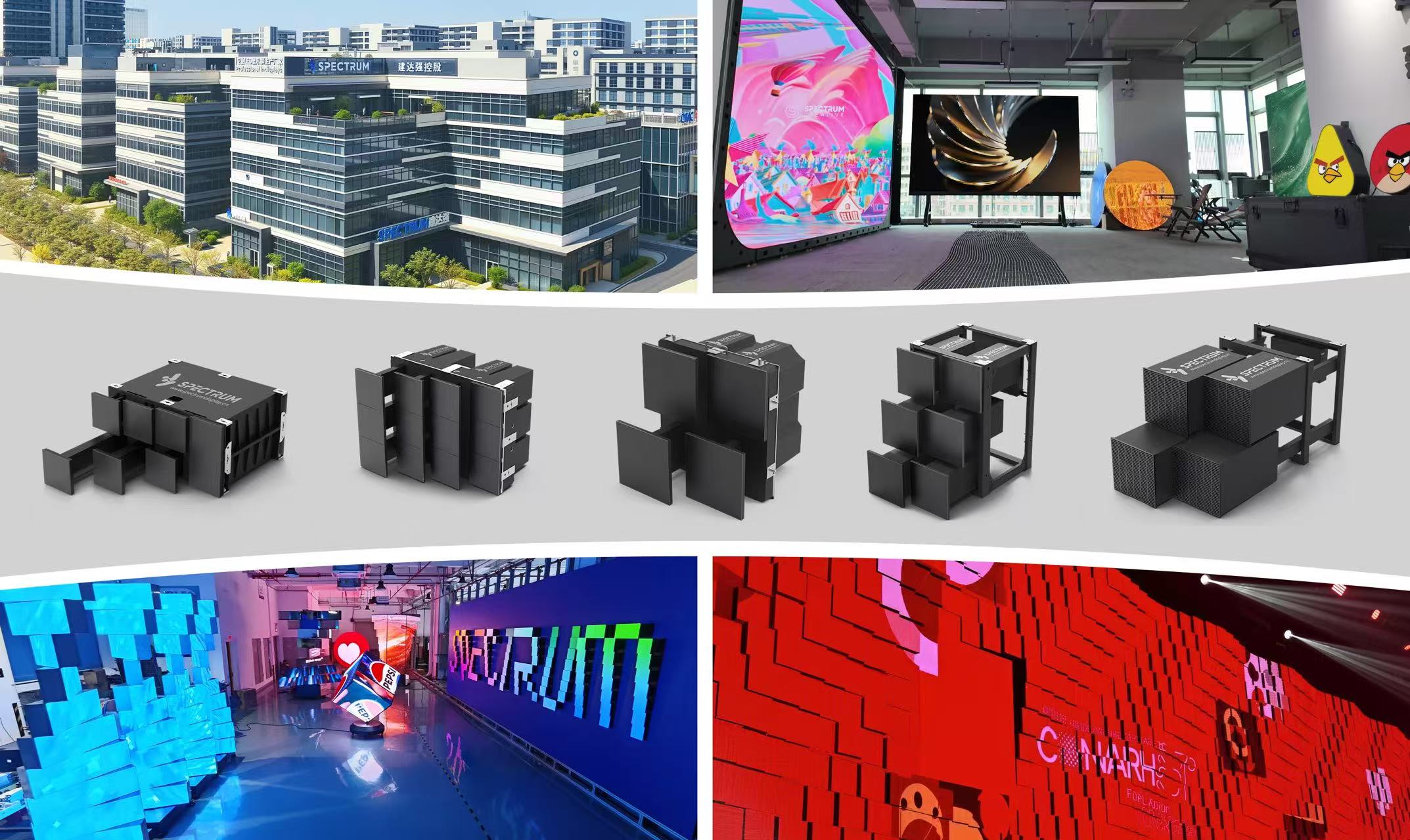
As a Mechanical LED Display Manufacturer and Kinetic LED Specialist, SpectrumDisplay focuses on creating customized solutions for complex spaces where standard products cannot meet the requirements.
01 Why Standard Products Cannot Meet High-End Visual Projects
Standardization has brought many advantages to the LED industry.
It allows:
predictable production,
controlled costs,
faster delivery,
easier maintenance.
For many conventional display projects, standard products are the right choice.
However, premium architectural and creative projects often require something different.
Because the goal is not only:
“install a screen.”
The goal is:
“create an experience.”
When Architecture Does Not Fit Standard Products
Imagine an architect standing in front of a large glass facade.
The vision is clear:
The screen should become a breathtaking visual wall when opened.
But when closed, it should disappear into the architecture like a normal window.
No standard LED cabinet can directly solve this requirement.
The problem is not the display technology itself.
The problem is the relationship between:
screen + structure + space + movement.
This is where customized mechanical LED solutions become valuable.
Instead of forcing architecture to adapt to a product,
the product is designed to understand the architecture.
02 Project Challenges: When Creative Ideas Meet Architectural Limitations
Every customized mechanical LED project begins with a challenge:
“The conventional solution cannot achieve what the designer wants.”
The engineering process starts from understanding the space, not selecting a standard product.
Challenge 1: Adapting to Non-Standard Spaces
Architectural environments are rarely perfect rectangles.
They may involve:
unique dimensions,
existing glass structures,
limited installation areas,
strict alignment requirements.
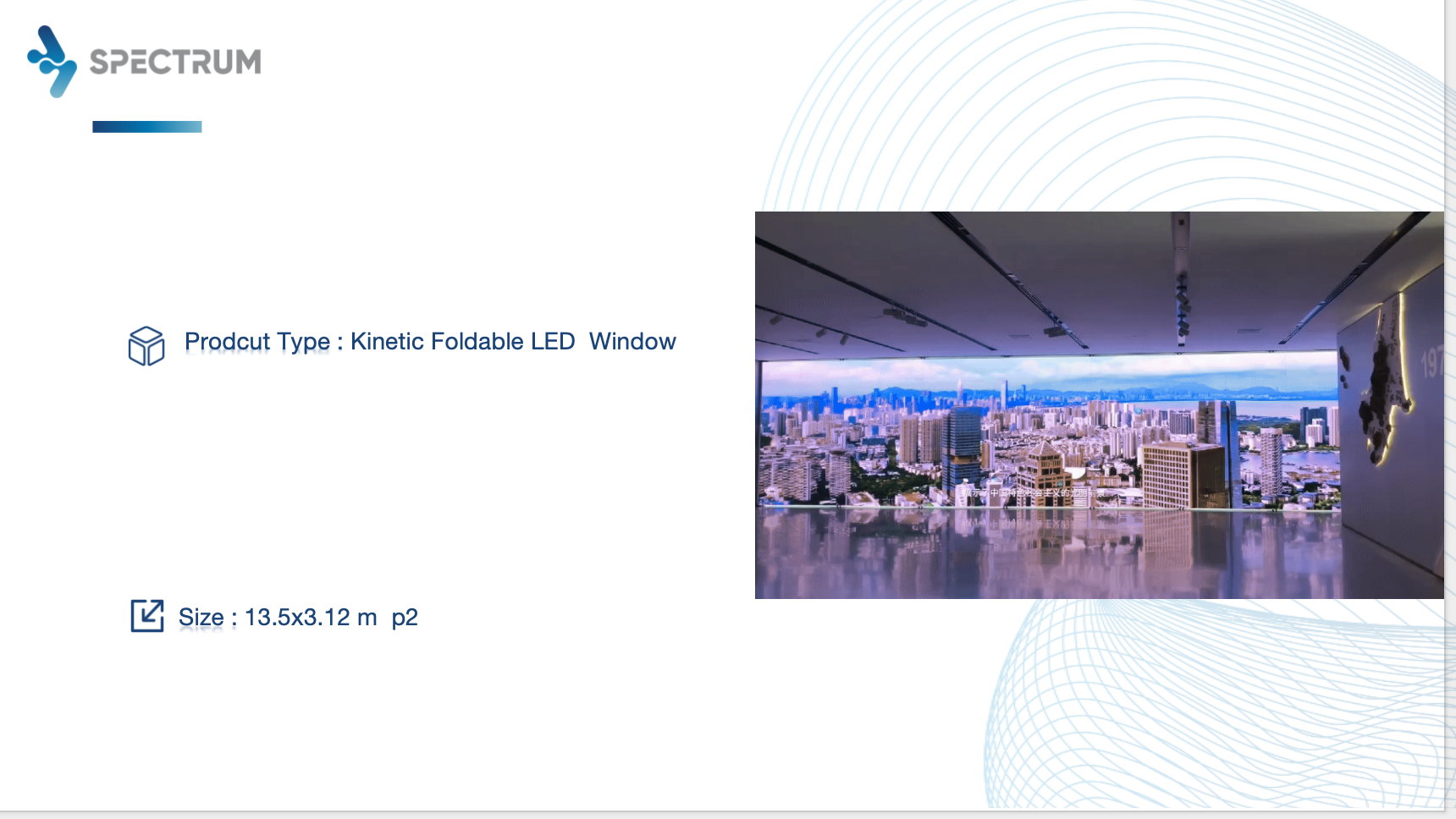
In one customized project, SpectrumDisplay faced a unique requirement:
A large-scale LED system needed to be integrated into a glass architectural structure.
The project dimensions were:
Width: 13.5 meters
Height: 3.12 meters
LED specification: P2
The design requirements were both challenging and specific:
When the display opened:
It needed to become a seamless large visual surface.
When the display closed:
It needed to align with the surrounding architecture and maintain the visual openness of the space.
A standard LED system could not directly achieve this.
The solution had to start from customized engineering.
Challenge 2: Mechanical Motion Control
Making a display show content is one challenge.
Making a large display move precisely is another.
A mechanical LED system must answer several questions:
How does it open?
How does it close?
How does it maintain stability?
How does it operate repeatedly over time?
In this project, two display sections needed to transform from a closed state into a fully opened visual surface within approximately 5 seconds.
However, speed alone was not the goal.
A successful mechanical display requires balance between:
movement speed,
visual impact,
stability,
and safety.
The movement itself becomes part of the experience.
A slow transition may reduce the visual impact.
An uncontrolled movement may affect reliability.
Therefore, every movement needs to be precisely engineered.
Challenge 3: Integrating Display Technology with Architecture
The biggest challenge is often not making technology visible.
It is making technology disappear.
When the system is closed, the display should not look like an additional device installed inside the building.
Instead, it should feel like:
part of the wall,
part of the window,
part of the architecture.
This requires careful consideration of:
surface materials,
structural alignment,
closing accuracy,
visual consistency.
The integration between display and architecture must be considered from the beginning of the mechanical design process.
A successful Architectural LED Display solution is not only about technology.
It is about harmony between technology and space.
03 The Solution: Customization Starts From Engineering
When facing these challenges, SpectrumDisplay does not simply modify a standard product.
Instead, the solution begins from the engineering foundation.
A customized mechanical LED system requires a complete process:
Concept Analysis
Understanding:
architectural conditions,
creative goals,
usage scenarios.
↓
Mechanical Design
Developing:
structural solutions,
movement mechanisms,
installation methods.
↓
Display Integration
Combining:
LED modules,
control systems,
visual performance.
↓
Manufacturing and Testing
Ensuring:
stability,
safety,
reliable operation.
04 Customized Mechanical Structure: Designing the Display Around the Architecture
For a customized mechanical LED project, the core principle is simple:
The display should adapt to the architecture, not force the architecture to adapt to the display.
Unlike standard LED products with fixed dimensions and structures, customized mechanical LED solutions begin from the actual project requirements.
The engineering team needs to consider:
architectural dimensions,
installation environment,
movement requirements,
maintenance accessibility,
visual appearance.
For the foldable LED project, every component was designed specifically for the application scenario.
The folding structure was not created by modifying an existing product.
Instead, the mechanical system was developed around the building environment.
Customized Structure: Creating a Perfect Fit Between LED and Space
One of the biggest differences between a standard LED display and a customized mechanical LED system is the design philosophy.
A standard solution asks:
“What size screen can fit here?”
A customized solution asks:
“What kind of display experience does this space need?”
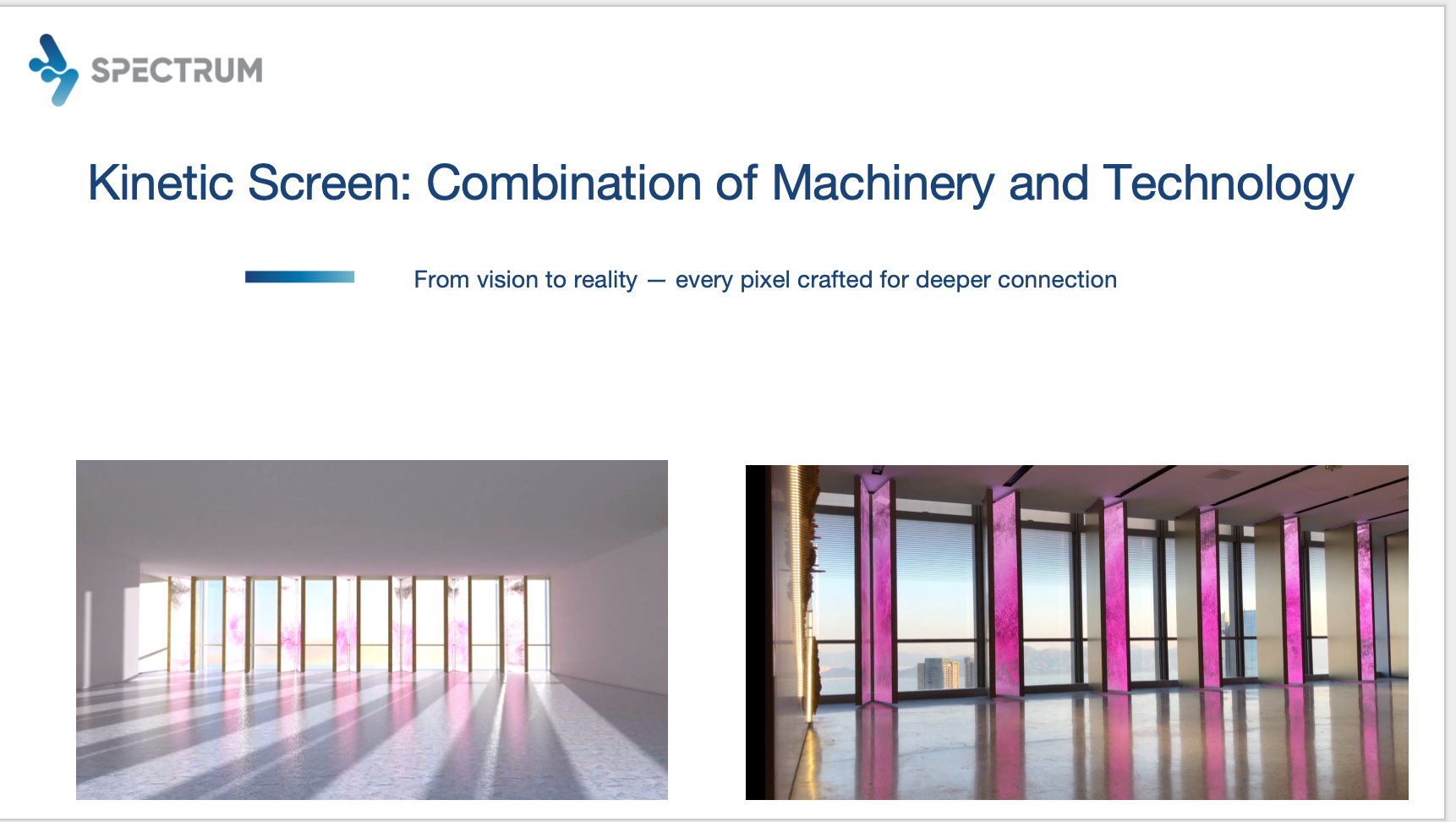
For this project, SpectrumDisplay developed a customized folding structure that allowed the LED system to become part of the architectural environment.
Each folding panel was carefully designed to achieve:
stable movement,
accurate positioning,
visual consistency,
reliable long-term operation.
The LED modules were customized according to the mechanical structure, ensuring that the display surface remained consistent during movement.
This approach represents the difference between:
a screen installed inside a building
and
a screen designed together with the building.
05 Precision Motion Design: Where Engineering Creates the Experience
A mechanical LED system is not successful simply because it can move.
The real challenge is creating movement that feels:
smooth,
controlled,
precise,
natural.
Every movement sequence affects the audience experience.
A high-quality mechanical LED system must control:
acceleration,
deceleration,
synchronization,
positioning accuracy.
Millimeter-Level Control Behind Large-Scale Movement
Large displays create unique engineering challenges.
When a system reaches several meters in width, even small mechanical errors can affect:
alignment,
closing performance,
visual quality.
In this project, SpectrumDisplay optimized the movement trajectory to achieve approximately 1mm gap controlduring the closing process.
This means the system needed to maintain precision across a large-scale structure.
The goal was not simply:
“Make the screen open and close.”
The goal was:
“Make every movement look intentional.”
Smooth Motion Creates Visual Impact
Mechanical movement itself becomes part of the experience.
A successful system does not create sudden or uncomfortable motion.
Instead, it achieves:
smooth startup,
controlled acceleration,
stable stopping.
The audience sees a visual transformation.
But behind that transformation is a carefully engineered motion system.
06 Safety Control System: When Machines Need to Understand Their Environment
Large mechanical displays introduce another important requirement:
Safety.
A moving LED system operates in public environments.
Therefore, the system must consider:
people nearby,
unexpected obstacles,
long-term operational reliability.
Multiple Safety Protection Layers
SpectrumDisplay integrates multiple safety solutions into customized mechanical LED projects.
These include:
Infrared Protection
Infrared sensing systems monitor the movement area and help detect potential obstacles.
Motion Feedback
The system can respond to abnormal resistance during operation.
Emergency Stop
On-site emergency controls provide additional protection when required.
The purpose is clear:
The visual experience should never come at the cost of safety.
07 Why Choose SpectrumDisplay as a Mechanical LED Display Manufacturer?
Many companies can provide LED displays.
However, complex mechanical LED projects require a different level of capability.
A successful project requires integration between:
Display Technology
Providing:
high-quality visual performance,
stable image output,
customized LED solutions.
Mechanical Engineering
Providing:
structural design,
movement solutions,
precision control.
System Integration
Connecting:
hardware,
software,
control systems,
architectural requirements.
Project Delivery
Supporting:
design communication,
manufacturing,
installation,
technical consultation.
SpectrumDisplay positions itself not only as an LED supplier, but as a:
Kinetic LED Specialist
that helps customers transform complex ideas into practical engineering solutions.
Project Value: When the Display Becomes Part of the Architecture
A successful customized mechanical LED project creates value beyond the hardware itself.
The final result is not simply a larger screen.
It is a new relationship between:
space,
technology,
audience,
brand experience.
Value 1: Enhancing Spatial Experience
A traditional LED display usually has one function:
Showing content.
A customized mechanical LED system creates additional possibilities.
The same space can have different forms:
Display Mode
The LED becomes a powerful visual surface.
Open Space Mode
The system integrates back into the architecture.
One space.
Multiple experiences.
Value 2: Creating Stronger Brand Memories
In today’s competitive environment, memorable experiences are more valuable than simple visual information.
People may forget:
a normal screen,
a standard display wall,
a traditional advertisement.
But they remember:
A wall that transformed.
A space that changed.
A visual moment that felt unexpected.
Mechanical LED systems create this emotional connection by turning technology into an experience.
Value 3: Making Complex Creative Ideas Possible
Architects and designers often imagine experiences that cannot be achieved with standard products.
For example:
“A large LED wall that disappears when not needed.”
“A display that becomes part of the building.”
“A visual system that changes with the event.”
These ideas require more than product selection.
They require engineering.
A Customized Mechanical LED Solution provides the bridge between creative concepts and real-world implementation.
08 Applications: Where Customized Mechanical LED Systems Create Value
Brand Launch Events
For product launches and corporate events, visual impact is critical.
Mechanical LED systems can create memorable opening moments and transform the stage environment.
Premium Showrooms
High-end showrooms require more than product display.
They need:
storytelling,
interaction,
immersive experiences.
Mechanical LED systems help create stronger brand environments.
Commercial Spaces
Retail spaces and commercial buildings increasingly focus on customer experience.
Dynamic visual systems can help attract attention and create unique spatial identities.
Immersive Experience Spaces
Future experiences combine:
architecture,
content,
interaction,
technology.
Mechanical LED systems allow spaces to actively participate in storytelling.
FAQ
Q1: What is a Customized Mechanical LED System?
A Customized Mechanical LED System combines LED display technology with precision mechanical structures and control systems to create dynamic visual solutions designed for specific spaces.
Q2: How is a mechanical LED display different from a standard LED display?
A standard LED display mainly focuses on showing content.
A mechanical LED display adds physical movement and spatial transformation, allowing the display itself to become part of the experience.
Q3: Why do mechanical LED projects require customization?
Because every architectural environment has different requirements, including:
dimensions,
installation conditions,
movement requirements,
safety considerations.
Customization allows the system to match the project instead of forcing the project to adapt.
Q4: What applications are suitable for customized mechanical LED systems?
They are suitable for:
Brand launch events
Premium showrooms
Commercial spaces
Architectural LED displays
Immersive experience environments
Q5: How does SpectrumDisplay ensure project reliability?
SpectrumDisplay combines:
mechanical engineering,
LED integration,
motion control,
safety systems,
to deliver customized mechanical LED solutions for complex projects.
Conclusion: Engineering Makes Creative Vision Possible
The value of a customized mechanical LED system is not simply what it can display.
It is what it makes possible.
From architectural limitations to visual breakthroughs, successful mechanical LED projects require the combination of:
creative thinking,
engineering capability,
precise manufacturing,
system integration.
SpectrumDisplay helps transform challenging ideas into real spatial experiences.
Because the future of LED is not only about displaying content.
It is about creating spaces that can change, adapt, and inspire.